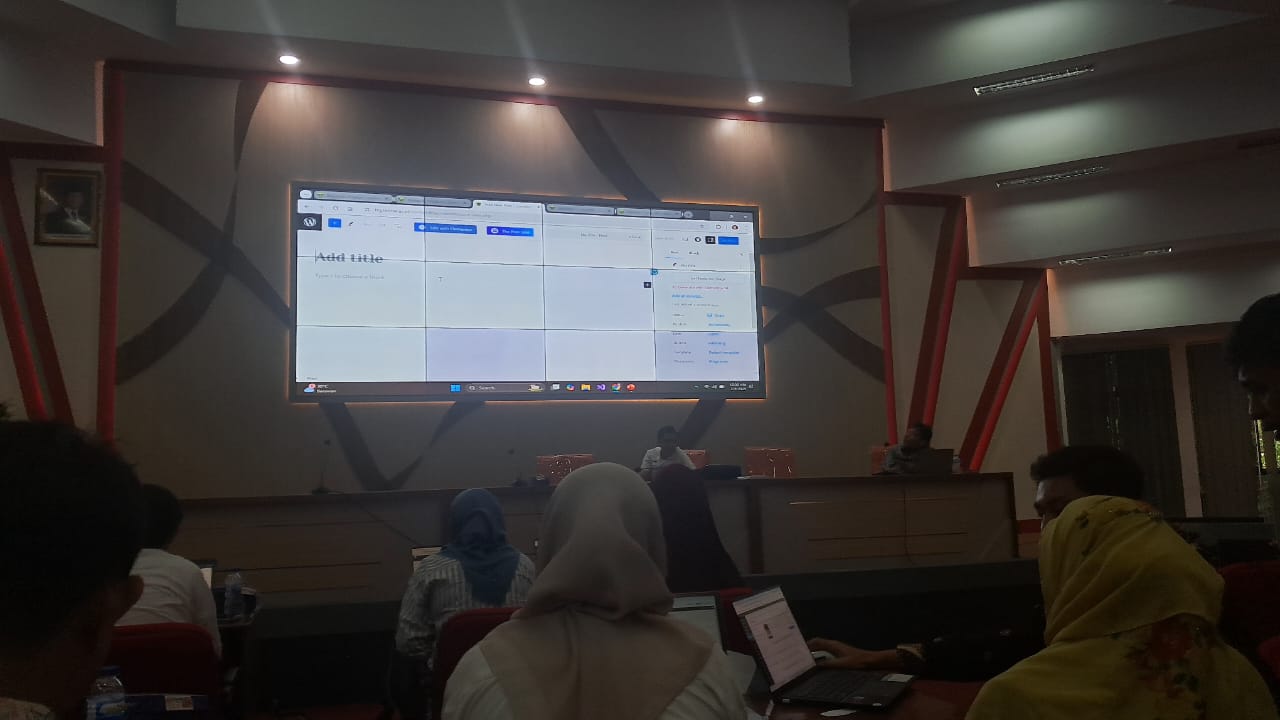
Updating Cultural Tourism Research Group Website
Digital platforms have become increasingly important for universities and research groups to communicate knowledge, share research outputs, and build connections with wider academic and public audiences. Recognizing the importance of an accessible and up-to-date digital presence, a Website Updating activity for the Cultural Tourism Thematic Research Group (TRG Cultural Tourism) was conducted on April 9, 2026, at Universitas Hasanuddin, Makassar, Indonesia. The activity focused on strengthening the management and presentation of information on the research group’s website to ensure that its research activities, publications, programs, and collaborations can be communicated effectively to a wider audience.
The main objective of the activity was to improve the capacity of the research group in managing digital content and maintaining an informative and user-friendly website. The website serves not only as an information platform but also as a digital representation of the group’s academic activities and research profile. Through regular updating, important information about research projects, academic publications, community engagement, collaborations, and other scholarly activities can be made more accessible to researchers, students, institutional partners, policymakers, and the general public.
The activity addressed several important aspects of effective website management. These included content organization, website updating, user-friendly presentation, and digital communication strategies. Attention was given to ensuring that information is accurate, current, and presented in a format that allows visitors to navigate the website easily. The activity also encouraged the use of appropriate visual and narrative approaches to communicate research activities in a way that is scientifically credible while remaining accessible to non-specialist audiences.
Another important focus was the use of digital storytelling to communicate cultural tourism research. Research findings and academic activities can sometimes be difficult for general audiences to understand when presented only through conventional academic formats. By developing concise narratives, relevant visual materials, and accessible descriptions, the website can serve as a bridge between academic knowledge and public understanding. This approach also increases opportunities for research outputs to reach communities and stakeholders who may benefit from them.
The website updating activity further strengthened the visibility of the TRG Cultural Tourism within the broader research ecosystem of Universitas Hasanuddin. A well-managed digital platform can showcase the group’s expertise, research themes, publications, community-based activities, and institutional partnerships. It can also provide an effective channel for communicating opportunities for collaboration with researchers and institutions at national and international levels.
The activity contributes to Sustainable Development Goal (SDG) 4: Quality Education by supporting the dissemination of academic knowledge and making research-based information more accessible to students, researchers, and the wider community. Digital access to research information can complement formal education and encourage broader engagement with knowledge.
The activity also supports SDG 17: Partnerships for the Goals by strengthening digital communication and visibility, which are important foundations for developing academic networks and research collaborations. By making its activities and expertise more visible online, the TRG Cultural Tourism can expand opportunities for knowledge exchange and collaboration with universities, research institutions, communities, and other stakeholders.
Overall, the Website Updating activity represented an important step in strengthening the digital infrastructure and academic visibility of the TRG Cultural Tourism. Through effective content management and accessible digital storytelling, the website can become a dynamic platform for disseminating knowledge, showcasing research contributions, and connecting cultural tourism research with broader academic and societal communities.