
Makassar/Indonesia/12-05-2025/PCD-RG —– When visiting a bustling rural village anywhere in Indonesia, visible progress is usually measured by newly paved roads, sturdy concrete bridges, or clean water facilities. While these physical upgrades undoubtedly make daily life much easier, do they actually empower residents to take full control of their own collective destinies? This vital question lies right at the heart of contemporary social development policy across the vast Indonesian archipelago.
An insightful study offers a fresh perspective on this pressing development dilemma. Published on 12 May 2025 in the SIGn Journal of Social Science by publisher CV. Social Politic Genius (SIGn), the academic article titled “The Concept of Community Empowerment versus Community Advancement: A Comparative Study in the Context of Social Development in Indonesia” dissects why our popular understanding of social progress requires a thoughtful overhaul.
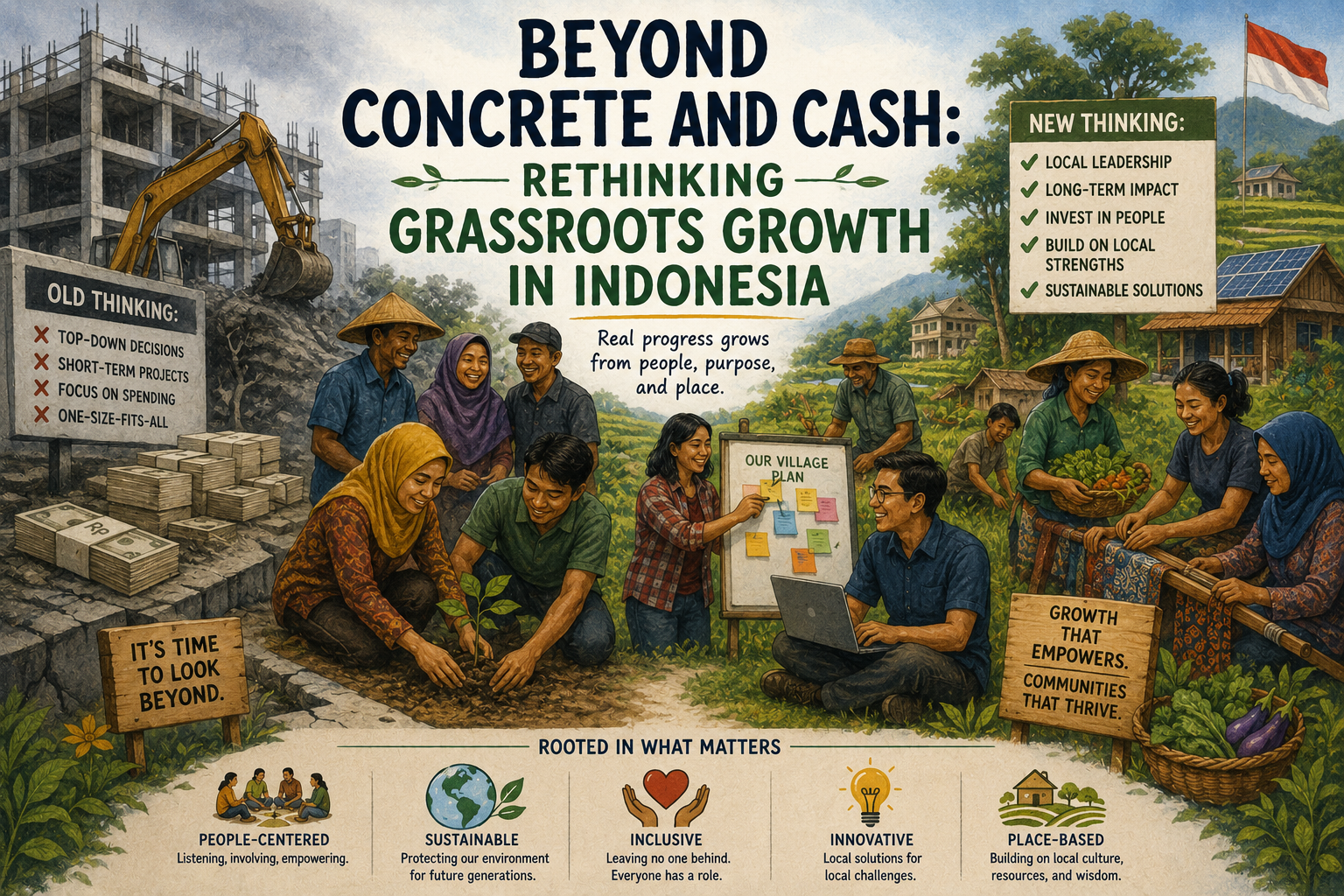
The research highlights that development practitioners, field facilitators, and local government officials frequently confuse two fundamental concepts: community advancement and community empowerment. On one hand, community advancement centers on tangible socio-economic upgrades, physical infrastructure, and top-down service provision. It builds village markets, constructs irrigation canals, or delivers direct financial subsidies. While undeniably useful, this model often treats local citizens as mere passive beneficiaries of external aid. Once external funding stops, infrastructure maintenance frequently stalls, leaving deeper structural issues completely unresolved.
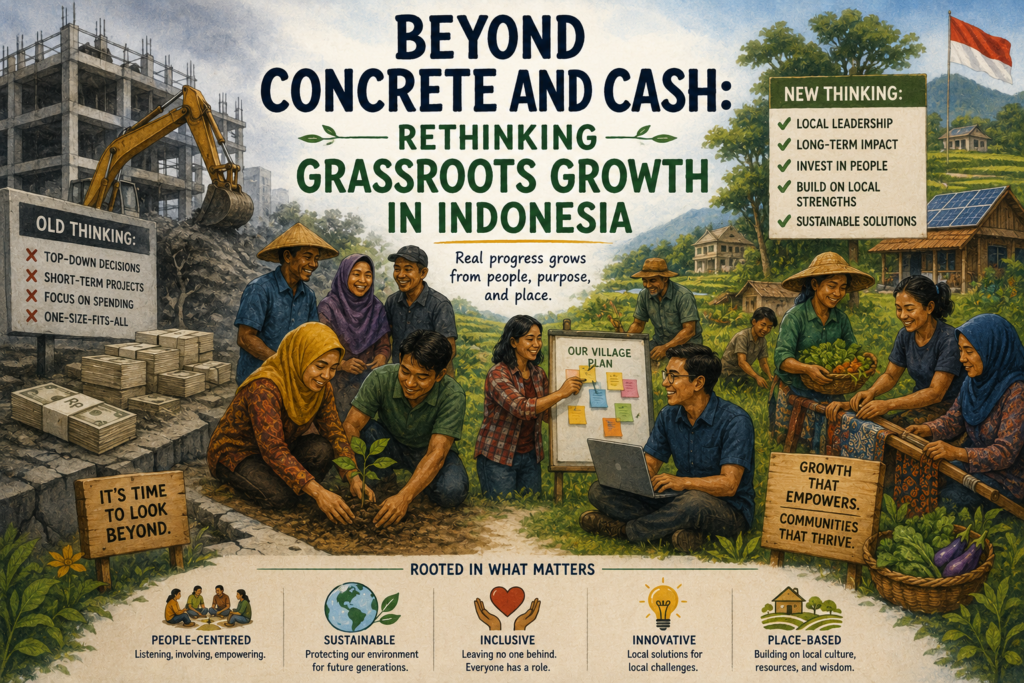
On the other hand, genuine community empowerment focuses primarily on shifting power dynamics, nurturing human agency, and building internal local capacities. Grounded in critical social philosophy, empowerment equips marginalized individuals with critical awareness, managerial skills, and the collective confidence needed to make strategic decisions independently. Instead of relying solely on outside intervention, empowered communities learn to organize themselves, negotiate with authorities, and actively drive their own long-term development choices.
This conceptual distinction is explicitly connected to SDG 1: No Poverty. Eradicating poverty sustainably requires far more than basic financial handouts or physical construction projects; it demands building internal agency so that vulnerable populations can break structural poverty cycles independently. Additionally, advancing SDG 17: Partnerships for the Goals depends on transforming traditional top-down development into equitable, participatory partnerships between civil society, local institutions, and government authorities.
In real-world Indonesian applications—such as the nationwide allocation of Village Funds—hybrid models frequently emerge. Physical works are combined with training programs or village-owned enterprise management. However, without clear conceptual boundaries, community initiatives risk falling into elite capture, where influential local figures dominate decision-making, or project-waiting syndrome, where communities remain passively reliant on future government handouts.
Ultimately, the study emphasizes that meaningful development is never a simple choice between physical hardware and human agency. Real, lasting social transformation occurs only when community advancement builds necessary structural foundations, while community empowerment creates the self-reliant human capacity to steer local progress into a thriving, equitable future.
Reference:
DOI: https://doi.org/10.37276/sjss.v5i2.430
Contact:
Prof. Dwia Aries Tina Pulubuhu
+62 87856272912 (PCD-RG)
dwiatn@unhas.ac.id