

Extreme heat is increasingly recognized as a growing public health concern, particularly in urban settings where dense built environments, limited green spaces, and social inequalities can amplify exposure and health risks. In Indonesia, rising temperatures and more frequent heat events highlight the urgent need to strengthen local preparedness and response systems.
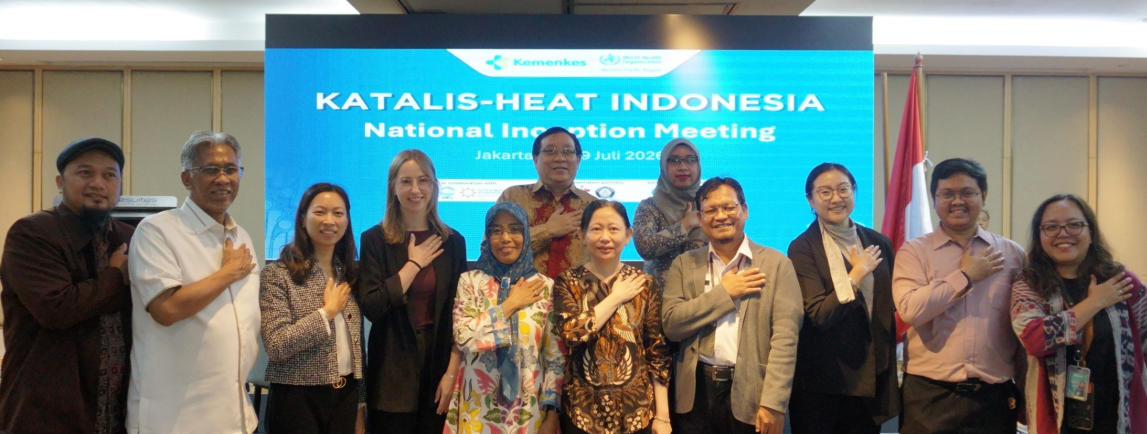
In this context, the activity titled “Conducting Heat Vulnerability Assessments and Building Subnational (Makassar) Capacity to Advance Local Heat-Health Action Planning in Indonesia” was implemented in Makassar City as part of broader efforts to better understand and address the health impacts of extreme heat. The initiative is aligned with the launch of KATALIS-HEAT, a collaborative effort led by WHO Indonesia with national and academic partners to generate evidence and strengthen action on heat-related health risks.
This activity is a WHO pilot project in collaboration with Universitas Hasanuddin under the KATALIS-HEAT initiative, designed to support the development of locally relevant evidence and practical tools for heat-health risk management. Conducted during July–December 2026, the program focuses on strengthening the scientific and institutional foundation needed to inform policy, improve preparedness, and support the development of city-level heat-health action plans.
The main objective of the activity is to develop a heat vulnerability assessment tailored to local conditions in Makassar. This assessment aims to identify populations, locations, and environmental factors that are most at risk of heat-related health impacts. By generating evidence grounded in local realities, the activity supports more targeted and equitable decision-making, enabling stakeholders to design interventions that effectively reduce health risks during periods of extreme heat.
Beyond technical assessment, the pilot project places strong emphasis on capacity building at the subnational level. Local government institutions, researchers, and relevant stakeholders are engaged to strengthen their understanding of heat-health linkages and to translate assessment findings into actionable planning processes. This multisectoral approach is essential, as effective heat-health action requires coordination across public health, urban planning, disaster risk management, and community engagement sectors.
The initiative also seeks to develop a scalable model that can be adapted and replicated in other regions across Indonesia. Makassar serves as a pilot city where methodologies, tools, and lessons learned are tested and refined. These insights will contribute to the broader national effort to build resilience against climate-sensitive health risks and support the expansion of heat-health action planning in other urban areas.
This activity is closely aligned with SDG 3: Good Health and Well-being and SDG 13: Climate Action. It contributes to SDG 3 by strengthening public health protection systems, particularly for populations vulnerable to heat-related illness. At the same time, it supports SDG 13 by enhancing climate adaptation capacity and integrating health considerations into local climate and urban planning processes.
Overall, this pilot initiative represents an important step in bridging scientific evidence, public health practice, and climate adaptation. Through collaboration, capacity building, and locally grounded assessment, the project aims to support Makassar in developing a more resilient, evidence-based, and sustainable heat-health action plan—while also contributing to national and regional efforts to address the growing health impacts of extreme heat.


