
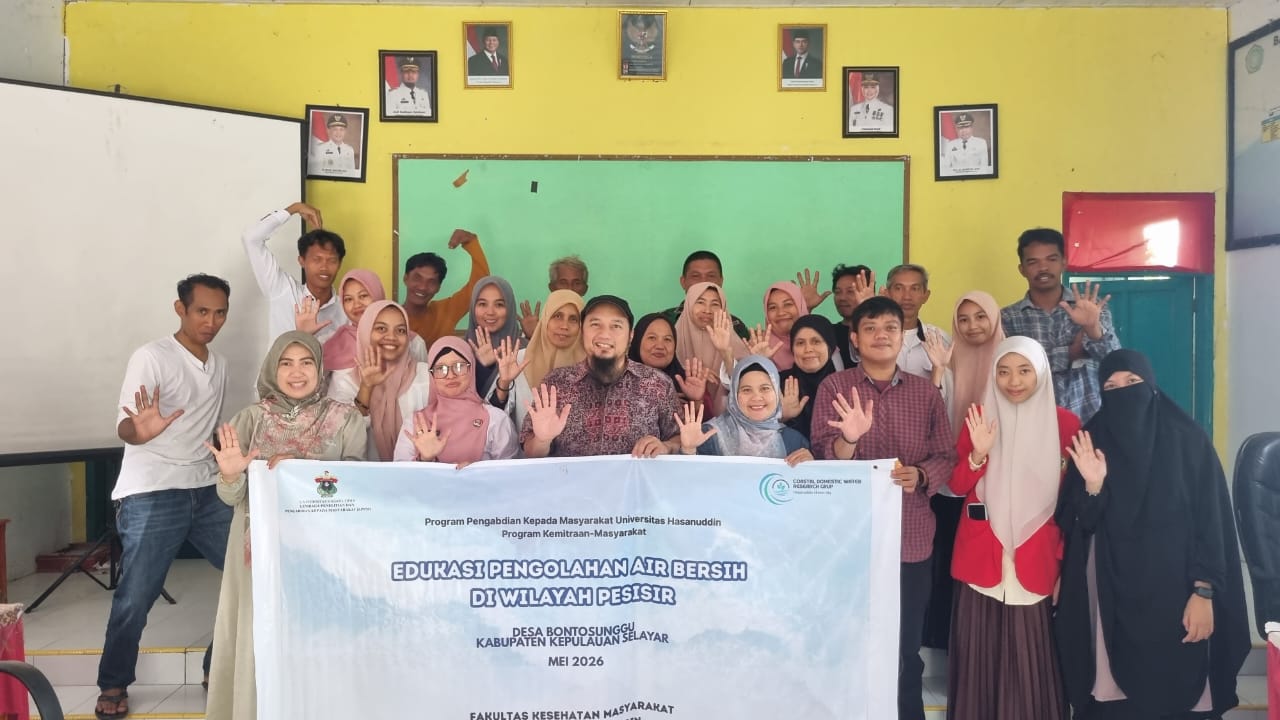

Clean water is essential for protecting public health and improving quality of life, particularly in island communities where access to safe drinking water may be affected by environmental conditions, limited infrastructure, and household-level water treatment practices. To address this challenge, a community-based activity entitled “Application of Filtration Technology and Health Education to Prevent Waterborne Diseases in Bontosunggu Village, Bontoharu District, Selayar Islands Regency” was conducted in Desa Bontosunggu, Kecamatan Bontoharu, Kabupaten Kepulauan Selayar, Sulawesi Selatan.
This activity was implemented on 16 May 2026 and involved 20 participants from the local community. The program aimed to strengthen community capacity in processing water to make it more suitable for consumption through health education and the application of simple filtration technology using locally available materials. By combining practical technology with public health education, this activity encouraged residents to better understand the connection between water quality, sanitation behavior, and disease prevention.
The main objective of the activity was to help the people of Bontosunggu Village improve household water management in a simple, affordable, and sustainable way. Filtration technology was introduced as a practical method to reduce visible impurities, suspended particles, unpleasant odor, and other physical contaminants that may affect water acceptability. The use of local materials was emphasized to ensure that the technology could be easily understood, maintained, and replicated by the community without requiring expensive equipment.
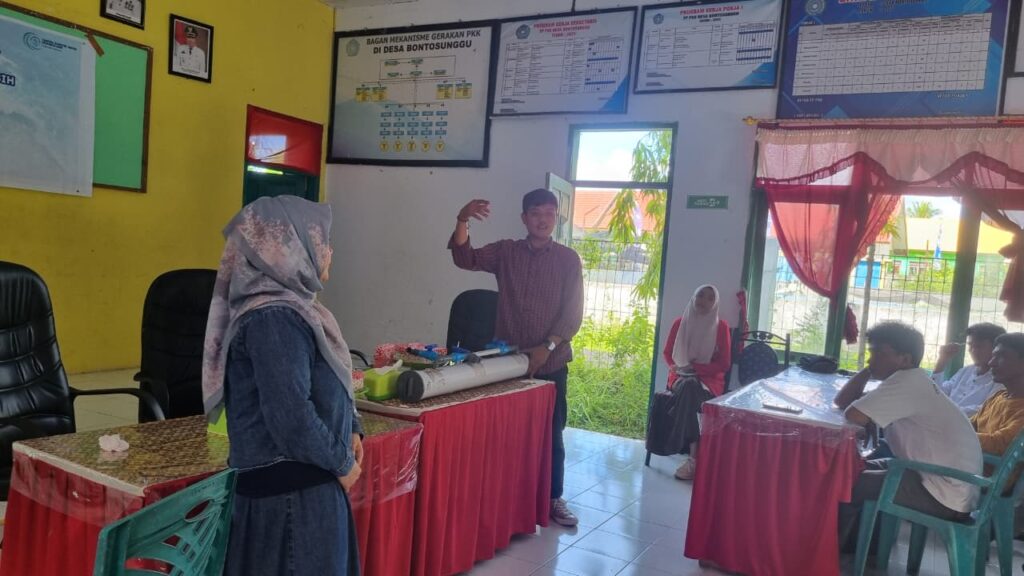
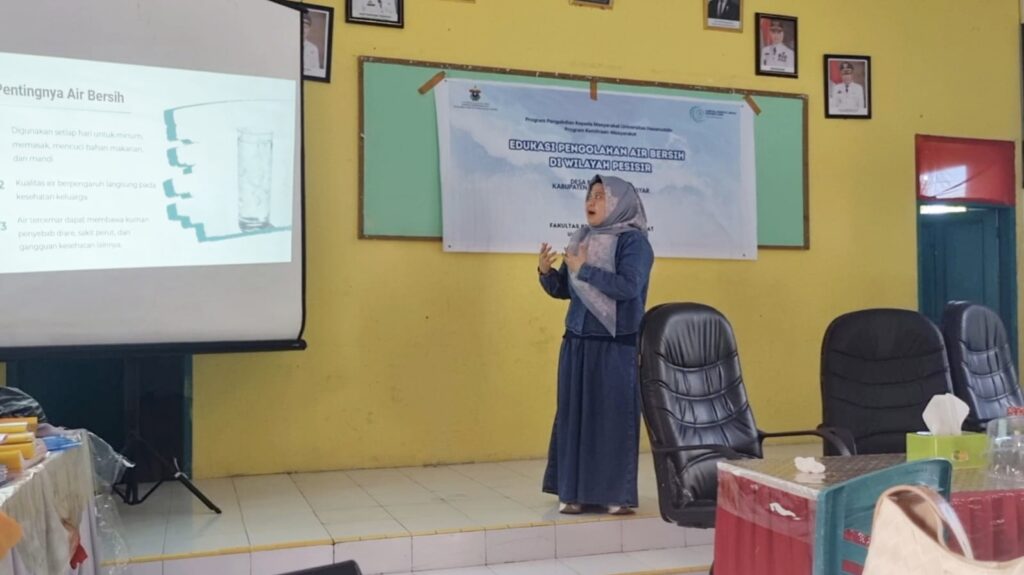
In addition to the technical demonstration, participants received health education on waterborne diseases, including illnesses that may occur when contaminated water is used for drinking, cooking, or daily household needs. The educational session explained the importance of clean water, proper water storage, handwashing practices, and household hygiene. These messages were delivered in simple scientific language so that participants could apply the knowledge directly in their daily lives.
This activity is strongly aligned with the Sustainable Development Goals, particularly SDGs 3: Good Health and Well-being and SDGs 6: Clean Water and Sanitation. The program supports SDGs 3 by promoting preventive efforts against waterborne diseases and encouraging healthier behavior within the community. It also contributes directly to SDGs 6 by improving community access to safer water through appropriate filtration technology and better sanitation awareness.
The activity also highlighted the importance of community empowerment. Clean water interventions are more effective when local residents are not only recipients of technology but also active participants in understanding, applying, and maintaining it. Through direct involvement, the community gained practical skills to identify water quality problems, operate simple filtration systems, and adopt cleaner household water practices.
Overall, this initiative represents an important effort to build a healthier and more resilient community in Bontosunggu Village. By integrating simple filtration technology, local resources, and health education, the program provides a practical model for reducing the risk of waterborne diseases while supporting clean and healthy living behavior in island communities.


