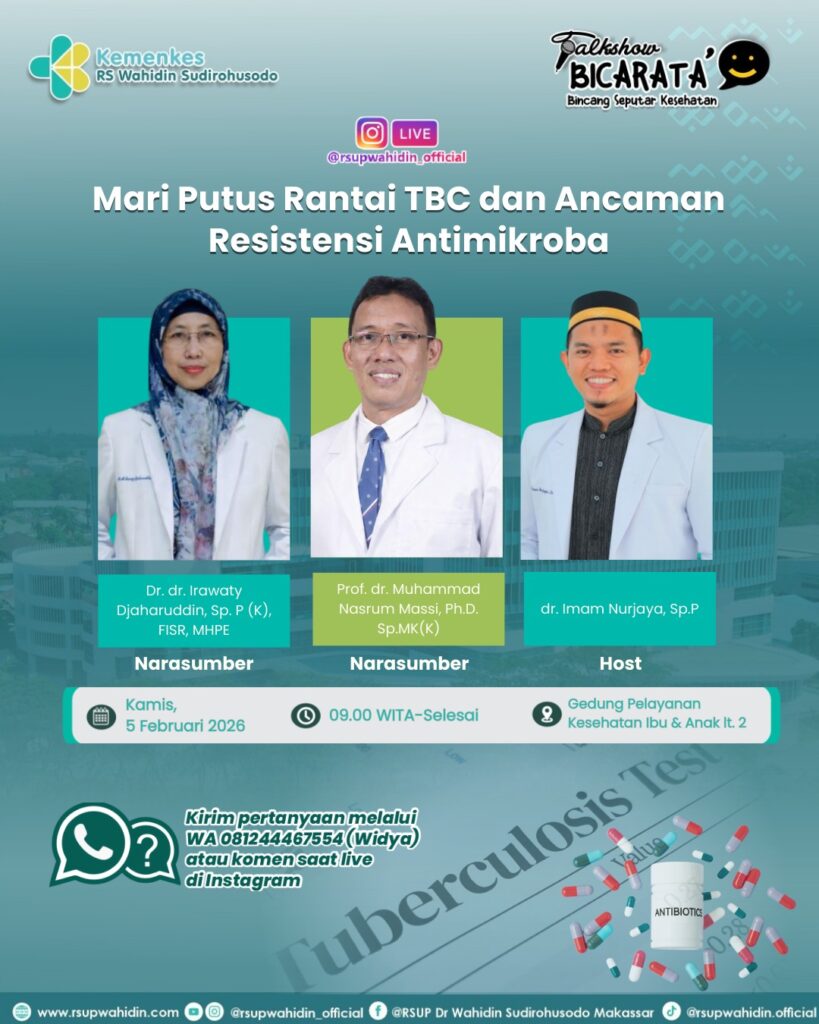
Tuberculosis (TB) is a contagious infectious disease caused by Mycobacterium tuberculosis and remains a major global health concern, including in Indonesia. TB mainly affects the lungs, but it can also spread to other parts of the body such as the lymph nodes, bones, and nervous system. The disease is transmitted through the air, making it easier to spread in crowded environments and places with poor ventilation.
While significant progress has been made in TB control, a growing challenge is the rise of antimicrobial resistance (AMR). This occurs when TB bacteria no longer respond to standard anti-TB drugs, making treatment longer, more expensive, and less effective. One of the most serious forms is multidrug-resistant TB (MDR-TB), which is resistant to the most important first-line TB medications.
Antimicrobial resistance threatens not only the success of TB treatment but also increases illness, death, and the social and economic burden on individuals and communities. The main causes of drug-resistant TB include improper use of medications, patients not completing their treatment, and limited access to accurate diagnosis and effective therapy.
Addressing TB and antimicrobial resistance requires a comprehensive approach. Early detection, correct and responsible use of medicines, strong treatment adherence, and continued innovation in diagnostics and treatment are all essential. Collaboration between healthcare workers, researchers, policymakers, and communities plays a crucial role in preventing the spread of drug-resistant TB and protecting the effectiveness of life-saving antibiotics for future generations.