
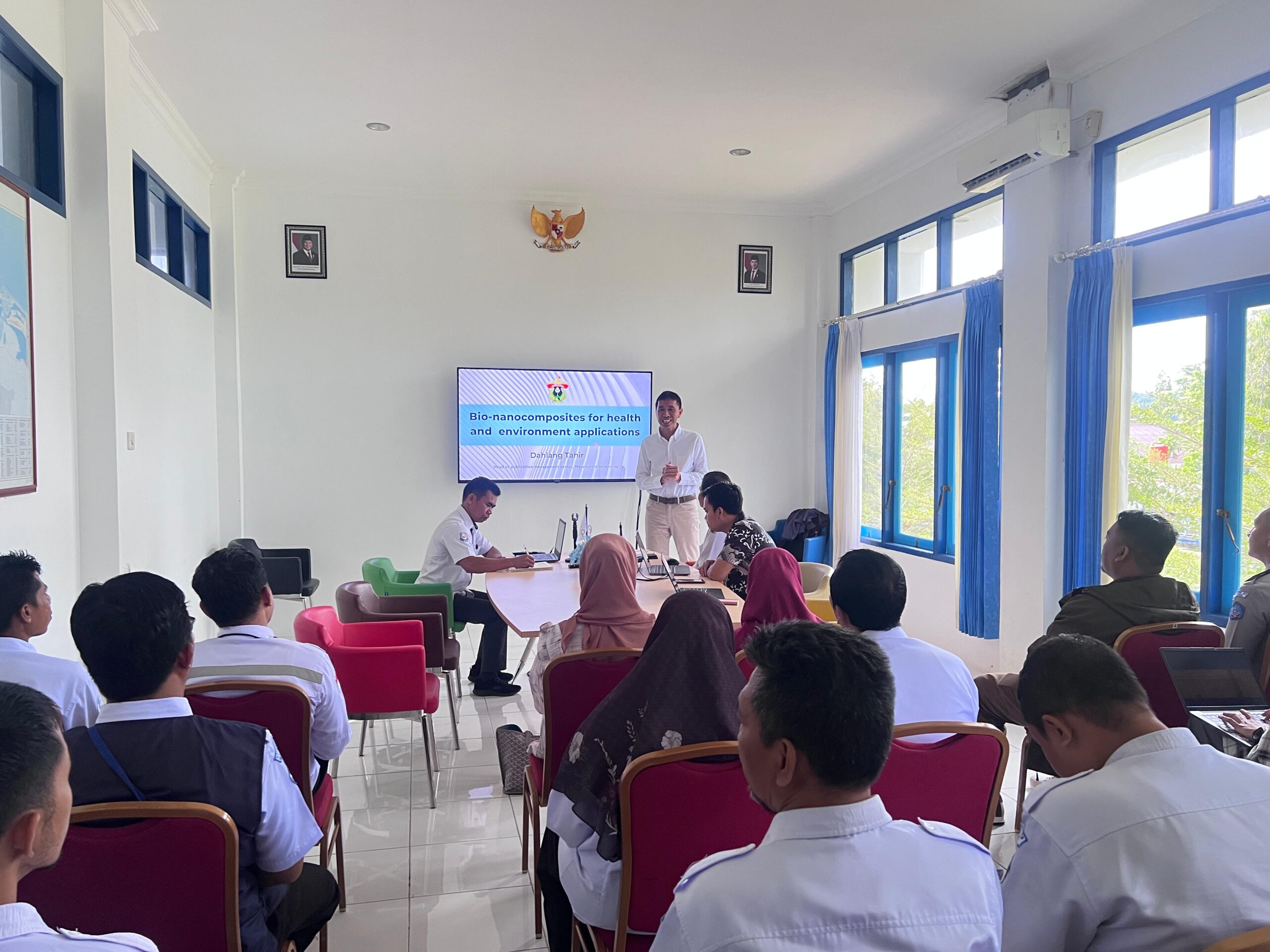

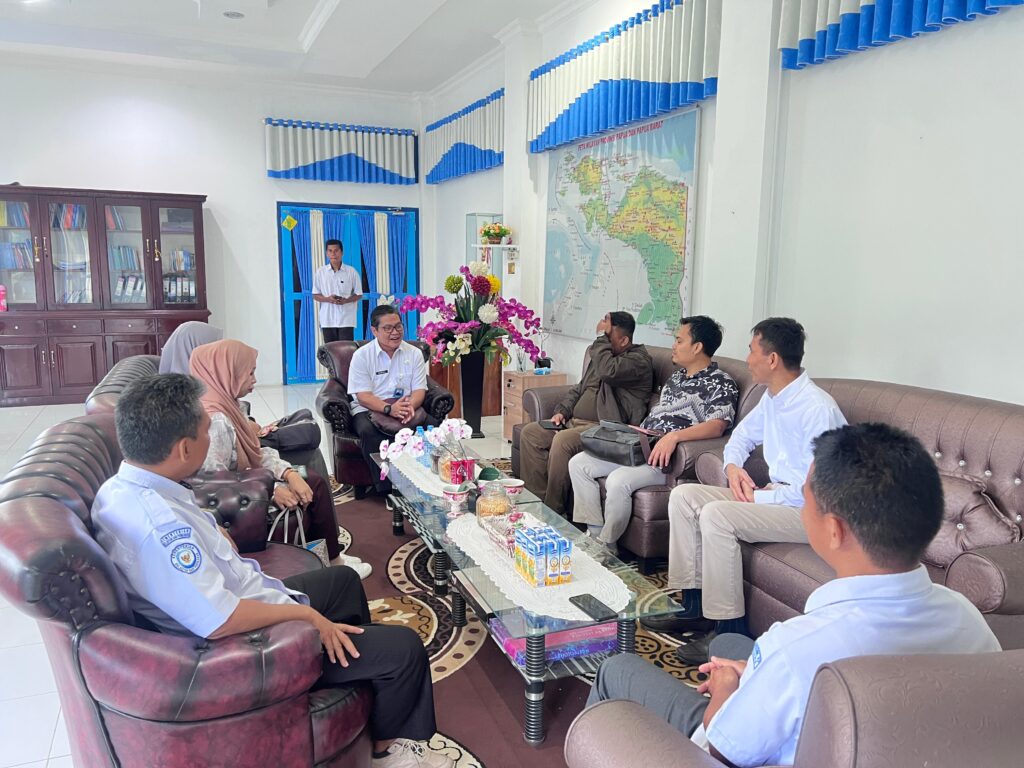
Sorong, Indonesia. April 29, 2025 | BiMin – An academic engagement activity titled “Bionanocomposite for Environmental and Health Applications” was successfully conducted at Sorong Marine and Fisheries Polytechnic. This initiative brought together a focused group of participants consisting of two lecturers and four researchers, creating an intimate yet highly productive environment for scientific exchange and collaboration.
The primary objective of this activity was to promote research in the emerging field of bionanocomposites while fostering stronger collaboration among higher education institutions. Bionanocomposites, which integrate biological materials with nanoscale components, are gaining increasing attention due to their potential to address pressing environmental and health challenges. Through this activity, participants explored recent advancements, shared insights, and discussed practical applications that could contribute to sustainable development.
The discussion emphasized how bionanocomposite materials can be utilized in environmental remediation, such as water purification and pollution control, as well as in healthcare innovations including drug delivery systems and antimicrobial materials. By bridging these two critical sectors—environment and health—the activity highlighted the interdisciplinary nature of modern scientific research and its capacity to generate impactful solutions.
Importantly, this initiative aligns closely with several Sustainable Development Goals (SDGs). It supports SDG 4: Quality Education, as the activity serves as a platform for knowledge sharing, capacity building, and academic enrichment among researchers and educators. The exchange of ideas and expertise strengthens educational quality and encourages innovation-driven learning. The discussion also touched on how research in environmental and health-related fields may contribute to environmental sustainability under SDG 14 (Life Below Water), particularly through interdisciplinary research collaboration.
Furthermore, the activity strongly reflects SDG 17: Partnerships for the Goals, as it emphasizes collaboration between academics and researchers. By fostering partnerships within the academic community, the initiative encourages joint research efforts, resource sharing, and the development of interdisciplinary approaches that are essential for addressing global challenges. Such collaboration is vital in ensuring that scientific advancements are effectively translated into real-world applications.
Throughout the session, participants engaged in meaningful discussions, identified potential research opportunities, and explored avenues for future collaboration. The small number of participants allowed for in-depth interaction and personalized knowledge exchange, which enhanced the overall effectiveness of the activity.


