
Makassar, Indonesia June 27 2025/APHREG. For many rural families, livestock are more than animals. Cattle, goats, and buffaloes can represent income, savings, food security, and even a family’s financial safety net. When disease strikes, the impact can quickly move beyond animal health and become a serious economic problem.
This issue was explored in a scientific article titled “Foot and Mouth Disease Outbreak Public Awareness: A Study of Knowledge, Attitudes and Practices of Farmers in Baring Village, Pangkajene and Islands Regency, South Sulawesi, Indonesia.” The article was published in the Journal of Animal Health and Production by ResearchersLinks Ltd on June 27, 2025. The study involved 52 livestock farmers and examined what they knew about Foot and Mouth Disease (FMD), how they responded to outbreaks, and what preventive measures they actually practiced.
FMD is a highly contagious viral disease that affects cloven-hoofed animals such as cattle, goats, sheep, and pigs. It can cause fever, excessive salivation, mouth lesions, foot wounds, and lameness. Although adult animals do not always die from the disease, FMD can sharply reduce milk production, weight gain, fertility, and overall livestock performance.
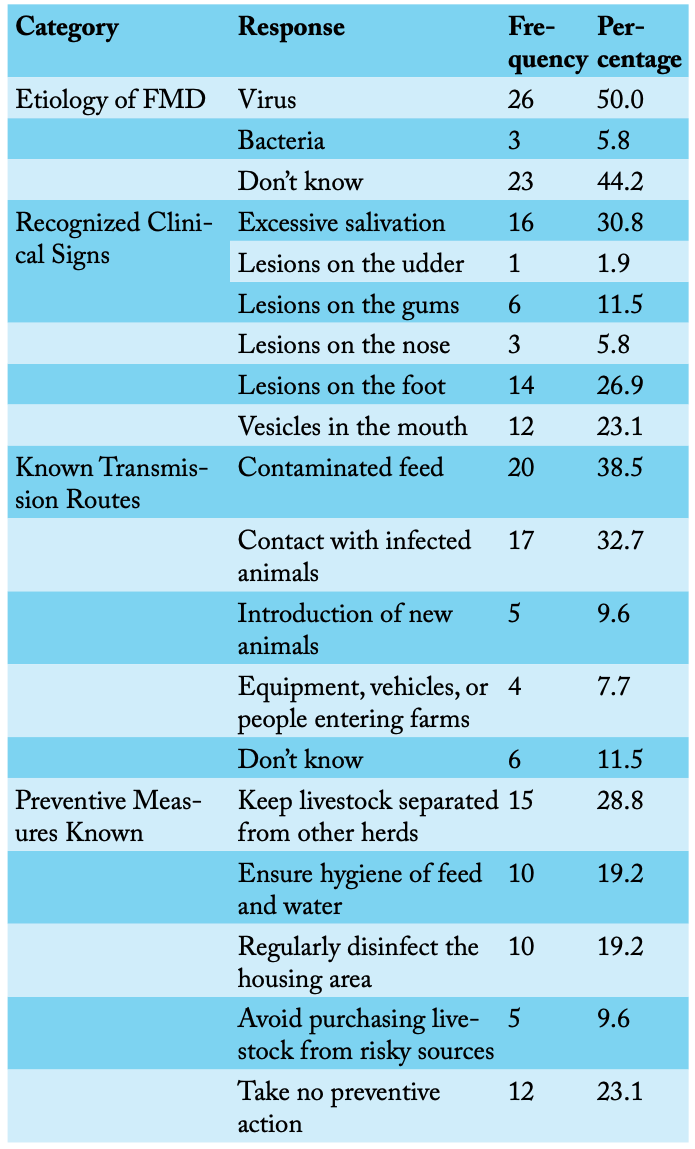
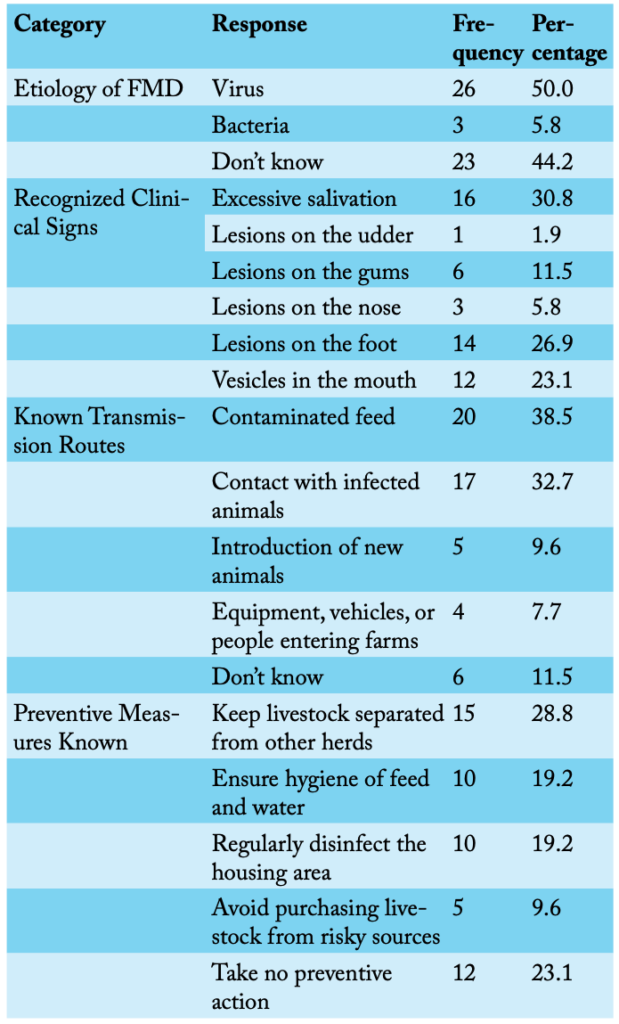
The study found an important problem: many farmers still depended on informal information. About 39% received FMD information from relatives, neighbors, or friends, while 33% relied on community leaders. Only 10% consulted veterinarians or animal health workers. Half of the farmers correctly knew that FMD is caused by a virus, but many were still unsure about its cause and transmission.
Knowledge did not always translate into action. Some farmers separated sick animals, maintained feed and water hygiene, or disinfected cages. However, about 23% reported taking no preventive action. Even more concerning, only around 11% reported FMD cases to veterinary authorities.
The economic consequences were also serious. Around 65% of respondents had experienced FMD in their livestock, 21% reported livestock deaths, and 75% had sold infected animals at lower prices. Meanwhile, more than 92% had no livestock insurance. This means that a disease outbreak could directly threaten household income and financial stability.
These findings connect clearly with Sustainable Development Goal 1 (SDG 1): No Poverty. Reducing poverty is not only about increasing income; it also means protecting vulnerable families from sudden financial shocks. Better farmer education, easier access to veterinary services, stronger biosecurity, early disease reporting, and affordable livestock insurance can help protect both animals and livelihoods.
The lesson from Baring Village is simple: protecting livestock health is also a way of protecting families from poverty.
Reference
DOI: https://dx.doi.org/10.17582/journal.jahp/2025/13.3.546.554
Contact:
Drh. Irwan Ismail, M.Si
+62 852-5546-6120
irwanismail@unhas.ac.id