Makassar, Indonesia, November 02 2026/albiorg/- The rising threat of drug-resistant bacterial strains has created an urgent demand for novel antibiotics. To tackle this global challenge, researchers are increasingly turning to unique natural sources, aligning with Sustainable Development Goal 3 (Good Health and Well-being) and Goal 14 (Life Below Water) to harness marine biodiversity for advanced medical solutions.
A breakthrough study titled “Lyngbyazothrins A-D, Antimicrobial Cyclic Undecapeptides from the Cultured Cyanobacterium Lyngbya sp.”, published in the Journal of Natural Products by the American Chemical Society and American Society of Pharmacognosy on July 21, 2009, sheds light on this potential. Authored by Elmi N. Zainuddin and colleagues, the research investigates the untapped pharmaceutical power of cyanobacteria.
Cyanobacteria are well known for producing diverse bioactive metabolites that serve as defensive mechanisms in their ecological niches. In this study, the research team successfully cultivated the cyanobacterium Lyngbya sp. and extracted four novel cyclic undecapeptides, named lyngbyazothrins A, B, C, and D. Using advanced spectroscopic techniques like nuclear magnetic resonance (NMR) and mass spectrometry, the scientists mapped out the complex chemical structures of these compounds, which feature unusual amino acids such as 4-methoxyhomophenylalanine and a specialized undecanoic acid derivative.
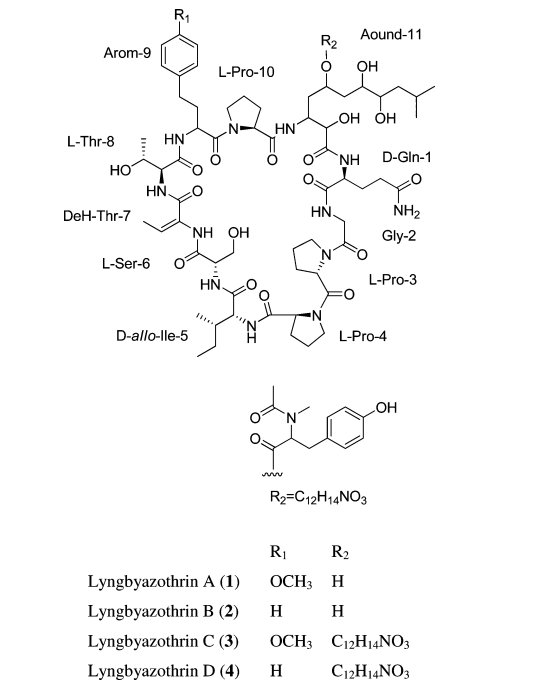
When tested for biological activity, the results were highly promising. While lyngbyazothrins A and B showed minimal effects, the binary mixture of lyngbyazothrins C and D demonstrated clear antimicrobial activity against several stubborn bacterial strains, including Bacillus subtilis, Escherichia coli, Pseudomonas aeruginosa, and Serratia marcescens. The findings suggest that specific chemical additions, such as the acyl residue at C-5 of the structure, play a vital role in enhancing their potency against both Gram-positive and Gram-negative bacteria.
Ultimately, this study bridges marine biotechnology with modern healthcare, demonstrating how aquatic microorganisms can fuel innovation in drug discovery. By expanding our therapeutic arsenal against resistant pathogens, such scientific explorations pave the way for a healthier and more resilient future.
Dr.rer.nat. Elmi Nurhaidah Zainuddin, DES.
elmizainuddin@unhas.ac.id