Makassar, Indonesia, 19 November 2026/albiorg/- From the sushi rolls on our dinner plates to the thickeners in our cosmetics and pharmaceuticals, seaweed has quietly become a global superstar. With the world’s seaweed market projected to reach USD 17.8 billion by 2032, coastal communities across Asia, Africa, and beyond rely heavily on ocean farming for their livelihoods. Yet, beneath the waves, a silent crisis is threatening this blue economy. Just like crops on land, farmed seaweeds are falling sick at alarming rates—putting harvests, coastal incomes, and ocean health at serious risk.
A comprehensive study titled “Reported seaweed diseases in aquaculture: a systematic review”, published in the journal Aquaculture International by Springer Nature on 9 February 2026, sheds crucial light on this growing underwater threat. By examining decades of global research from the late 1980s to 2025, the authors reveal that at least 16 distinct diseases are now affecting commercially farmed seaweeds worldwide. In warm tropical waters—including major producing nations like Indonesia and the Philippines—the most notorious culprit is “ice-ice” disease, which turns vibrant seaweed branches pale, translucent, and fragile before they break apart. Meanwhile, farmers in cooler waters across East Asia and Europe battle a variety of rot and spot diseases that destroy seaweed blades before harvest.
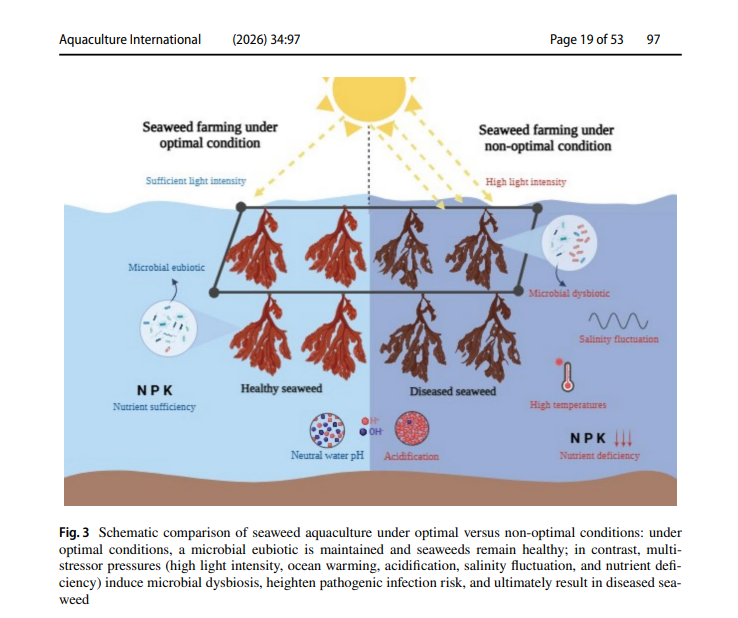
Why are these outbreaks becoming so frequent? The review highlights a perfect storm of biological and environmental pressures. As seaweed farms expand and intensify, extreme weather linked to climate change—such as marine heatwaves, sudden shifts in ocean salinity from heavy rains, and water acidification—stresses the seaweeds. Weakened by environmental stress, the seaweeds lose their natural chemical defenses, allowing opportunistic bacteria, parasites, and viruses to invade. The economic toll is staggering: outbreaks can wipe out entire harvests, degrade the quality of valuable extracts like carrageenan, and cost farming communities millions of dollars annually.
Safeguarding these underwater crops directly supports Sustainable Development Goal 14 (SDG 14): Life Below Water, which calls for the conservation and sustainable use of our oceans and marine resources. Healthy seaweed farms do not just produce food and raw materials; they absorb excess nutrients, oxygenate coastal waters, and support marine biodiversity. When diseases devastate farms, unsustainable quick fixes—like dumping infected seaweed back into the sea or overusing chemical fertilizers—can further harm marine ecosystems.
Fortunately, science is paving the way for smarter, eco-friendly solutions. The researchers emphasize strengthening farm biosecurity, breeding genetically diverse and disease-resistant seaweed varieties, and using natural seaweed extracts as “vaccines” to boost crop immunity. Even more exciting, emerging technologies like artificial intelligence, underwater sensors, and drone imaging can now detect early signs of sickness before the human eye can see them. By combining modern innovation with strong global collaboration, we can keep our underwater forests thriving for generations to come.
Dr.rer.nat. Elmi Nurhaidah Zainuddin, DES.
elmizainuddin@unhas.ac.id