As the global push for carbon neutrality accelerates, deploying sustainable power in densely populated urban environments remains a significant logistical hurdle. Traditional flat silicon solar panels, while highly effective in open fields, are often too heavy and structurally demanding for standard city rooftops. Furthermore, their rigid design requires specific sun angles to achieve optimal efficiency, making them less than ideal for the shadowed, vertical landscapes of modern metropolises. To overcome these critical limitations, an extraordinary leap in photovoltaic engineering has emerged from the heart of Japan.
To actively contribute to this technological paradigm shift, a dedicated academic engagement was recently conducted. The operational details of this collaborative event encompass the Number of participants: 20 researcher (collaborating with the i-PERC UEC team) and It was attended by TRG Leader, Azwar Hayat, Ph.D. By integrating into the dynamic research environment at the University of Electro-Communications (UEC) in Tokyo, the explored a groundbreaking joint venture spearheaded by the renowned Prof. Shuzi Hayase (AFM-RG External Collaborator) at i-PERC (Innovation Research Center for Preventive Environmental and Energy Chemistry) in close partnership with the Japanese technology giant, Ushio Inc. Prof. Shuzi Hayase is active collaborator with AFM-RG in Hasanuddin University.
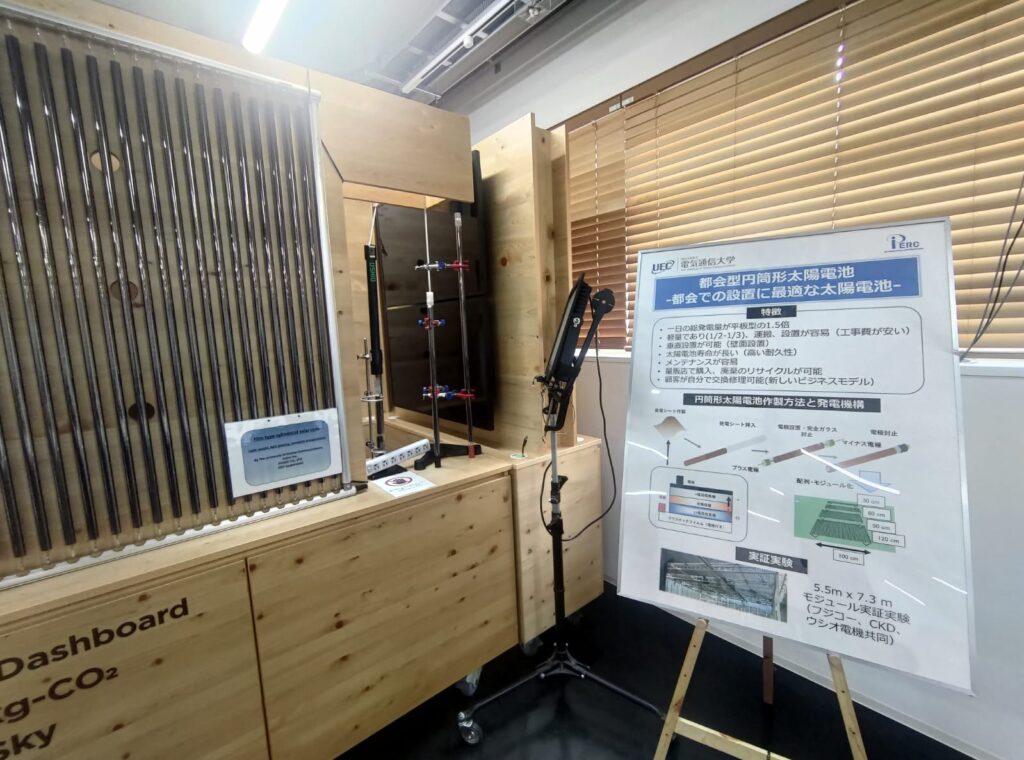
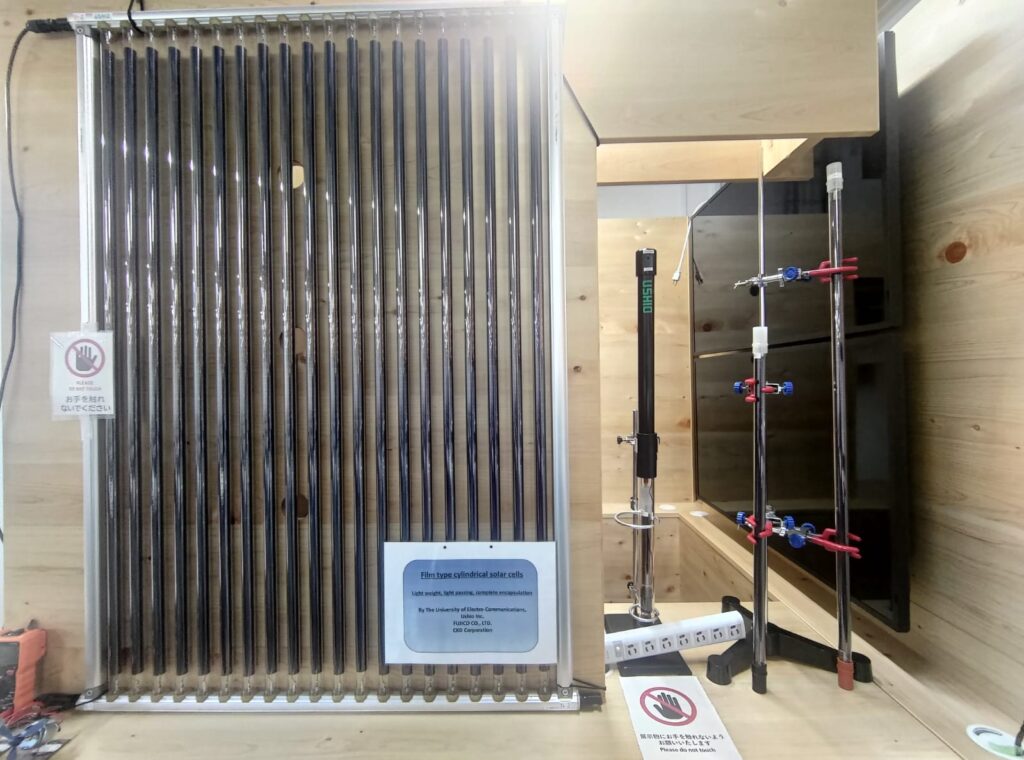
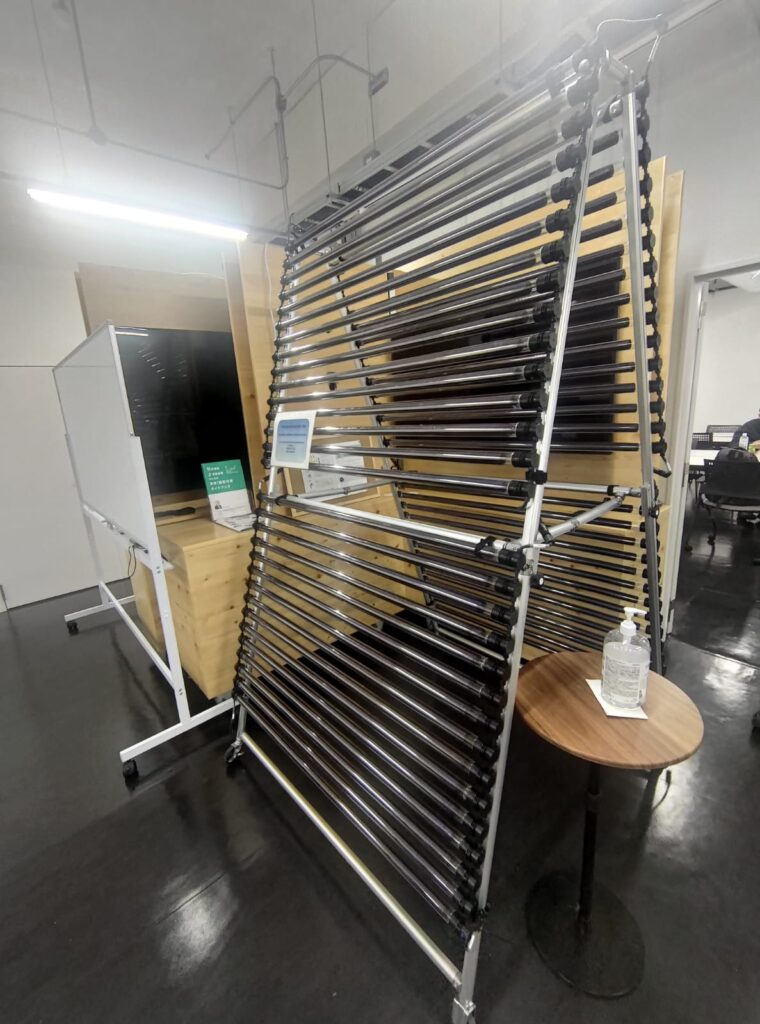
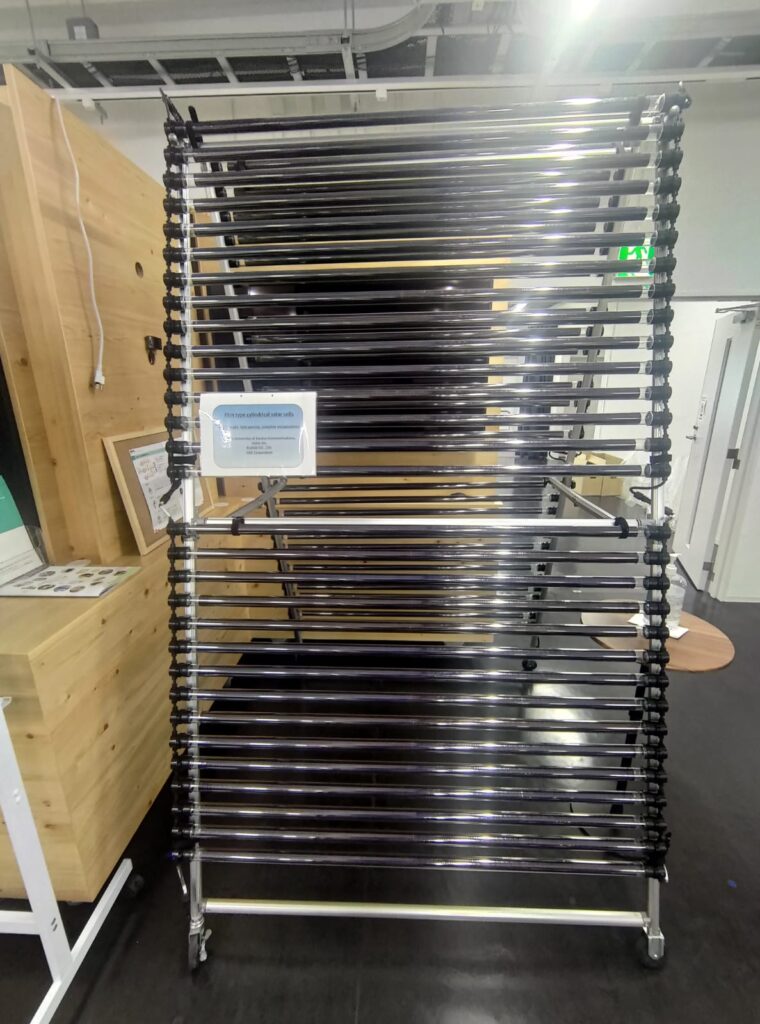
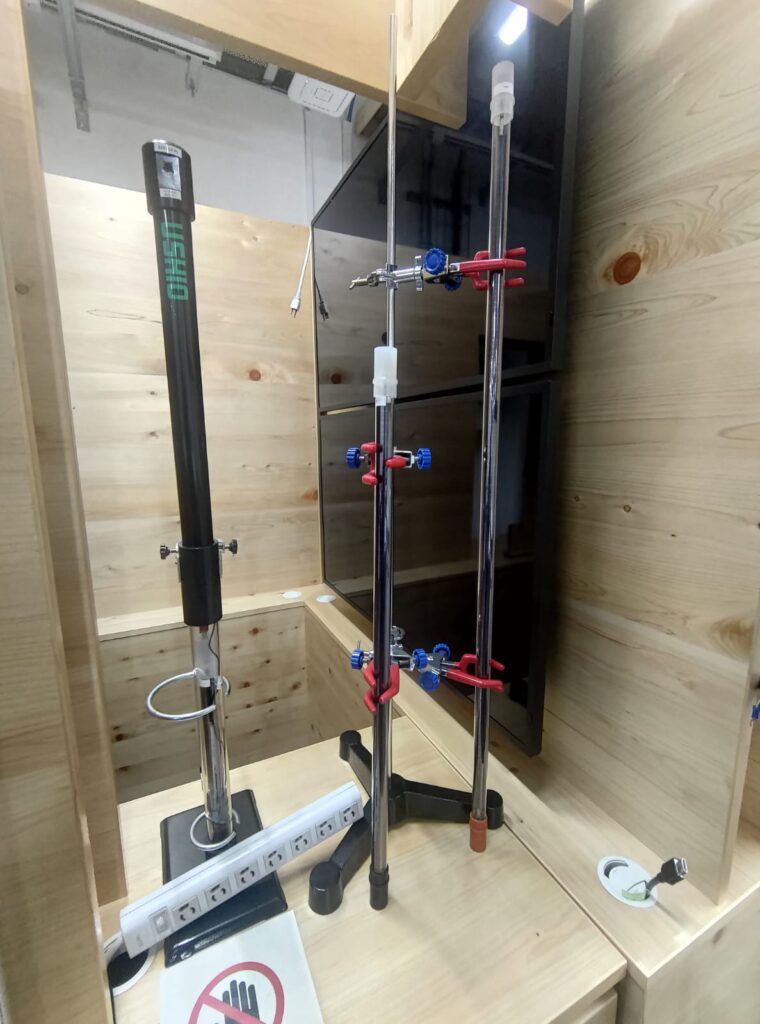
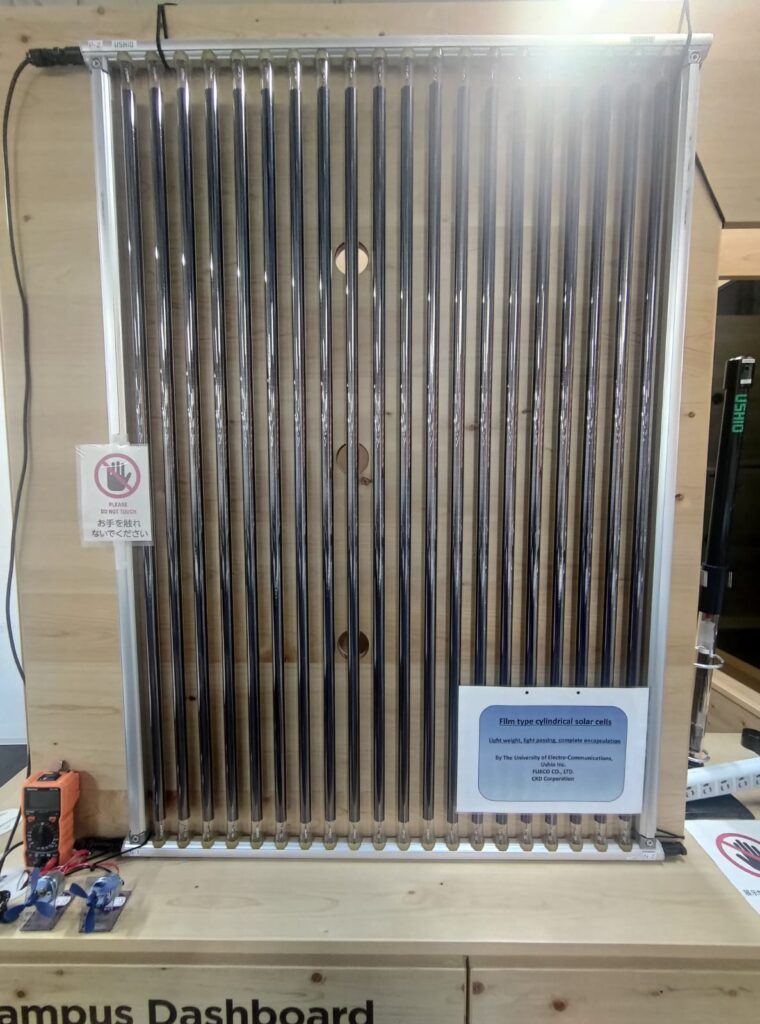
The centerpiece of this revolutionary collaboration is the development of “Film-type Cylindrical Solar Cells.” Unlike conventional, bulky solar modules, these innovative devices consist of advanced, highly flexible photovoltaic films meticulously encapsulated within lightweight, transparent cylindrical tubes. Scientifically, this unique geometry provides a massive advantage: omnidirectional light absorption. Because of their curved tubular shape, these solar cells can effortlessly capture sunlight from any angle, including scattered and reflected light bouncing off surrounding city structures. Moreover, weighing only a fraction of traditional panels, these cylinders can be easily mounted vertically on skyscraper facades, effectively turning ordinary city walls into massive, active power generators without requiring expensive structural reinforcements.
This visionary project is not just a triumph of materials science; it is deeply anchored in the United Nations Sustainable Development Goals. By reimagining how solar power can be harvested in space-constrained cities, this initiative powerfully drives forward SDG 7: Affordable and Clean Energy. It promises to expand the reach of renewable power generation into urban centers where it is consumed the most. Furthermore, the collaboration is a stellar embodiment of SDG 9: Industry, Innovation and Infrastructure. Moving away from heavy, rigid panels to these highly adaptable, mass-producible cylindrical modules represents the exact kind of resilient, innovative infrastructure required to upgrade our urban environments and build the smart, eco-friendly cities of tomorrow.
Ultimately, the successful prototyping and continued refinement of these cylindrical solar cells mark a crucial milestone in renewable energy architecture. Through dedicated international academic exchange and industrial partnership, this innovation provides a highly practical, aesthetically pleasing, and remarkably efficient blueprint for powering the sustainable urban landscapes of the future.