
Tracking Invisible Vectors: A One Health Assessment of Environmental Microplastics in Honey
Rize, Turkiye April 14 2026 /Womenhealth/– In an era where anthropogenic pollution spans across every natural ecosystem, understanding the subtle pathways of environmental contaminants has become paramount for global public health and ecological preservation. On April 14, 2026, an international collaborative review was successfully published in the Kafkas Universitesi Veteriner Fakultesi Dergisi, led by researcher Burhan Başaran alongside co-authors Andi Nilawati Usman, Mükerrem KAYA, and Güzin KABAN. This scientific initiative brought together expertise from Recep Tayyip Erdogan University and Atatürk University in Türkiye, as well as Hasanuddin University in Indonesia. Grounded in a comprehensive analysis of 13 global studies, the research investigates the occurrence, physical properties, and polymer profiles of microplastics contaminating honey across diverse geographical regions. By bridging environmental science, apicultural health, and human toxicology, the study underscores the critical necessity of evaluating food safety through an integrated One Health framework.
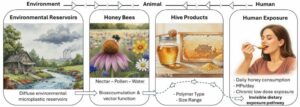
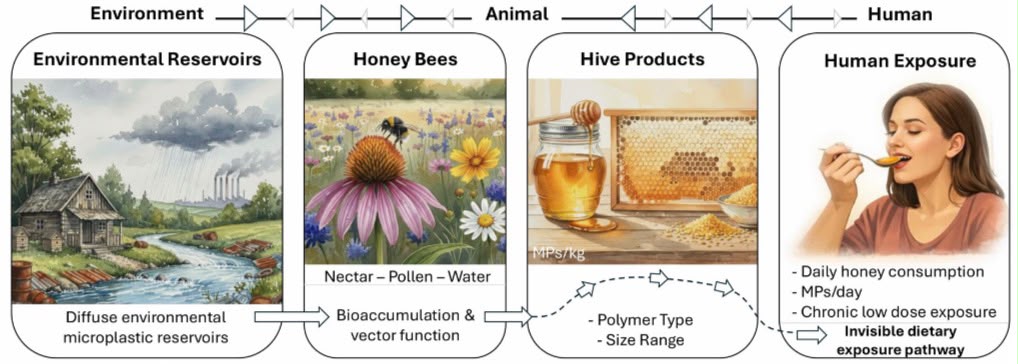
Honey represents a unique natural matrix because its production relies entirely on the continuous interactions between honeybees (Apis mellifera) and their surrounding habitats. As honeybees forage for nectar, pollen, and water, they inadvertently collect airborne and surface microplastics—predominantly fibers and fragments made of polyethylene (PE), polypropylene (PP), and polyethylene terephthalate (PET). These microparticles are subsequently transported into hives and transferred directly into honey, turning bees into active biological sentinels of environmental pollution. Beyond reflecting environmental contamination, microplastics pose toxicological risks to honeybees themselves by inducing intestinal dysplasia, altering gut microbiota, impairing cognitive foraging behavior, and weakening immune responses against viral pathogens. When humans consume contaminated honey, these invisible particles enter the dietary chain, contributing to cumulative dietary exposure that may trigger oxidative stress, systemic inflammation, or cellular disruption.
This initiative directly aligns with several United Nations Sustainable Development Goals (SDGs). Most prominently, it advances SDG 1: No Poverty by promoting sustainable apiculture, protecting bee health, and safeguarding rural beekeepers’ livelihoods against environmental degradation. It directly contributes to SDG 4: Quality Education by generating open-access, science-backed knowledge to elevate public awareness regarding plastic pollution and human health risks. Furthermore, the study exemplifies SDG 17: Partnerships for the Goals through its cross-border academic collaboration between Turkish and Indonesian institutions.
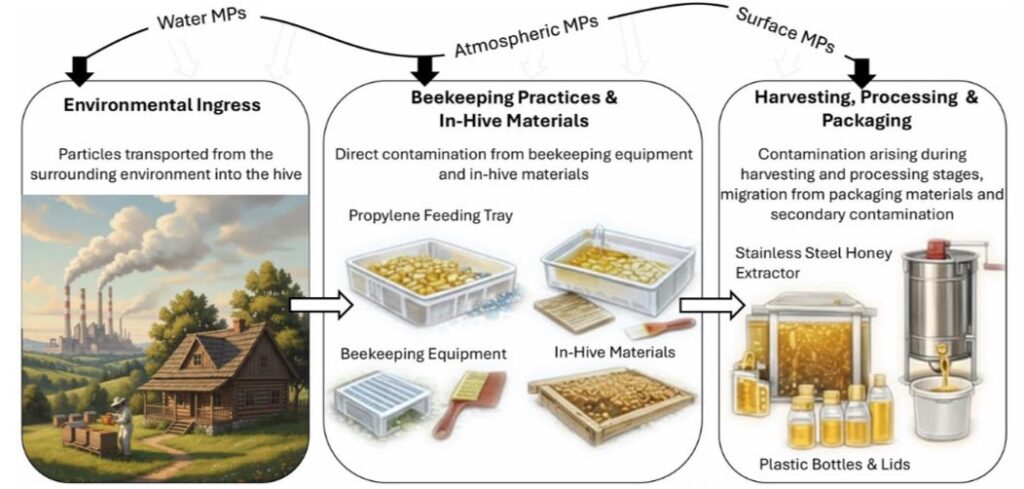
The project synthesized extensive scientific literature published through late 2025 to establish baseline daily intake models and highlight key methodological gaps in current risk assessment protocols. By demonstrating how localized environmental pollution reaches the human dinner table through biotic vectors, the study advocates for standardized analytical frameworks, harmonized microplastic detection protocols, and stricter regulations on plastic usage in agricultural supply chains. Ultimately, safeguarding honey purity requires holistic policy actions that protect ecosystem integrity, animal well-being, and human health simultaneously.
References
DOI:
https://doi.org/10.9775/kvfd.2026.36351
Contact:
Dr. Andi Nilawati Usman
+62 852-4009-3168
andinilawati@pasca.unhas.ac.id