Precision Immunonutrition: Advancing Public Health and Cellular Resilience
In conclusion, modulating immunity through targeted bioactive compounds represents a powerful frontier in modern healthcare. By translating complex molecular interactions into understandable narrative insights, this event reinforces the vital role of collaborative science in building resilient communities worldwide.
In summary, this activity, titled Translational Immunonutrition and Precision Medicine, successfully fulfilled its objective to explore the molecular mechanisms of immunonutrients and translate precision nutrition research into practical clinical and public health applications. Executed on January 15, 2026, at Universitas Padjadjaran, Bandung, Indonesia, the event brought together a total of 150 participants. The program was made possible through key international and institutional partnerships, notably with the University of Bari (Italy), alongside Universitas Sumatera Utara, Hasanuddin University, and State Islamic University of Sunan Kalijaga. With active student involvement from Michle William Tan and Felice Chrismary Lu, the event explicitly addressed and contributed to SDG 1 (No Poverty), SDG 4 (Quality Education), and SDG 17 (Partnerships for the Goals).
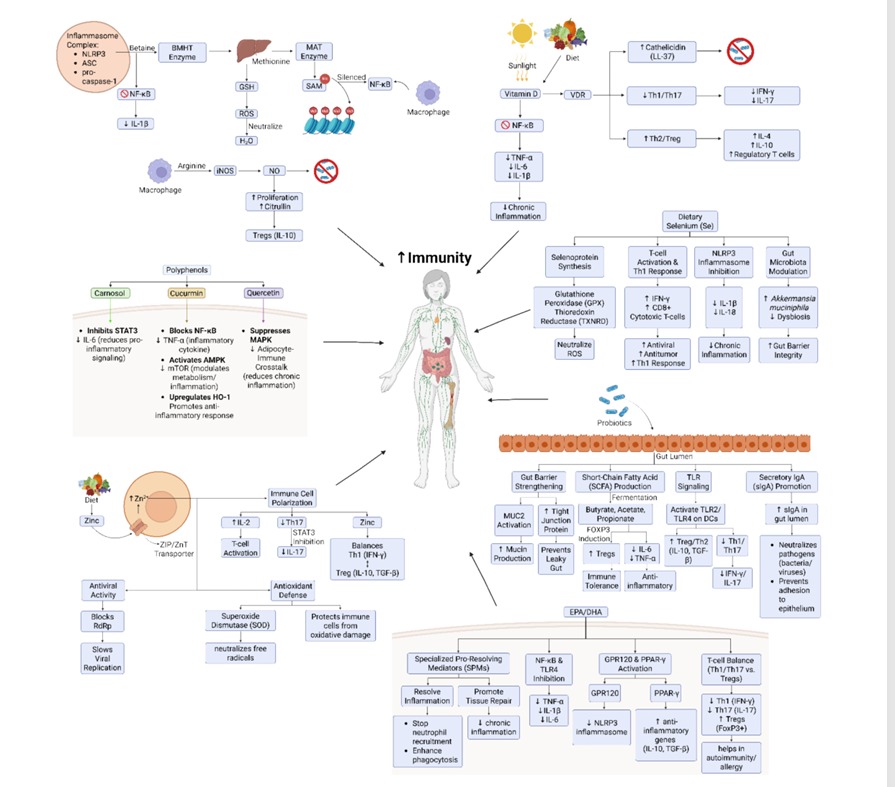
The intricate interplay between nutrition and human immunology has entered a transformative era, shifting from generic dietary recommendations toward precision health frameworks. To address the growing global burden of chronic inflammation, infectious diseases, and metabolic disorders, our institution organized an international academic initiative titled “Translational Immunonutrition and Precision Medicine”. Held at Universitas Padjadjaran, Bandung, Indonesia, this activity served as a collaborative benchmark for integrating multi-omics technologies, molecular pharmacology, and functional food development into actionable public health solutions.
Objective & Event Overview
The primary objective of this event was to explore the mechanistic pathways of key immunonutrients—such as omega-3 fatty acids, zinc, selenium, polyphenols, and probiotics—in modulating immune cell responses and gut barrier integrity. By bringing together leading researchers, medical practitioners, and students, the program aimed to foster cross-disciplinary strategies that bridge basic biological sciences with clinical applications. To ensure comprehensive dissemination and high-level dialogue, the event successfully gathered 150 participants, including clinical researchers, academics, and graduate students. Executed on January 15, 2026, the agenda featured interactive scientific symposia, research presentations, and strategic workshops focused on personalizing therapeutic nutrition.
Strategic Partnerships and Impact
International collaboration was central to the success of this initiative. Key international partners included the Department of Biosciences, Biotechnologies and Biopharmaceutics at the University of Bari, Italy, alongside prominent national academic entities such as Universitas Sumatera Utara, Hasanuddin University, and State Islamic University of Sunan Kalijaga. Active contributions were also made by dedicated student researchers, including Michle William Tan and Felice Chrismary Lu, who presented critical evidence on nutrient-driven immune cell differentiation and precision nutrition paradigms. Crucially, this initiative directly aligns with several United Nations Sustainable Development Goals (SDGs). It addresses SDG 1 (No Poverty) by highlighting accessible, cost-effective immunonutritional strategies and food fortification programs to prevent disease burdens in vulnerable populations. It advances SDG 4 (Quality Education) by fostering advanced scientific literacy, cross-border academic exchange, and capacity building for young researchers and students. Furthermore, it fulfills SDG 17 (Partnerships for the Goals) by uniting international universities, multidisciplinary research departments, and clinical institutes to solve complex global health challenges.
Reference
DOI:
https://doi.org/10.1016/j.jff.2025.107119
Corresponding Contact:
Andi Nilawati Usman
+62 852-4009-3168andinilawati@pasca.unhas.ac.id