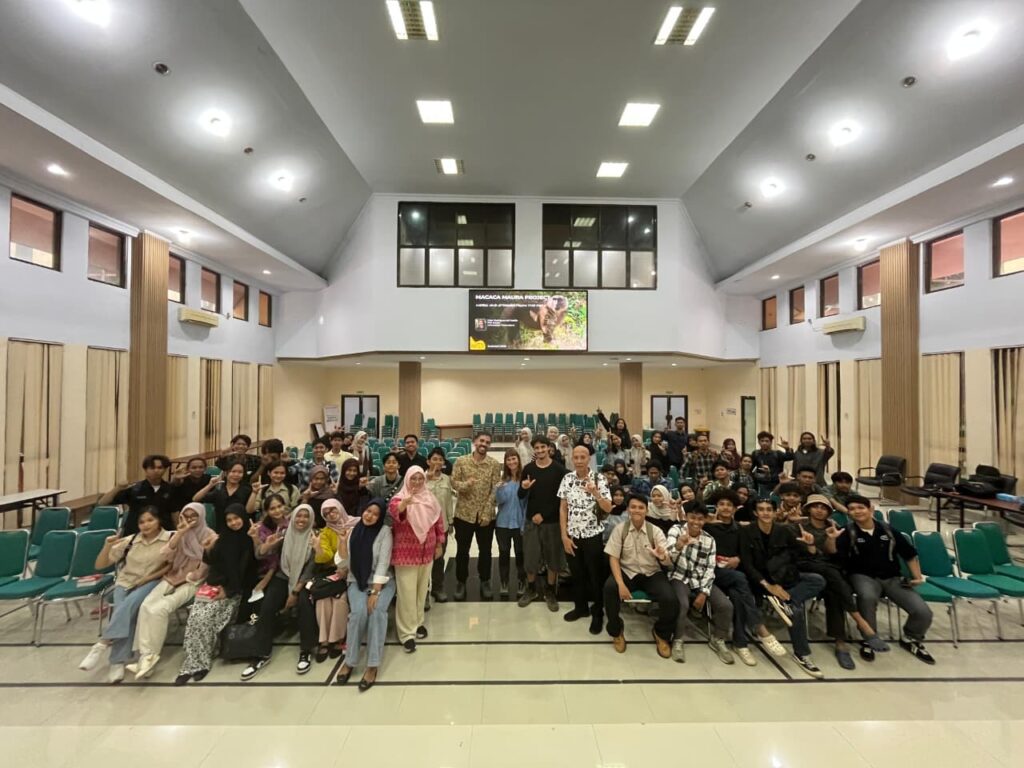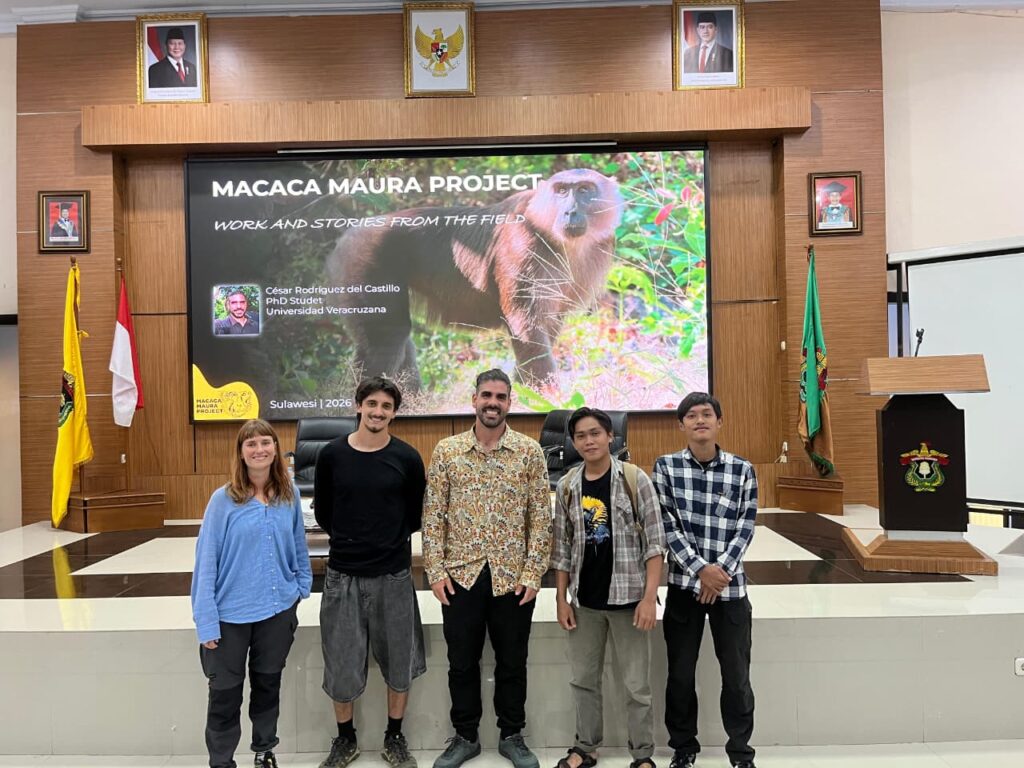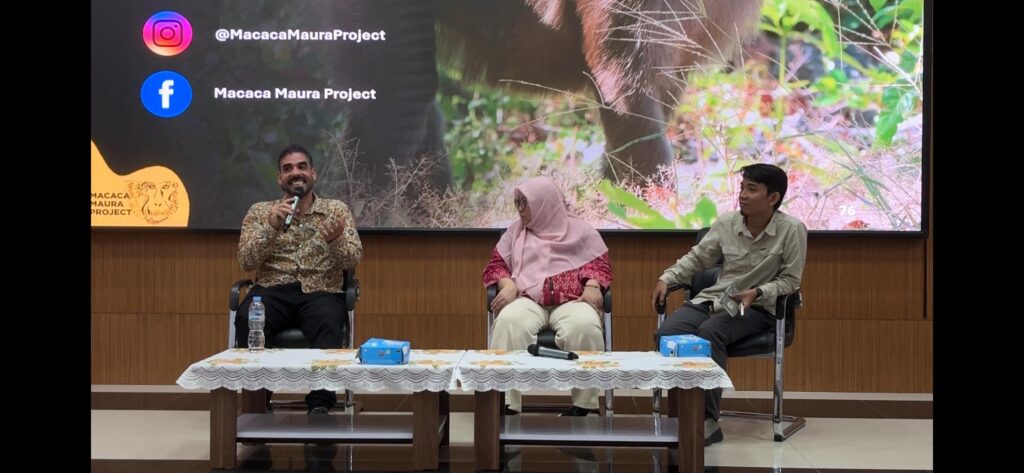
The Conservation Study Program at the Faculty of Forestry, Universitas Hasanuddin, successfully organized a public lecture titled “The Macaca maura Project (MMP): Work and Stories from the Field.” This academic event served as a dynamic platform for knowledge exchange, bringing together students, researchers, and conservation enthusiasts to explore real-world experiences in primate research and conservation. The lecture featured Cesar Rodriguez del Castillo, a researcher actively involved in the Macaca maura Project (MMP), who shared valuable insights from his fieldwork in Bira, Bulukumba Regency—one of the primary research sites for this endemic species.
The main objective of this activity was to enhance participants’ understanding of primate ecology, research methodologies, and conservation challenges, particularly those related to Macaca maura. Through a combination of scientific explanation and field-based storytelling, the session aimed to inspire students to engage in wildlife research while strengthening their awareness of biodiversity conservation. The lecture also sought to create opportunities for collaboration between students and ongoing research projects, encouraging active participation in conservation initiatives.
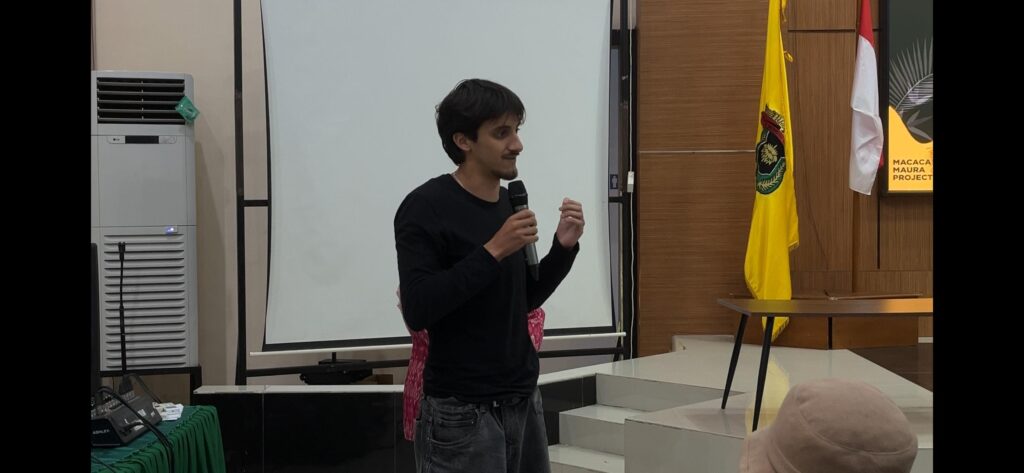
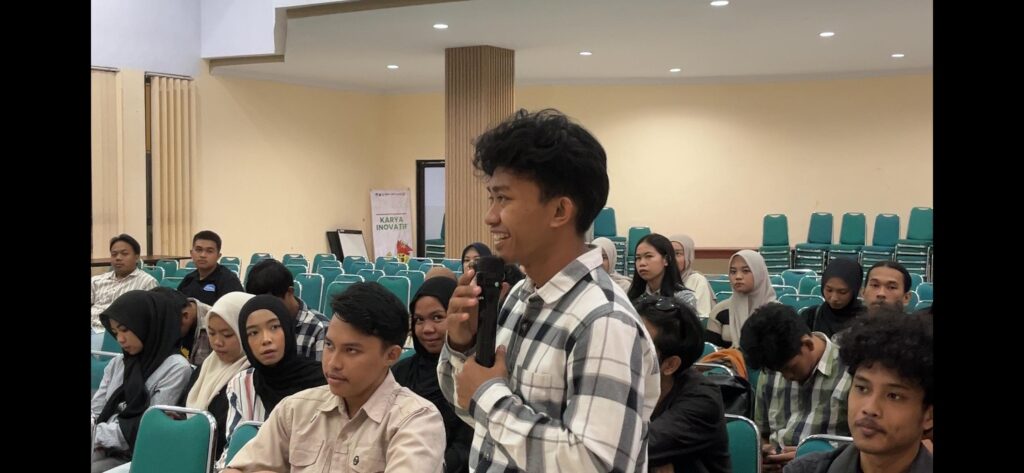
During the presentation, Cesar highlighted the uniqueness of Sulawesi as a biodiversity hotspot, especially for primates of the genus Macaca, which exhibit high levels of endemism. He focused on Macaca maura, describing its complex social structure, adaptive daily behaviors, and strong dependence on forest ecosystems. The discussion further addressed the various challenges faced by the species, including habitat disturbance due to human activities and threats from natural predators. In addition, participants were introduced to the progress of the Macaca maura Project, including its research achievements, ongoing programs, and future plans aimed at ensuring the long-term survival of the species.
This lecture also played a significant role in supporting global sustainable development efforts. It contributes to SDG 4 (Quality Education) by providing accessible, high-quality learning experiences that integrate theory and real-world application. It aligns with SDG 15 (Life on Land) by promoting awareness and understanding of terrestrial biodiversity conservation, particularly for endemic species such as Macaca maura. Furthermore, the collaboration between local academic institutions and international researchers reflects SDG 17 (Partnerships for the Goals), demonstrating the importance of cross-border cooperation in addressing environmental challenges. Indirectly, the activity also supports SDG 1 (No Poverty) by equipping students with knowledge and skills that can contribute to future employment and sustainable livelihoods in conservation sectors.
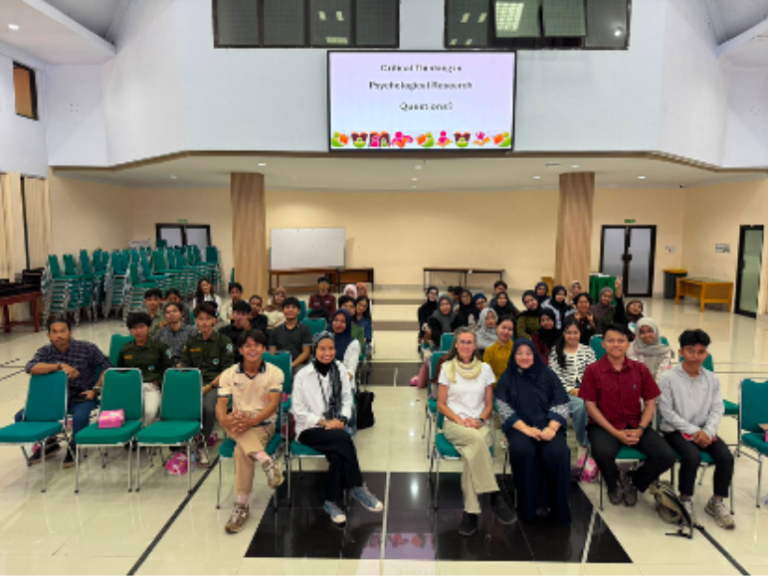
The activity was held at the Aula of the Faculty of Forestry, Universitas Hasanuddin, providing an interactive academic environment for discussion and engagement. The enthusiasm of participants was evident throughout the session, reflecting a strong interest in conservation science and field-based research opportunities.
This activity involved 80 participants and was conducted on April 9th, 2026 at the Aula Fakultas Kehutanan, Universitas Hasanuddin. The international partner involved in this activity is the Macaca maura Project (MMP).
Through this initiative, the lecture not only expanded scientific knowledge but also inspired a new generation of conservationists ready to contribute to the protection and sustainability of wildlife in Indonesia.