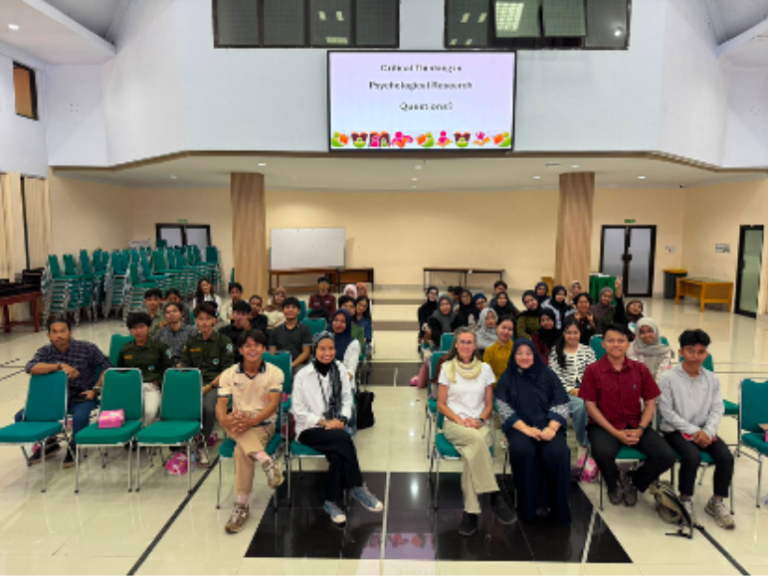
The increasing expansion of mining activities in Indonesia has raised important concerns regarding environmental sustainability and biodiversity conservation. In response to this challenge, the Forest Conservation Study Program initiated a strategic discussion with the Nickel Efforts for Sustainable Transition (NEST) Project on April 16, 2025, to address the urgent need for Anoa conservation in mining landscapes, particularly in Morowali Regency, Central Sulawesi. This initiative highlights the importance of integrating scientific research, community engagement, and cross-sector collaboration to mitigate the impacts of industrial development on endemic wildlife.
The primary objective of this activity is to design an evidence-based conservation strategy for Anoa, an endemic and protected species in Sulawesi, by conducting preliminary assessments of its presence in and around mining areas. These assessments include community-based surveys, ecological baseline studies to determine population distribution, and identification of potential threats arising from mining operations and increased human activity. By combining ecological data with local knowledge, the initiative aims to create a comprehensive understanding of the current condition of Anoa populations and the pressures they face.
The discussion emphasized that conservation efforts must begin with accurate and systematic data collection. Community surveys play a crucial role in capturing local observations and experiences, while scientific baseline studies provide measurable indicators of Anoa presence and habitat conditions. Additionally, identifying threats such as habitat fragmentation, noise disturbance, and human-wildlife conflict is essential for developing targeted mitigation strategies. These early-stage activities will serve as the foundation for long-term conservation planning and policy recommendations.
This initiative also reflects a strong commitment to achieving global sustainability targets. It directly supports SDG 4 (Quality Education) by fostering knowledge exchange between academics, practitioners, and students, and by promoting research-based learning opportunities. It contributes to SDG 15 (Life on Land) by focusing on the protection of terrestrial ecosystems and the conservation of endemic species such as Anoa. Furthermore, the collaboration between academic institutions and international partners embodies SDG 17 (Partnerships for the Goals), demonstrating the importance of collective action in addressing complex environmental challenges. The involvement of local communities and stakeholders also aligns with SDG 1 (No Poverty) by encouraging inclusive participation and creating opportunities for community-based conservation initiatives.
The activity took place in the context of Morowali Regency, Central Sulawesi, a region experiencing rapid industrial growth due to nickel mining and processing. This makes it a critical site for balancing economic development with environmental protection. Through this initiative, stakeholders aim to ensure that conservation efforts are not only scientifically sound but also socially inclusive and sustainable.
This activity involved 20 participants and was conducted on April 16, 2025, in Morowali Regency, Central Sulawesi, Indonesia. The international partner involved in this initiative is Nickel Efforts for Sustainable Transition (NEST) Project.
Through this collaborative effort, the initiative seeks to lay the groundwork for effective Anoa conservation strategies while promoting awareness, education, and sustainable practices in mining landscapes.