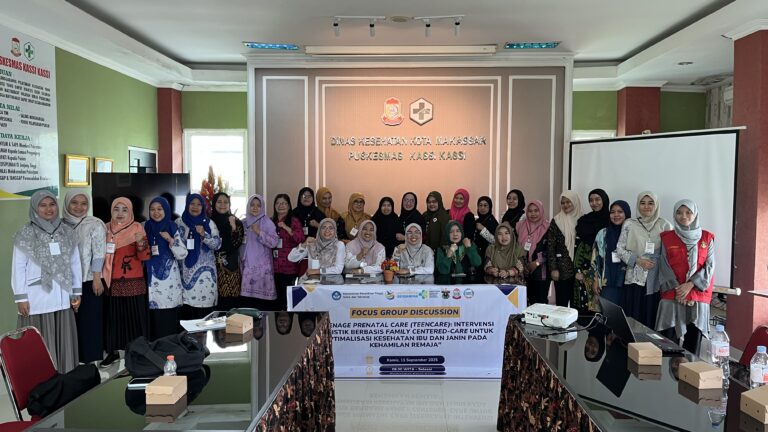
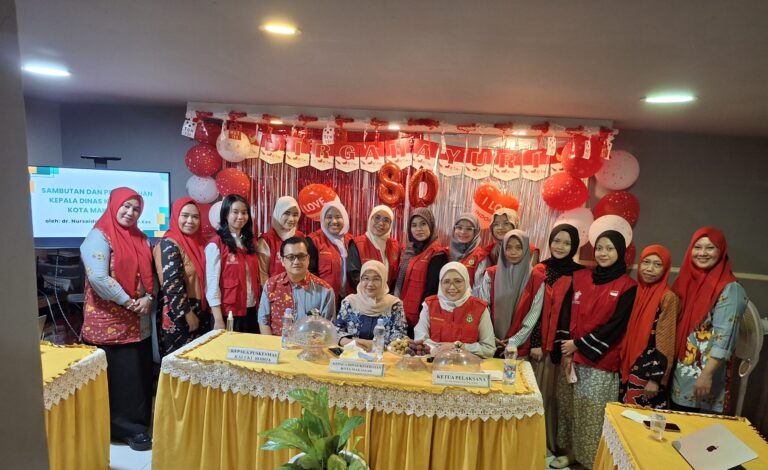
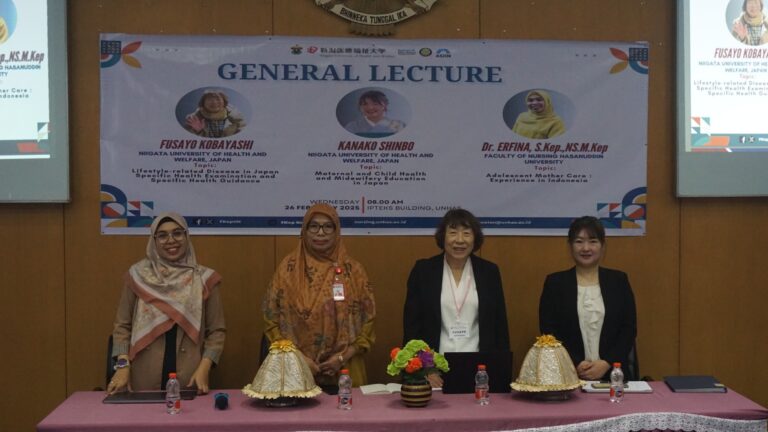
In an effort to strengthen academic capacity and promote evidence-based practice in nursing, the Master’s Program in Nursing, Faculty of Nursing, Hasanuddin University a virtual sharing session focusing on the topic of scoping review and rapid review. This activity reflects the institution’s commitment to fostering research excellence and expanding global academic collaboration through meaningful knowledge exchange.
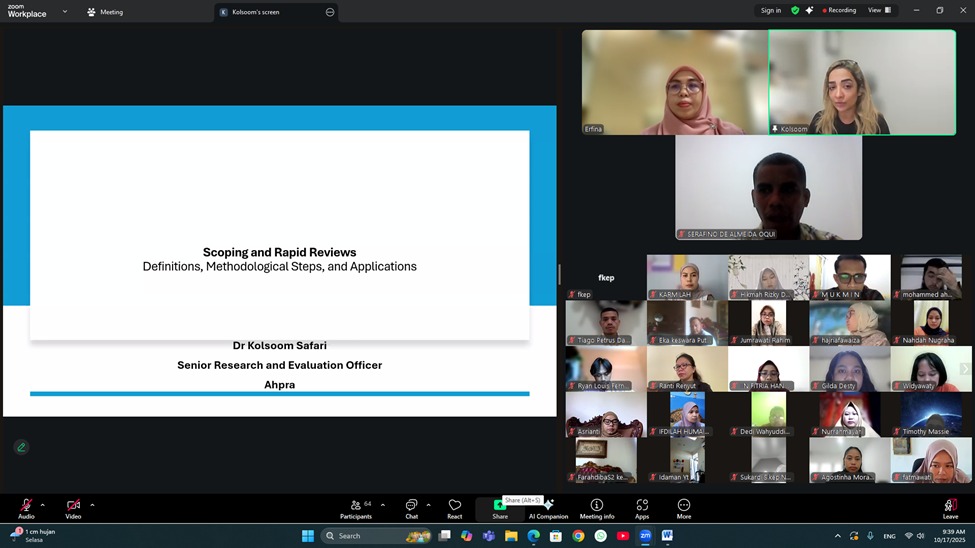
The session was held virtually via Zoom on 17 October 2025, with the participation of 68 attendees, predominantly master’s nursing students, including Fadiah Izzati Salim, Dedi Wahyuddin, Erni Banga Allo, and other postgraduate students. The session featured an international expert, Dr. Kalsoom Safari from La Trobe University, Australia, who delivered an insightful presentation on evidence synthesis. Drawing on her experience as a Casual Academic, she highlighted methodological approaches and best practices for conducting scoping reviews and rapid reviews.
The primary objective of this activity was to deepen participants’ understanding of the concepts, methodologies, and practical applications of scoping reviews and rapid reviews, particularly from the perspective of international academic practice. During the session, participants were introduced to systematic approaches for mapping existing literature, identifying research gaps, and synthesizing evidence in a timely manner to inform healthcare decision-making. The speaker also emphasized the importance of methodological rigor and transparency in conducting both scoping and rapid reviews, especially in the context of healthcare research where timely evidence is crucial.
Through interactive discussions and case-based explanations, participants gained valuable insights into how these research methodologies can be applied in nursing research and practice. The session not only enhanced students’ research skills but also encouraged critical thinking and analytical abilities in evaluating scientific evidence. This is particularly important in preparing future nurse researchers and practitioners to contribute meaningfully to healthcare improvement and policy development.
Furthermore, this activity aligns with several Sustainable Development Goals (SDGs), explicitly contributing to SDG 1: No Poverty, SDG 3: Good Health and Well-being, SDG 4: Quality Education, and SDG 17: Partnerships for the Goals. By strengthening research competencies among nursing students, the program indirectly supports poverty reduction (SDG 1), as improved healthcare services contribute to better socioeconomic outcomes. The focus on advancing evidence-based practice directly supports SDG 3, ensuring better health outcomes through informed decision-making. Additionally, the provision of high-quality, inclusive education aligns with SDG 4, while the collaboration with an international academic expert exemplifies SDG 17, highlighting the importance of global partnerships in advancing knowledge and innovation. Overall, this sharing session represents a significant step in enhancing the research capacity of nursing students at Hasanuddin University. By integrating international perspectives and promoting rigorous research methodologies, the Faculty of Nursing continues to prepare its graduates to become competent, critical, and globally engaged professionals. This initiative not only strengthens academic quality but also reinforces the role of higher education institutions in contributing to sustainable global development.