MAKASSAR, Indonesia, May 2025/UFRG/ ─ What if the secret to living longer is not always about adding something to our diet—but occasionally giving our bodies a break from eating?
Intermittent fasting (IF) has become increasingly popular, with people adopting different fasting schedules in the hope of improving metabolic health, controlling body weight, or even promoting healthy aging. But behind the popular diet trend lies a much more fundamental biological question: what actually happens inside the body when food becomes temporarily unavailable?
A recent study published in ACS Omega on May 12, 2025, explored this question using an unlikely but powerful research model: the fruit fly, Drosophila melanogaster. The study, titled “Impact of Intermittent Fasting on Survival and Gene Expression Profiles Associated with Autophagy, Metabolism, and Antioxidant in Drosophila melanogaster”, examined whether intermittent fasting could influence survival and genes involved in metabolism, cellular recycling, and antioxidant defense.
What Did the Researchers Find?
The researchers divided fruit flies into groups receiving different feeding schedules. Some flies had continuous access to food, while others experienced either 4 or 8 hours of fasting three times per week. The results were intriguing. Both fasting schedules improved fly survival compared with continuously fed flies. By day 10, more than 60% of flies subjected to the 8-hour fasting regimen remained alive, compared with approximately 50% of the control flies.
The researchers also found that fasting changed the activity of several genes related to metabolism, mitochondrial function, antioxidant defense, and autophagy.
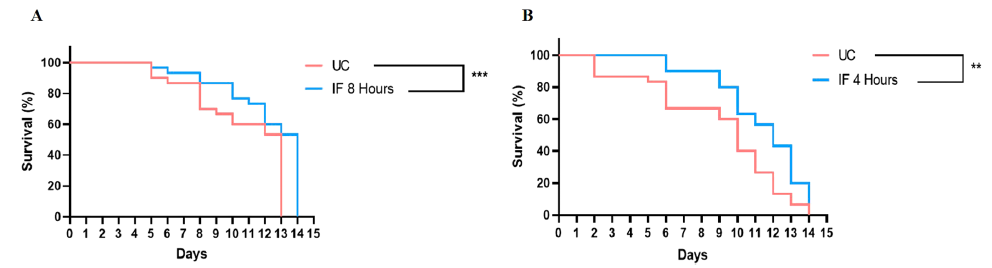
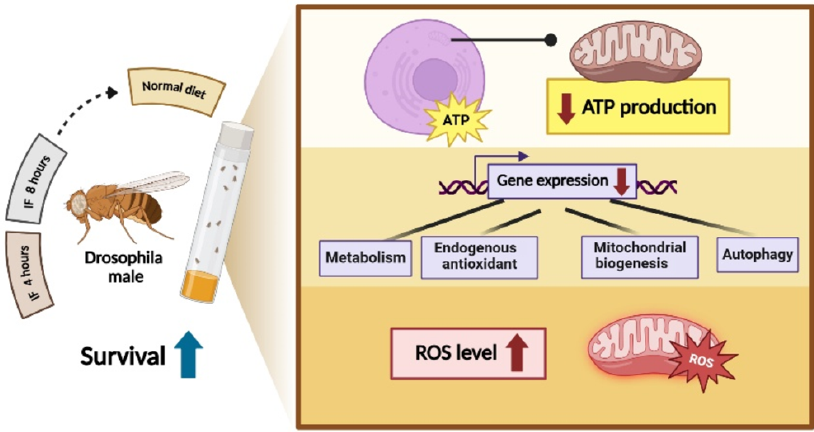
Interestingly, these results were different from some previous studies that reported increased autophagy and antioxidant activity during fasting. This suggests that the effects of intermittent fasting may depend on how long and how often fasting is performed, as well as the biological condition of the organism.
Overall, the findings provide new insights into how fasting may influence survival and cellular processes. This research supports SDG 3: Good Health and Well-Being by contributing to our understanding of nutritional strategies that may influence metabolism and healthy aging.
Reference
DOI:
https://doi.org/10.1021/acsomega.5c00400
Contact: Prof. Firzan Nainu
Email: firzannainu@unhas.ac.id
Mobile: +6282191310384