
MAKASSAR, Indonesia Apr 1 2026/UFRG/ – Diabetes mellitus, particularly type 2 diabetes (T2DM), has become one of the most pressing global health challenges of our time. Affecting more than 529 million people worldwide, the disease is characterized not only by high blood sugar levels but also by chronic inflammation that worsens metabolic dysfunction and leads to serious complications . While many treatments exist, scientists continue to explore innovative and accessible solutions. Surprisingly, one such candidate may already be sitting in our medicine cabinets: aspirin.
This insight emerges from a recent study titled “Aspirin-Mediated Reduction of Glucose Level and Inflammation in Drosophila melanogaster,” published in ACS Omega by the American Chemical Society on 29 April 2025 . The study investigates how aspirin, widely known as a pain reliever, might also play a role in regulating blood sugar and inflammation—two key drivers of T2DM.
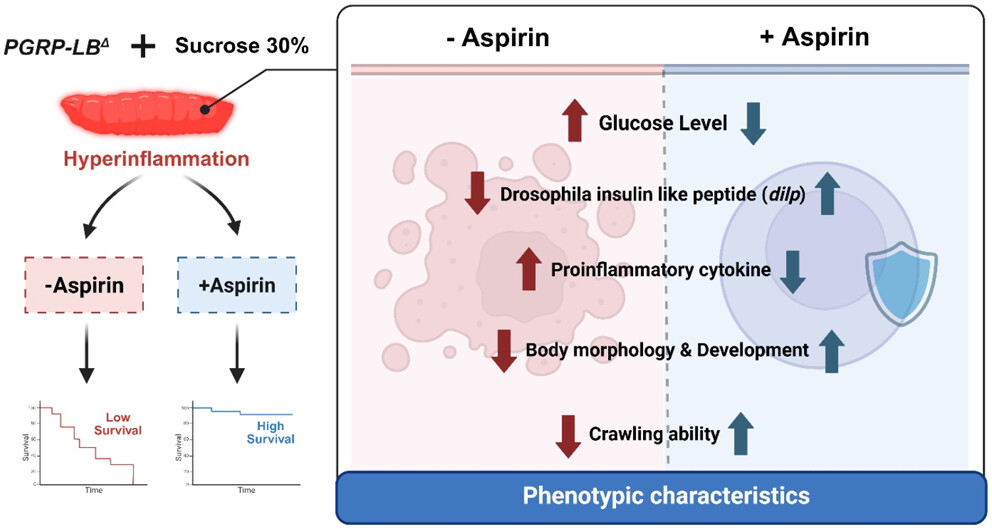
To explore this possibility, researchers turned to an unlikely yet powerful model organism: the fruit fly, Drosophila melanogaster. Despite its simplicity, this organism shares approximately 75% of disease-related genes with humans, making it a valuable tool for biomedical research . In the study, flies were fed a high-sugar diet to mimic the metabolic disturbances seen in diabetes. This led to increased glucose levels, reduced growth, impaired movement, and heightened inflammatory responses—closely resembling aspects of human T2DM.
When aspirin was introduced, the results were striking. The treatment significantly reduced glucose levels and improved several physiological parameters, including body size, weight, and mobility . At the molecular level, aspirin also suppressed the expression of inflammation-related genes while helping restore metabolic balance. These findings suggest that aspirin may act not only as an anti-inflammatory agent but also as a modulator of glucose metabolism.
The mechanism behind this effect lies in aspirin’s ability to inhibit enzymes involved in producing inflammatory molecules. Chronic inflammation is known to worsen insulin resistance, a hallmark of T2DM. By reducing inflammation, aspirin may indirectly improve the body’s ability to regulate glucose . Although these findings are preliminary and based on an animal model, they provide an important foundation for future research in humans.
This study also contributes to broader global development priorities, particularly the Sustainable Development Goals (SDGs). It is closely aligned with SDG 3 (Good Health and Well-being) by advancing knowledge that could lead to improved treatment strategies for non-communicable diseases such as diabetes. Furthermore, it supports SDG 4 (Quality Education) by demonstrating the value of scientific research and model organisms in understanding complex diseases. Importantly, the collaborative nature of this research reflects SDG 17 (Partnerships for the Goals), highlighting how teamwork across institutions and disciplines drives innovation.
Beyond its scientific implications, the study underscores a key message: solutions to complex health problems may sometimes be found in familiar places. While aspirin is not yet a standard treatment for diabetes, its potential dual role in reducing both inflammation and blood glucose opens new avenues for affordable and accessible therapies.
In conclusion, this research not only deepens our understanding of diabetes but also illustrates how creative scientific approaches can uncover unexpected possibilities. As the global burden of T2DM continues to rise, such insights are essential for building a healthier and more sustainable future.
Reference: https://doi.org/10.1021/acsomega.4c11509
Contact: Prof. Firzan Nainu
Email: firzannainu@unhas.ac.id
Mobile: +6282191310384