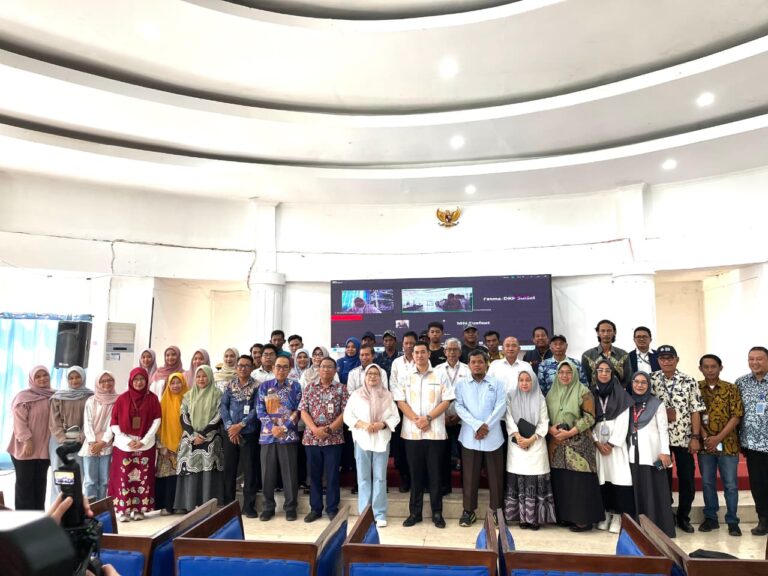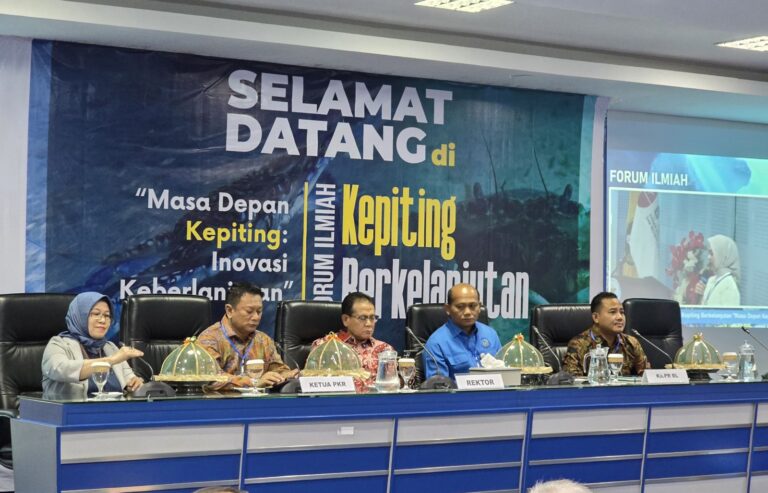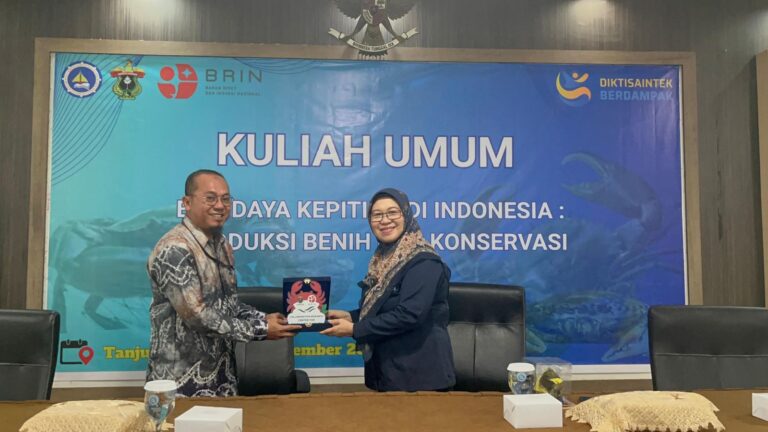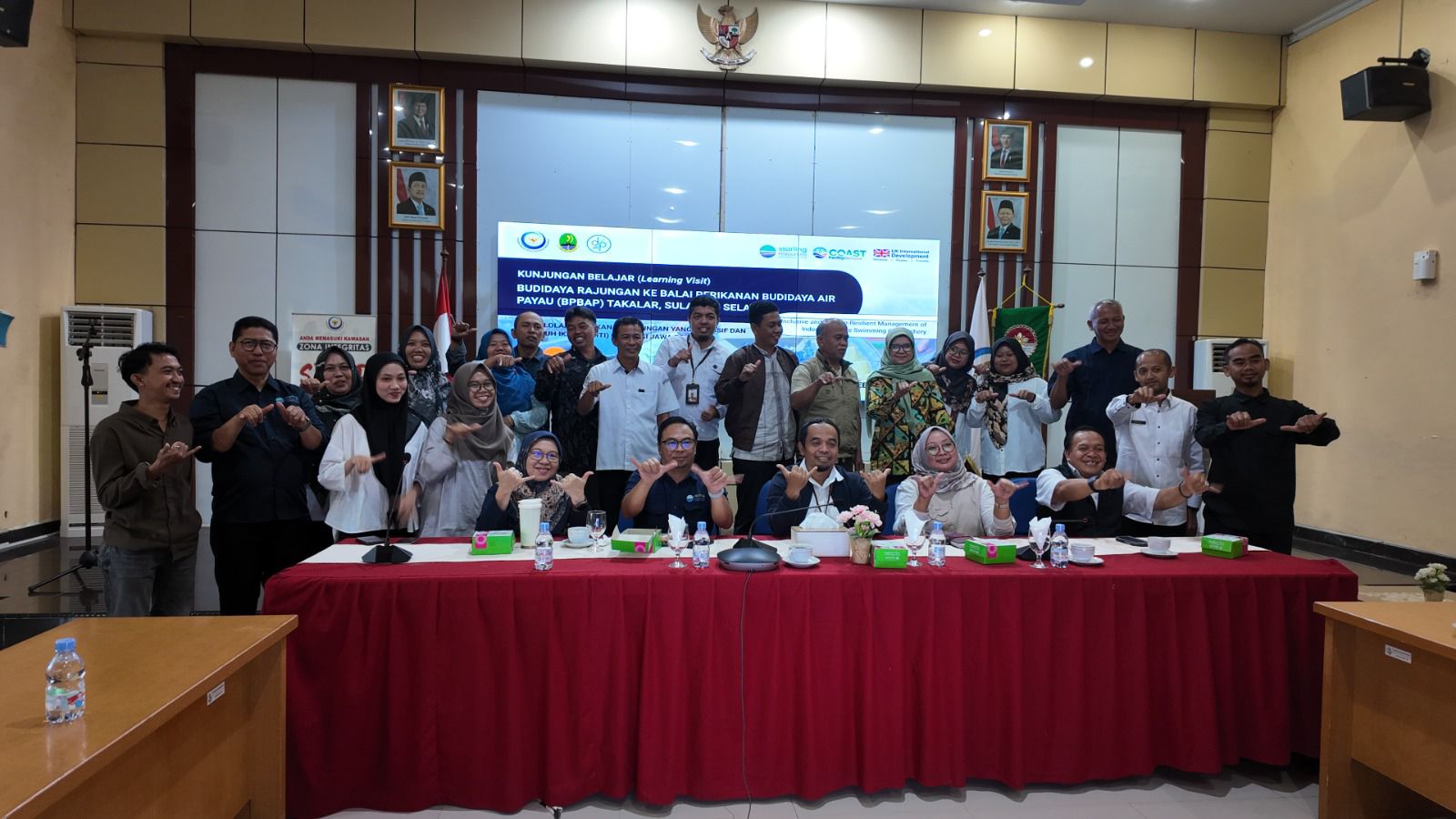

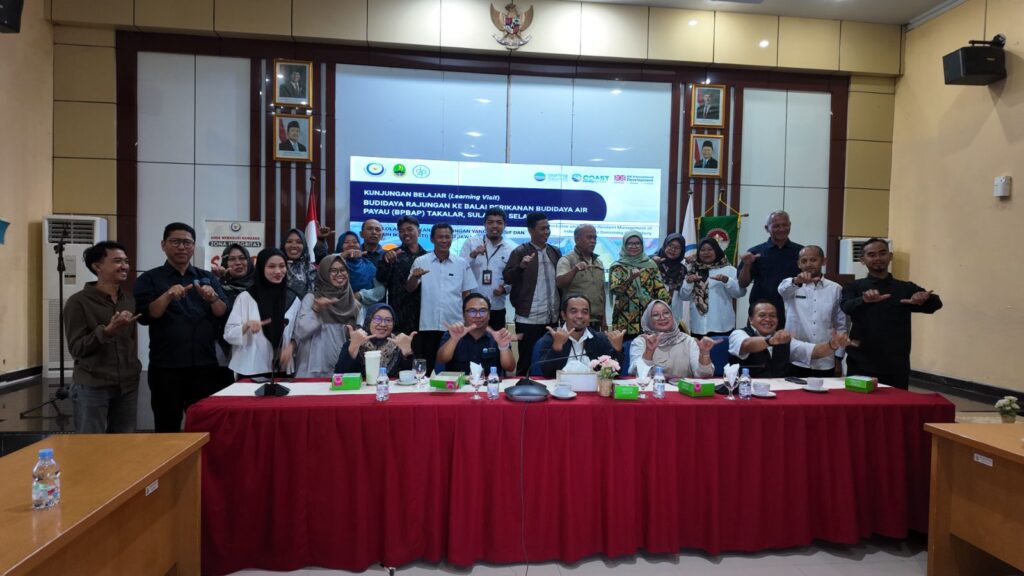
Takalar, February 4, 2026 – In an essential effort to enhance regional marine management and adapt coastal livelihoods to environmental changes, a specialized learning visit was conducted at the main hall of the Brackishwater Aquaculture Development Center (Balai Perikanan Budidaya Air Payau – BPBAP) Takalar, South Sulawesi. Centered on the program titled “Inclusive and Climate-Resilient Blue Swimming Crab Fisheries Management (PRITI) in West Java Province,” the workshop gathered approximately 30 participants, comprising West Java Provincial Fisheries Office staff, crab aquaculture business actors, local fishers, researchers, university students, and BPBAP Takalar engineers. The primary objective of this capacity-building initiative was to broaden the knowledge, technical vision, and scientific competence of West Java fisheries officials and commercial stakeholders regarding sustainable blue swimming crab (Portunus pelagicus) aquaculture and climate-smart fisheries governance.
This strategic learning visit was funded by the British Government through the Climate and Ocean Adaptation and Sustainable Transition (COAST) Facility and expertly facilitated by Starling Resources. The initiative serves as a direct operational action to support the implementation of West Java Governor Regulation No. 33 of 2022 concerning the Sustainable Blue Swimming Crab Fisheries Management Plan. During the intensive session, renowned marine scientist Prof. Dr. Yushinta Fujaya served as the main expert speaker, delivering crucial scientific insights into the fundamental biological, environmental, and technical parameters required for successful crab aquaculture. She underscored that transitioning from wild-capture reliance toward controlled hatchery seed production and eco-friendly farming practices is vital for maintaining wild stock balance, reducing mortality, and safeguarding marine biodiversity.
This capacity-building initiative explicitly aligns with several Sustainable Development Goals (SDGs). By delivering structured, high-caliber scientific training and fostering cross-regional knowledge exchange between technical experts, government officials, and local practitioners, the program directly advances SDG 4: Quality Education. Furthermore, the collaborative framework uniting the UK Government’s COAST Facility, Starling Resources, the West Java Provincial Government, academic institutions, and local fishing communities strongly embodies SDG 17: Partnerships for the Goals, illustrating how multi-stakeholder governance accelerates climate-resilient resource management.
The focus on sustainable crab management also contributes directly to SDG 14: Life Below Water, as eco-friendly aquaculture mitigates overfishing pressures on wild populations, preserves fragile coastal marine ecosystems, and protects aquatic biodiversity. Ultimately, translating these technical insights into sustainable aquaculture operations directly addresses SDG 1: No Poverty. By stabilizing crab production, mitigating climate risks, and creating equitable market opportunities, the program protects coastal livelihoods, secures household incomes, and ensures long-term economic resilience for artisanal fishing families throughout West Java. Through this collaborative learning visit at BPBAP Takalar, regional stakeholders have reinforced their shared commitment to driving inclusive, science-backed, and climate-resilient marine fisheries management.