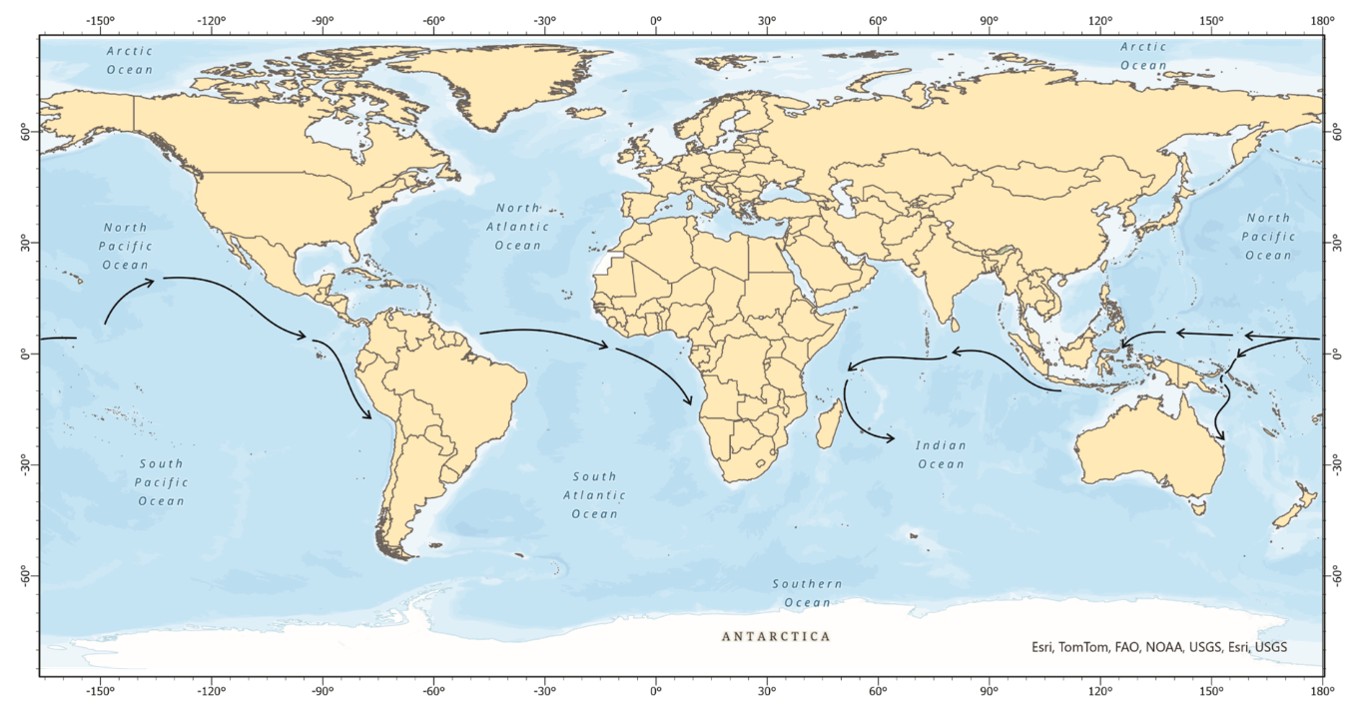

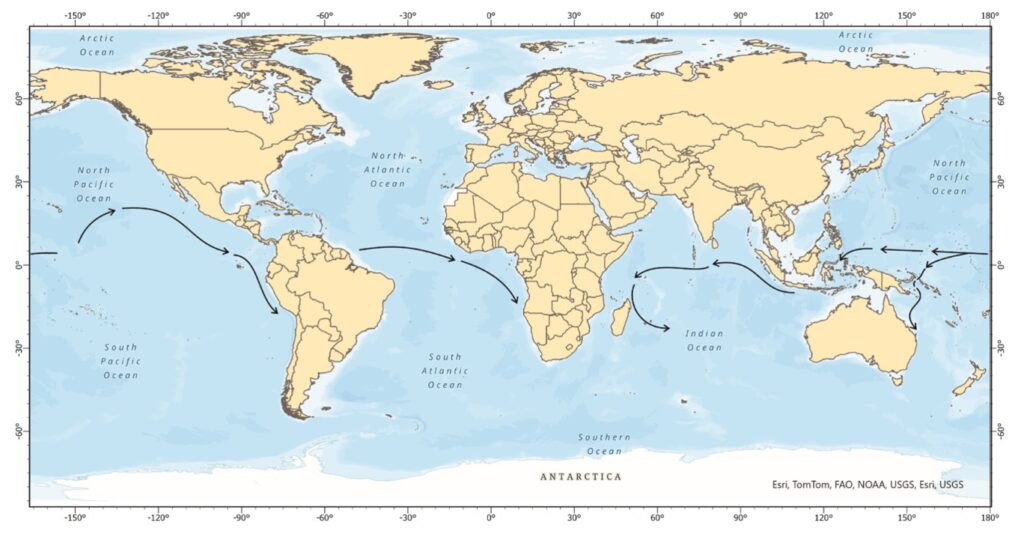
Global migration routes of Yellowfin Tuna illustrate how this highly migratory species moves across tropical and subtropical oceans in search of suitable environmental conditions.
MAKASSAR, Indonesia Aug 29 2026/TRG/ – The ocean may look limitless, but for Yellowfin Tuna (Thunnus albacares), not every part of it feels like home. Temperature, food availability, currents, salinity, and even large-scale climate events can determine where these highly migratory fish gather, feed, reproduce, or move next.
A new scientific review led by researchers from Hasanuddin University brings together six decades of Yellowfin Tuna research from 1963 to 2023, revealing how a changing ocean is reshaping one of the world’s most valuable tuna species. The study reviewed research across the Pacific, Indian Ocean, and Southeast Asian seas to understand the environmental forces controlling tuna habitat and migration.
Tuna Follow the Right Temperature
Among the many environmental signals in the ocean, temperature stands out as the strongest. Yellowfin Tuna can occupy a wide thermal range, but the review found that their most suitable habitat generally occurs between 23.4–30.42°C in tropical waters and 19.53–25.41°C in subtropical waters.
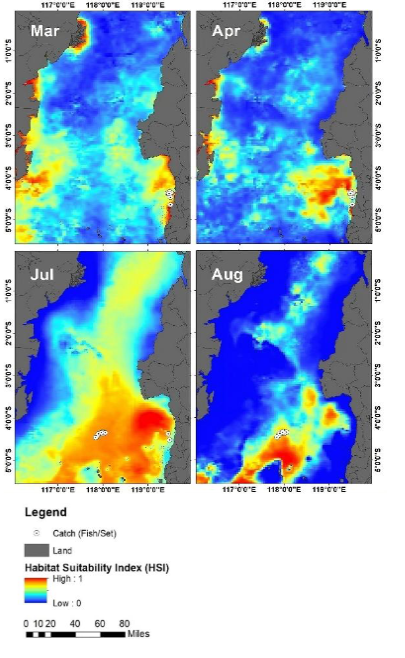
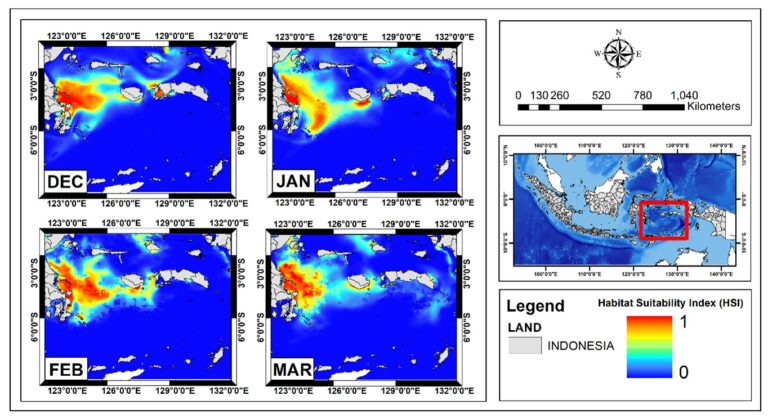
But temperature is only part of the story. Chlorophyll-a helps indicate productive waters where the marine food web begins, while salinity and sea surface height can reveal water masses and productive oceanographic structures. Upwelling, oceanic fronts, and eddies can concentrate nutrients and prey, effectively creating natural “dining areas” for tuna.
Climate Change Is Moving the Map
The review also shows that tuna habitat is not fixed. Climate variability such as El Niño and La Niña can alter water temperature, productivity, prey availability, and fishing success. More importantly, long-term ocean warming is gradually pushing suitable Yellowfin Tuna habitats toward cooler waters.
Previous studies synthesized in the review estimate that suitable habitats have shifted poleward by roughly 5.5 kilometres per decade in the Southern Hemisphere and 6.5 kilometres per decade in the Northern Hemisphere. Such movements could eventually change which countries have easy access to productive tuna grounds, creating new challenges for nations whose economies and coastal communities depend on tropical tuna fisheries.
Technology Can Help Fishers Follow a Changing Ocean
The solution is not simply to chase tuna farther offshore. Researchers highlight satellite remote sensing, electronic tagging, high-resolution ocean observations, and machine-learning models as increasingly important tools for anticipating where suitable tuna habitats may move. Combining these technologies with historical catch records could enable fisheries managers to respond more quickly to changing ocean conditions.
This knowledge directly supports SDG 14: Life Below Water by strengthening science-based fisheries management. It is also relevant to SDG 2: Zero Hunger because tuna contributes to food security, SDG 13: Climate Action through understanding climate-driven ecosystem changes, and SDG 17: Partnerships for the Goals, since migratory tuna cross national boundaries and require collaborative management.
In a warming ocean, the question is no longer only where tuna are today, but where they will be tomorrow. Understanding that movement may determine how successfully we protect both tuna populations and the communities that depend on them.
DOI:
https://doi.org/10.1016/j.rsma.2026.104830
Mukti Zainuddin
Corresponding Author
Department of Fisheries, Hasanuddin University
Phone: +62 852-5591-3244
Email: mukti@unhas.ac.id