


MAKASSAR, Indonesia May 11 2026 /TERMITE/- Plastic packaging has become part of everyday life. From food containers to shopping bags, modern society depends heavily on packaging materials for convenience and protection. Unfortunately, most conventional packaging is made from non-biodegradable plastic, which creates serious environmental problems. Plastic waste pollutes rivers, oceans, and soil, threatening ecosystems and human health worldwide. As global concern about environmental sustainability grows, scientists are searching for safer and more eco-friendly alternatives.
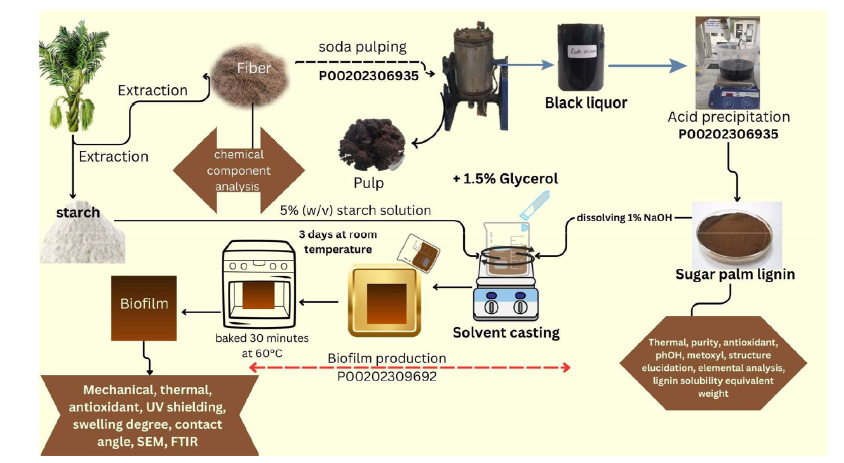
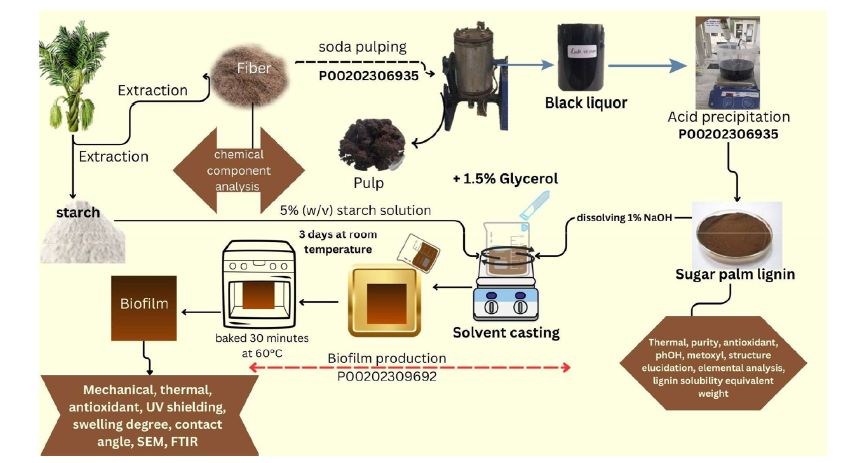
One promising innovation comes from sugar palm fiber. This idea was explored in the scientific article titled “Lignin from the Sugar Palm’s Fiber (Arenga pinnata Merr.) as a Potential Active Compound in Packaging”, published in Elsevier by Elsevier on 1 February 2025. The study examined the potential use of lignin extracted from sugar palm fiber as an active compound for sustainable packaging materials.
Lignin is a natural compound commonly found in plant cell walls. It plays an important role in strengthening plant structures and protecting them from environmental stress. In this research, scientists investigated how lignin from sugar palm fiber could be utilized in packaging applications. The results showed promising potential for creating more environmentally friendly packaging materials with natural protective properties.
This innovation is strongly connected to SDG 12: Responsible Consumption and Production, one of the Sustainable Development Goals established by the United Nations. SDG 12 encourages sustainable resource management, waste reduction, and environmentally responsible industrial practices. Developing packaging from natural plant-based materials can help reduce dependence on petroleum-based plastics and minimize environmental pollution.
Sugar palm (Arenga pinnata Merr.) is widely known in Indonesia as a valuable multifunctional plant. Local communities use it for food products, traditional materials, and economic activities. However, many by-products from sugar palm processing, including fibers, are often underutilized or discarded as waste. Through scientific innovation, these agricultural residues can gain new economic value while supporting environmental sustainability.
The use of lignin in packaging also offers additional benefits. Unlike conventional plastics that can remain in the environment for hundreds of years, plant-based materials are generally more biodegradable and environmentally friendly. This means they may help reduce long-term waste accumulation and contribute to cleaner ecosystems.
In addition, the research demonstrates how science and sustainability can work together to address modern environmental challenges. Instead of viewing agricultural waste as useless material, researchers are transforming it into innovative products with industrial potential. Such approaches support the global transition toward a circular economy, where waste materials are reused and repurposed efficiently.
The study also highlights the importance of investing in green innovation and natural-resource-based technology. As consumers become more environmentally conscious, industries are increasingly encouraged to develop sustainable alternatives that balance economic growth with ecological responsibility.
Scientific publications such as “Lignin from the Sugar Palm’s Fiber (Arenga pinnata Merr.) as a Potential Active Compound in Packaging” show that solutions to global environmental problems may already exist in nature. Through research, collaboration, and sustainable innovation, natural resources can help build a cleaner and healthier future.
Ultimately, transforming sugar palm fiber into eco-friendly packaging is not just a scientific achievement. It is also a meaningful contribution toward achieving SDG 12: Responsible Consumption and Production for a more sustainable world.
Article Metadata
Article Title : Lignin from the sugar palm’s fiber (Arenga pinnata merr.) as a potential active compound in packaging
Journal : Elsevier
Publication Publisher : Elsevier
Date : 1 February 2025
Related SDG : SDG 12 – Responsible Consumption and Production
Reference:
https://doi.org/10.1016/j.cscee.2025.101133
Contact:
Prof. Dr. Ir. Astuti Arif, S.Hut., M.Si., IPU.
+62 811-442-171
astuti_arif@unhas.ac.id


