

MAKASSAR, Indonesia 10 September 2026/SRI-RG/- High-rise building projects built under “design-build” contracts, where a single firm handles both design and construction, move fast and involve many overlapping teams. That speed and complexity is exactly what makes keeping everyone safe so difficult: safety rules only work if the knowledge behind them actually reaches the people pouring concrete and operating cranes.
But what if the sharpest tool for improving site safety isn’t a stricter rulebook, but better knowledge management, the way information about hazards, procedures, and lessons learned is captured, stored, shared, and applied across a project?
A newly published study puts that idea to the test. The research, titled “Development of Knowledge Management Based on Safety Audit for Design-Build Contract in High-Rise Building Projects,” was published in the Civil Engineering Journalin March 2026. The authors built a Construction Safety Management System (CSMS) audit framework covering five main variables, fifteen sub-variables, and eighty-six individual indicators, then tested it using survey data from 41 respondents across five high-rise, design-build projects, analyzed with a statistical technique called Partial Least Squares Structural Equation Modeling.
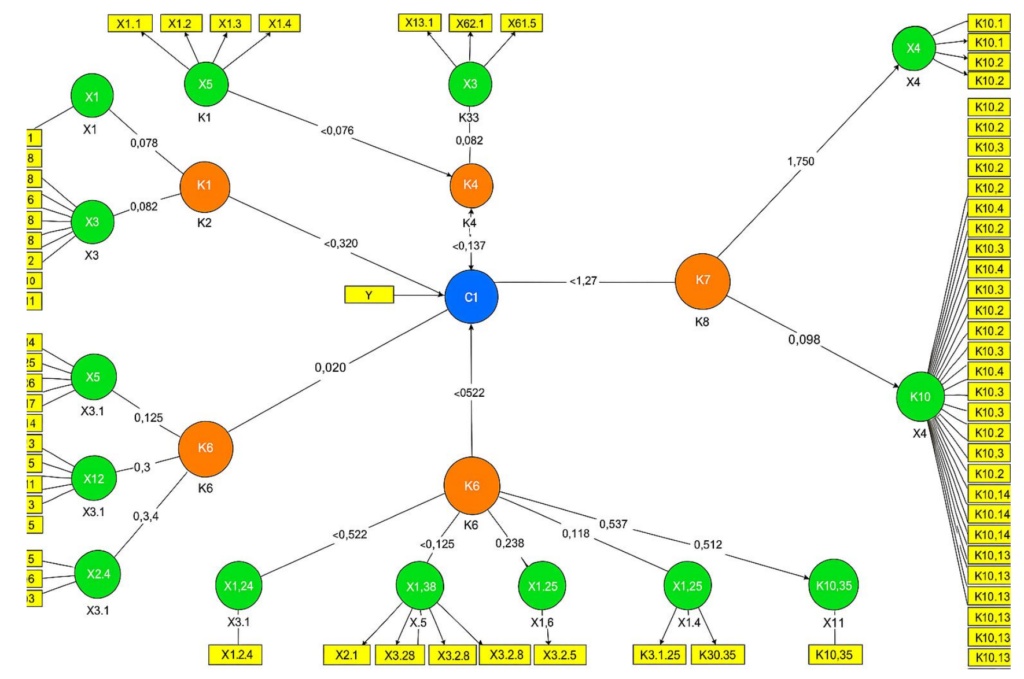
The results identified which safety elements matter most in practice. Ranked by significance, Construction Safety Operations came out on top, driven largely by strong operation-control and safety-planning practices, followed by Mastery and Contribution in Construction Safety, Construction Safety Planning, Construction Safety Performance Evaluation, and Construction Safety Support. All five variables passed the study’s reliability and validity checks, confirming that the survey instrument genuinely captured distinct, meaningful aspects of site safety rather than overlapping noise. Separately, when the authors surveyed three of the high-rise projects on how thoroughly they had actually implemented the knowledge-based audit, all three scored in the “high” implementation category, with two projects at a full 100 percent and one at 91 percent.
The authors are candid, however, that the statistical relationships between individual audit elements and overall implementation levels were not strong: their model’s R-square value was only about 10 percent, meaning roughly 90 percent of what drives real-world audit implementation remains unexplained by this framework alone, a limitation they flag openly for future research to address.
This research speaks directly to SDG 4: Quality Education, whose Target 4.4 calls for substantially increasing people with relevant skills, including technical and vocational skills, for safe and productive work. By showing that operational know-how, hands-on training, and structured knowledge-sharing, not just written rules, drive safety performance, the study makes the case that investing in workers’ safety knowledge is itself a form of workforce education with life-or-death stakes.
The authors recommend that construction firms build shared digital safety databases and audit-tracking dashboards, while regulators develop standardized national guidelines that embed knowledge management directly into how CSMS audits are conducted, turning safety audits from routine paperwork into genuine, organization-wide learning tools.
Reference:
DOI: https://doi.org/10.28991/CEJ-2026-012-03-023
Contact:
R. Arifuddin
Department of Civil Engineering, Universitas Hasanuddin
Email: rosmarianiarifuddin@unhas.ac.id