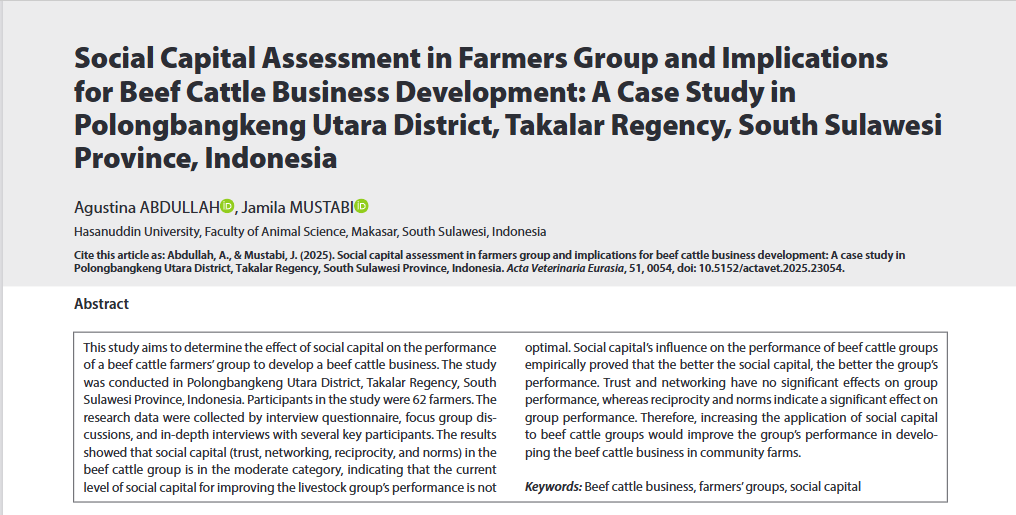
MAKASSAR, Indonesia Apr 07 2026 /SLF-RG/ – In a quiet corner of South Sulawesi, a group of beef cattle farmers gather under a wooden shed. They talk not just about their animals, but about trust, cooperation, and shared rules. These invisible bonds—known as social capital—may be just as important as feed or medicine. A new study titled “Social Capital Assessment in Farmers Group and Implications for Beef Cattle Business Development: A Case Study in Polongbangkeng Utara District, Takalar Regency, South Sulawesi Province, Indonesia,” published in the Acta Veterinaria Eurasia by Istanbul University on February 20, 2025, reveals that the success of farmer groups depends heavily on how well members trust and help each other.
The research focused on 62 farmers in Polongbangkeng Utara. It measured four things: trust, networking, reciprocity (mutual help), and norms (shared rules). The results were eye-opening. While most farmers had moderate levels of trust, two factors stood out as truly powerful: reciprocity and norms. Farmers who actively helped each other and followed group rules saw much better group performance. Surprisingly, trust alone and having many connections did not significantly improve results. What mattered most was everyday cooperation and a commitment to shared agreements.
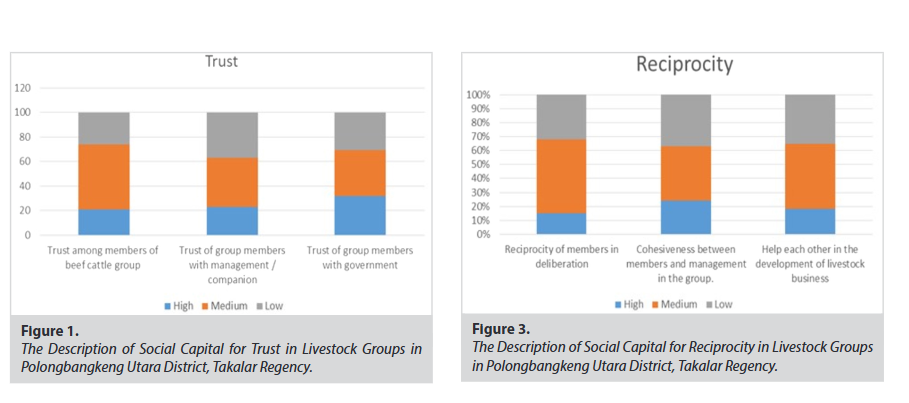
Why does this matter for global goals? Because these findings directly support SDG 1 (No Poverty) . Strong farmer groups help poor rural families increase their income from cattle. When groups work well, members get better access to government aid, shared knowledge, and markets. This lifts entire communities out of poverty, one healthy calf at a time.
The study also points to problems. Many groups do not process cattle waste into fertilizer, missing a chance to earn extra money and protect the environment. Others struggle because leaders make decisions without group discussion. Farmers lose trust when they feel unheard. Some members miss meetings without facing any consequences, weakening the group’s discipline.
This is where education and partnership become critical. SDG 4 (Quality Education) matters because farmers need training in modern livestock techniques, bookkeeping, and leadership. SDG 17 (Partnerships for the Goals) is equally vital. The government, universities, and private companies must work together with farmer groups—not just giving cattle but also teaching skills and building transparent communication channels.
In simple terms, a group of farmers who trust, help, and hold each other accountable will always outperform a group that only shares a barn. Social capital is not a vague idea. It is the glue that turns individual farmers into a thriving business. As Indonesia works toward sustainable rural development, investing in reciprocity and norms may be one of the smartest moves we can make.
Reference
DOI: 10.5152/actavet.2025.23054
Contact:
Dr. Agustina ABDULLAH
+62 812-4237-920
agustina.abdullah@unhas.ac.id