MAKASSAR, Indonesia August 30 2026 /SLF-RG/ – When agricultural extension programs fail, the problem is rarely the farmers. More often, it is the mismatch between what programs offer and what farmers actually need. In many smallholder beef cattle communities across Indonesia, feed technology exists but sits unused, not because farmers are unwilling, but because no one asked them what they needed in the first place.
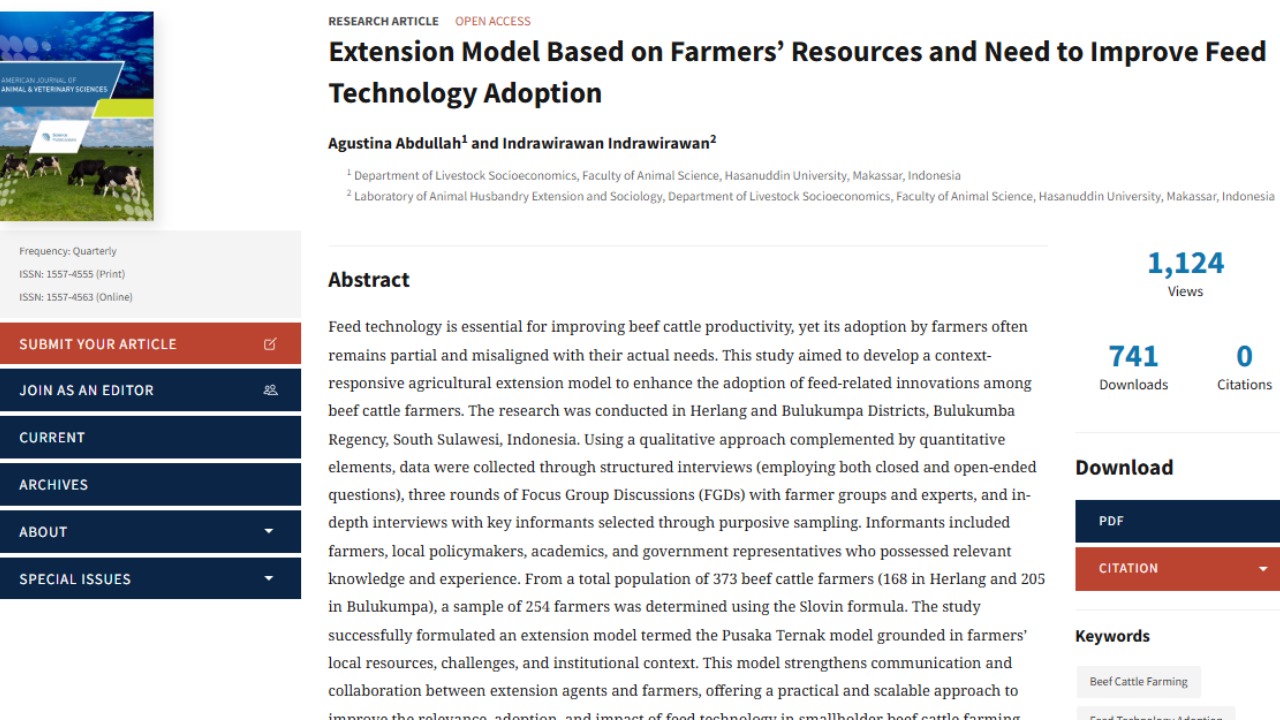
A study published in the American Journal of Animal and Veterinary Sciences, titled “Extension Model Based on Farmers’ Resources and Need to Improve Feed Technology Adoption” by Agustina Abdullah and Indrawirawan Indrawirawan, accepted on 01 April 2026 by Science Publications. Conducted across Herlang and Bulukumpa Districts in Bulukumba Regency, the study surveyed 254 beef cattle farmers out of a total population of 373, combining structured interviews, three rounds of Focus Group Discussions, and in-depth interviews with farmers, policymakers, academics, and government representatives.
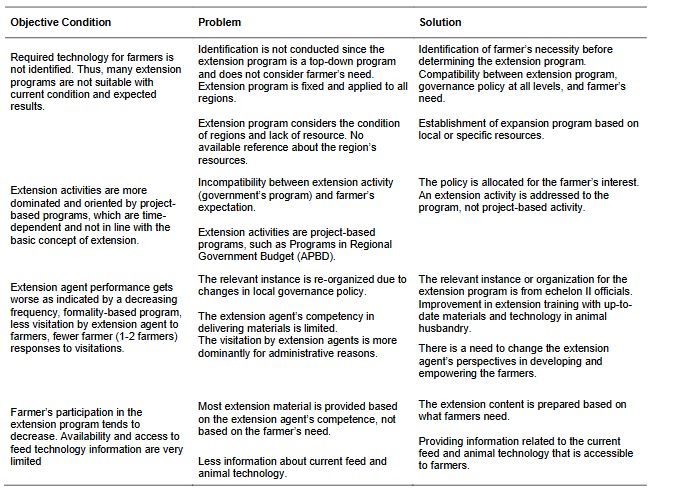
The core finding is both clear and urgent. Feed technology adoption among smallholder beef cattle farmers in the study area remained low, with only around 24% of farmers implementing innovations such as ammoniation and fermentation techniques. The primary cause was not technical complexity. It was the top-down design of extension programs that delivered the same content to every region without assessing what local farmers actually needed or had available. Extension agents visited infrequently, their materials were often irrelevant, and farmers gradually disengaged from programs that did not speak to their reality.
In response, the research developed the Pusaka Ternak model, a context-responsive agricultural extension framework built around two central actors: farmers and extension agents. Unlike conventional programs, this model begins with identifying each farmer’s available resources, knowledge, and local conditions before designing any extension content or method. Extension agents in this model are not merely instructors; they are partners who listen, adapt, and collaborate with farmers from the ground up.
These findings speak directly to Sustainable Development Goal 4 (SDG 4): Quality Education, which emphasizes inclusive, equitable, and lifelong learning for all. Agricultural extension, at its best, is a form of applied education that meets people where they are. The Pusaka Ternak model embodies this principle by prioritizing farmer-centered learning, practical knowledge transfer, and capacity building grounded in local context. The research also connects to SDG 1 (SDG 1): No Poverty, as improved feed technology adoption leads to higher cattle productivity, better farm income, and stronger economic resilience for rural smallholder households. Furthermore, SDG 17 (Partnerships for the Goals) is reflected in the model’s emphasis on multi-stakeholder collaboration among government agencies, universities, extension bodies, and farming communities.
For policymakers and extension practitioners, the message is straightforward. Effective technology extension is not about broadcasting information. It is about building relationships, understanding local resources, and co-designing solutions with the very communities they serve. The Pusaka Ternak model offers a practical, scalable blueprint for doing exactly that across South Sulawesi and beyond.
Reference
DOI: https://doi.org/10.3844/ajavsp.2026.21.01.008
Contact:
Dr. Agustina ABDULLAH
+62 812-4237-920
agustina.abdullah@unhas.ac.id