MAKASSAR, Indonesia August 31 2026 /SLF-RG/ – Rice is more than just a staple food for nearly 90% of Indonesians. It is the backbone of rural livelihoods, the foundation of national food security, and a symbol of agricultural identity. Yet in Pinrang, one of South Sulawesi’s key rice-producing regions, harvested area dropped by over 11,000 hectares and production fell by nearly 94,000 tonnes in 2023 alone. Behind this decline lies a critical question: why are farmers not adopting modern agricultural technologies at the pace that the situation demands?
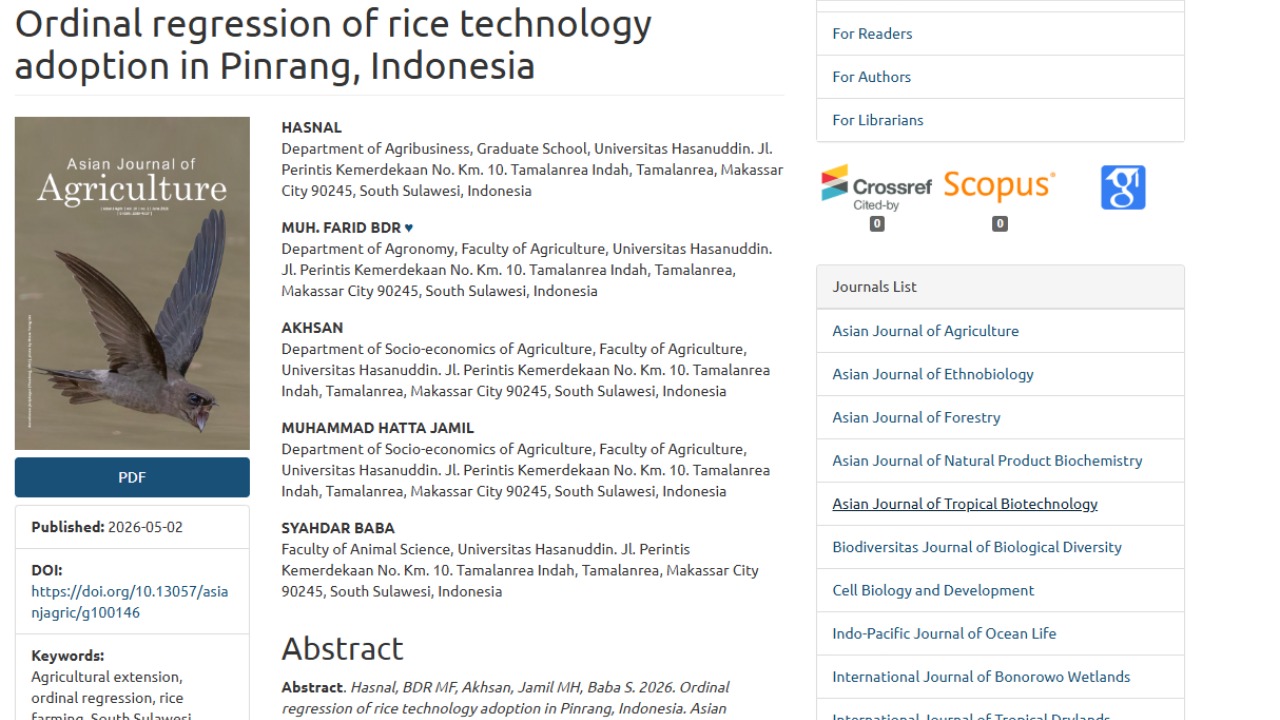
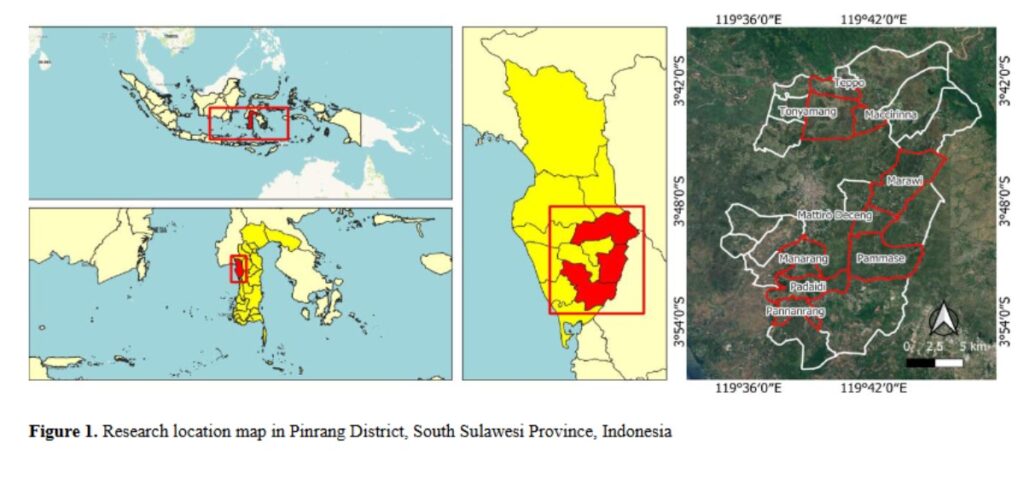
A recent study published in the Asian Journal of Agriculture, titled “Ordinal Regression of Rice Technology Adoption in Pinrang, Indonesia” by Hasnal, Muh. Farid BDR, Akhsan, Muhammad Hatta Jamil, and Syahdar Baba, published in June 2026. The research surveyed 108 rice farmers across nine villages in three sub-districts of Pinrang and used ordinal logistic regression to classify technology adoption into three levels: low, medium, and high, covering seven technologies including tractors, drones, transplanters, electric sprayers, certified seeds, the jajar legowo planting system, and combine harvesters.
The findings paint a nuanced picture. The majority of farmers, 63.9%, were at a moderate adoption level, meaning they use some but not all available technologies. About 24.1% had achieved high adoption, while 12% remained at low levels. This uneven pattern signals that technology is reaching farmers, but not deeply enough or broadly enough to make a transformative difference.
So what actually drives adoption? The study found that formal education, access to diverse information sources, extension service intensity, household income, distance from home to farmland, and non-formal education participation were the most significant factors. Farmers with more years of schooling were 2.37 times more likely to adopt technologies at higher levels. Those with higher incomes were 1.79 times more likely to invest in modern tools. Strikingly, farmers who had never participated in non-formal training such as farmer field schools or agricultural workshops had only 0.9% of the adoption odds compared to those who had.
These findings speak directly to Sustainable Development Goal 1 (SDG 1): No Poverty. Reducing poverty in rural communities requires more than infrastructure. It demands that farmers have the knowledge, financial capacity, and institutional support to adopt technologies that increase their productivity and income. When education gaps and income barriers block technology adoption, smallholder farmers remain trapped in cycles of low yield and economic vulnerability. Bridging these gaps through targeted extension programs, non-formal training access, and income-support mechanisms is not merely an agricultural policy matter. It is a poverty reduction imperative.
This research stands out methodologically by moving beyond the traditional binary approach of “adopted or not adopted,” offering a more realistic, layered view of how technology spreads across farming communities. For policymakers, extension workers, and development practitioners, the message is clear: reaching farmers is not enough. Supporting them through education, training, and economic enablement is what transforms access into adoption, and adoption into prosperity.
Reference
DOI: https://doi.org/10.13057/asianjagric/g100146
Contact:
Prof. Syahdar Baba
+62 812-4244-359
syahdarbaba@unhas.ac.id