


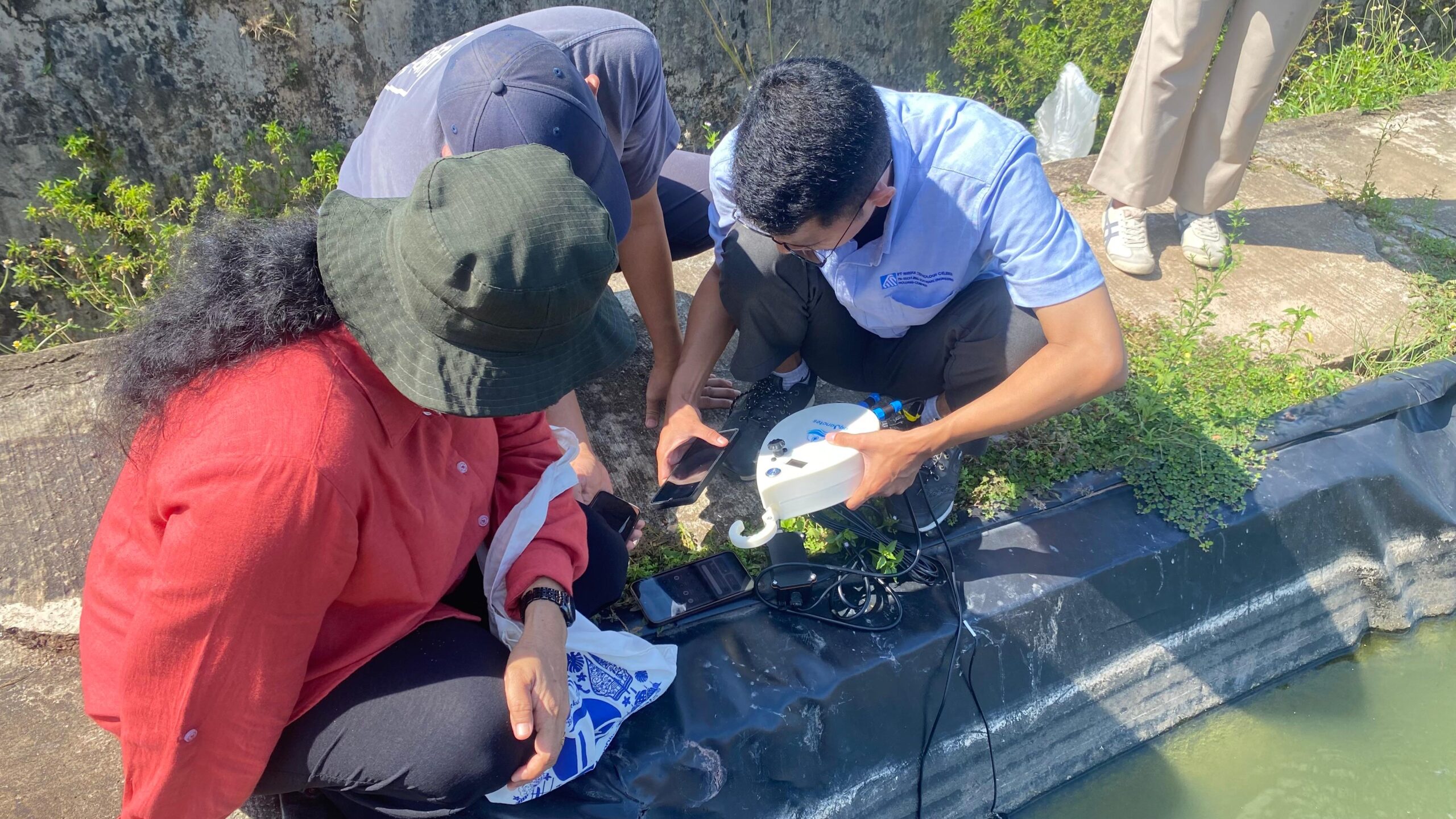
Description
The aquaculture sector is a fundamental pillar for Indonesia's food security and blue economy, yet its productivity is often hampered by water quality instability. Fluctuations in vital parameters such as temperature, pH, and dissolved oxygen pose a serious threat to the survival of aquatic life, ultimately causing significant losses for farmers. This problem is particularly felt by MSME (Micro, Small, and Medium Enterprises) hatcheries and small-scale farmers who have limited access to accurate and affordable real-time monitoring technology, creating a technology gap with large-scale industries.
To bridge this gap, Aquanotes was developed as a smart water quality monitoring system based on the Internet of Things (IoT) and artificial intelligence (AI). This device not only performs automatic data acquisition but also provides predictive analysis and recommendations for preventive actions for farmers. The innovation of Aquanotes lies in its integration of industrial-standard multi-sensors, a compact and portable design, and a rental-based business model specifically designed to address the capital limitations of MSMEs. This product was developed through a user-centered design approach and has resulted in intellectual property in the form of an Industrial Design.
The Aquanotes downstreaming project is designed in a two-year strategic roadmap (2025-2026) through collaboration with an industry partner, PT Media Teknologi Celebes. The goal is to increase its Technology Readiness Level (TRL) from TRL 6-7 to TRL 8-9, making it ready for full commercialization.
In the first year (2025), the main focus is on Product and Business Model Validation. This phase serves as a crucial foundation before proceeding to the production stage. Three main activities will be carried out: first, prototype validation with a user acceptance target of at least 80% stating the product is beneficial. Second, business model validation to ensure commercial viability, especially by testing the rental scheme through surveys and Focus Group Discussions (FGDs). Third, dissemination of results and formalization of the partnership through the signing of a Cooperation Agreement (PKS). The mandatory output by the end of 2025 is a business model that has been validated and formally agreed upon by the research team and the industry partner.
Entering the second year (2026), the program continues to the Downstreaming and Full Commercialization stage. Based on the validated model, activities will begin with design finalization and pilot-scale production for standardization. The pilot products will then undergo industry feasibility testing and certification processes to meet market standards. In parallel, the business plan will be finalized into a binding commercialization agreement. Intellectual Property protection is also a priority, with the target of obtaining 'granted' status for the registered Industrial Design. The mandatory output by the end of 2026 is an Aquanotes product that is tested, certified, and legally protected, marking its readiness for a broad market launch and to make a tangible contribution to the sustainable blue economy in Indonesia.
Description
The research implementation includes the development of an application product named Aquanotes, which is capable of presenting the latest data on water temperature, dissolved oxygen (DO), and pH in an easy-to-read graphical model. A sensor system will be installed in the rearing tank to collect data automatically and continuously. This data will then be sent and stored on a server to be processed and displayed on the application. The results obtained are as follows:
- water temperature
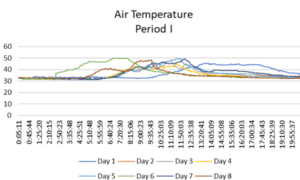
Based on the graph image above, the results of real-time water quality monitoring by utilizing internet of things (IoT) technology at the larval hatchery black tiger shrimp nauplii—post-larva 2, the temperature value during the rearing period was in the range of 30.81°C—33.19°C. The rearing of black tiger shrimp larvae in this study had a fluctuating temperature. The temperature was in the range of 30.81°C—32.5°C, the highest was 32.5°C which occurred on the first day while the lowest temperature was 30.81°C which occurred on the sixth day.
Temperature is one of the important factors in aquaculture activities. Low temperature results in a low metabolic system and conversely, high temperature results in its metabolism becoming fast, which then relates to the shrimp's appetite. According to Muarif (2016), temperature is a parameter that has a major influence on the cultivated organism because it greatly affects various physiological processes such as respiration rate, feed efficiency, growth, behavior, and reproduction. Real-time monitoring of water quality in the rearing of black tiger shrimp larvae nauplii—post-larva 2 in the first cycle showed a slightly fluctuating temperature value, ranging between 30.81°C—32.5°C.
2. Dissolved oxygen (DO)
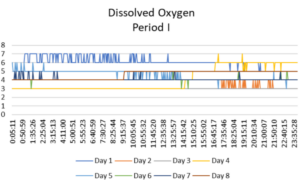
Based on the graph above from the real-time water quality monitoring using IoT, the DO (dissolved oxygen) value in the rearing of black tiger shrimp larvae in the first cycle was in the range of 3—7 mg/L, whereas in the second cycle it was in the range of 4—7 mg/L. Each day, the DO had different fluctuations in the first cycle, including day 1 (5—7 mg/L), day 2 (3—4 mg/L), day 3 (3 mg/L), day 4 (3—7 mg/L), day 5 (4—6 mg/L), days 6 & 7 (4—5 mg/L), and day 8 (4 mg/L). The highest DO value was 7 mg/L, while the lowest DO value was 3 mg/L. The result of the dissolved oxygen monitoring in the first cycle ranged from 3—7 mg/L.
The DO value in the first cycle was at an environmental condition that could be tolerated by the shrimp larvae, which was 3 mg/L, occurring on the 2nd, 3rd, and 4th days. The water condition in the black tiger shrimp larval rearing pond was not in accordance with the optimal dissolved oxygen level to support the growth of the shrimp larvae. When dissolved oxygen is low, it causes the shrimp to be stressed and can even lead to death. The DO value in the optimal range for black tiger shrimp larvae is 5—7 mg/L. However, black tiger shrimp larvae can tolerate dissolved oxygen in the range of 3—8 mg/L. This value meets the requirements in the rearing of black tiger shrimp larvae to support growth and survival.
3. pH
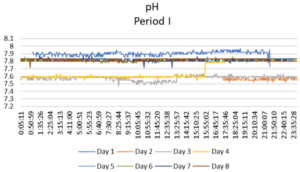
Based on the graph image above from the real-time water quality monitoring based on the Internet of Things, the pH value in the first cycle of black tiger shrimp larvae rearing was in the range of 7.47–7.97. The highest pH value during the rearing was 7.97, which occurred on the first day, while the lowest pH was 7.47, which occurred on the third day. Results of the real-time water quality monitoring conducted on the rearing of black tiger shrimp larvae from the nauplii—PL2 phase using the internet of things, the highest pH value was 7.97, which occurred on the third day at 18:50 WITA. Meanwhile, the lowest pH value was 7.47, which occurred on the third day at 8:30 WITA. The decrease in the pH value that occurred after the administration of artificial feed can be seen on the graph for the third day at 18:50 WITA with a pH value of 7.97. This was caused by the decomposition of organic matter, namely leftover feed and feces, which produces CO2 and reduces alkalinity. The decrease in pH value during the rearing period is caused by various factors, namely the accumulation of organic matter and the decomposition of leftover feed. When feed is broken down through the nitrification process, it causes the CO2 in the waters to increase, resulting in a decrease in pH. In addition to CO2 production, the aerobic decomposition of organic matter from leftover food and the accumulation of organic matter produces organic acids that lower the pH value.
Description
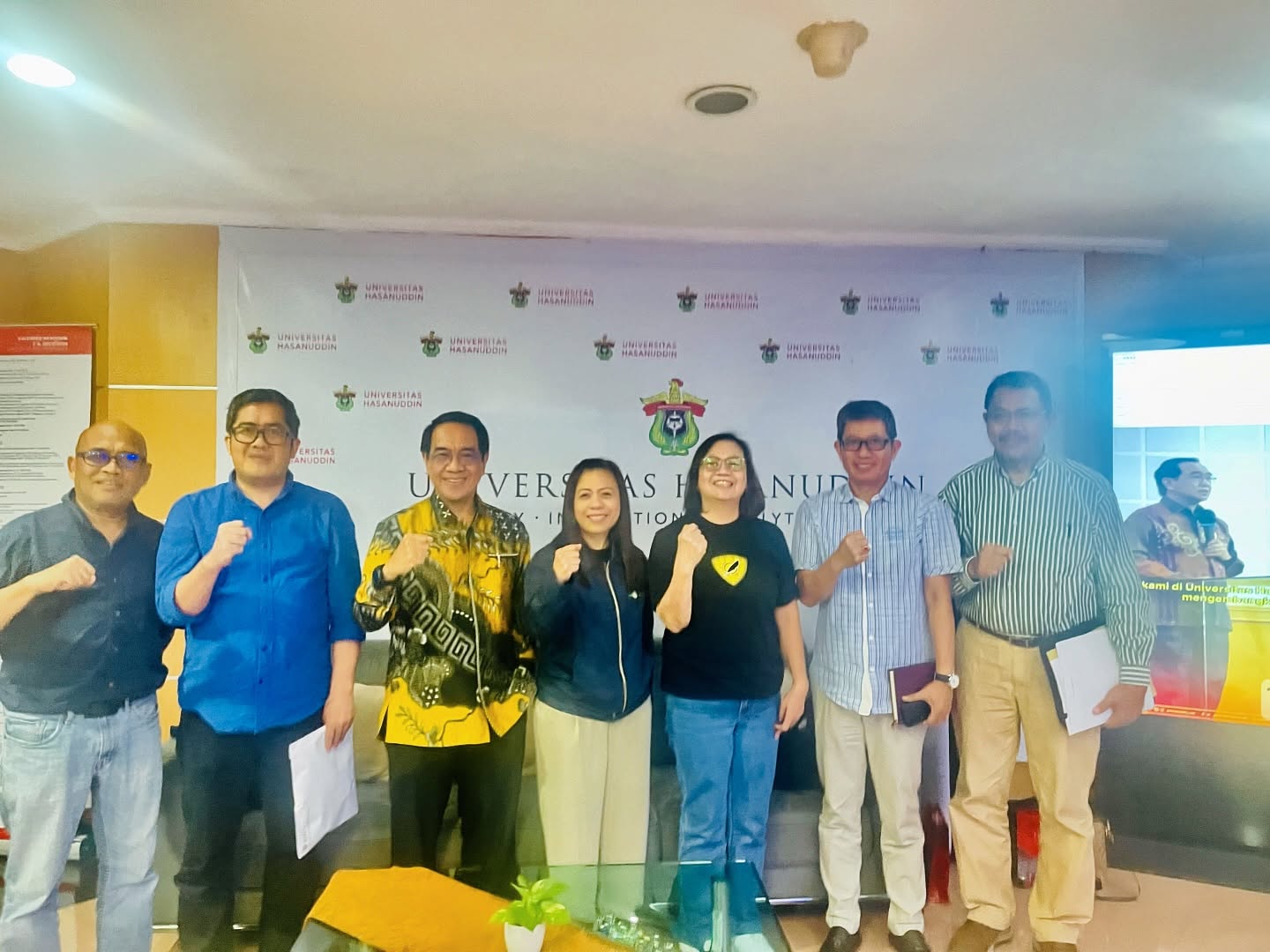
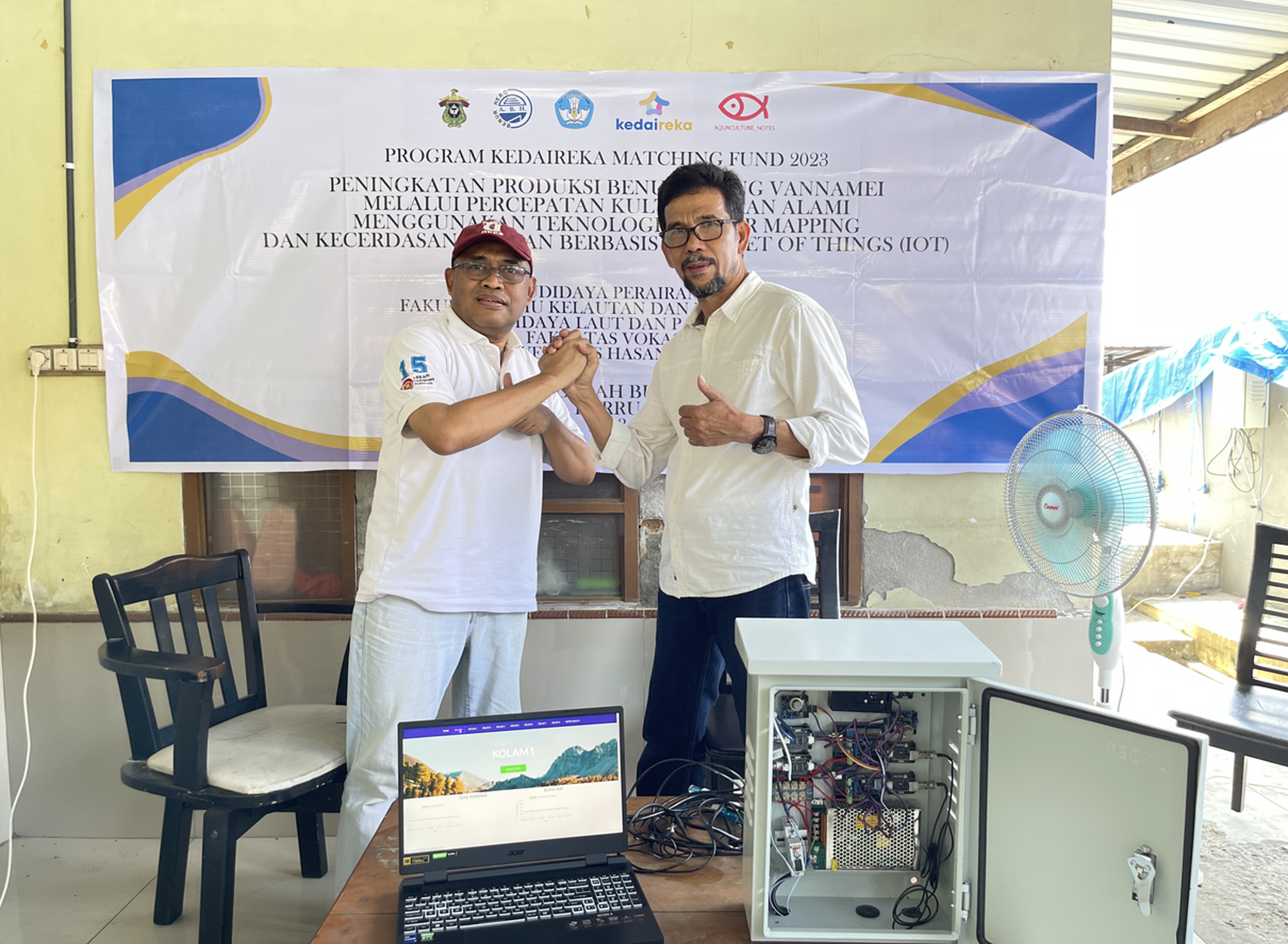
The collaborative commitment between the Proposer, through Hasanuddin University, and the partner business, UD Anugerah Bumi Hero, began in 2023 through the Kedaireka Matching Fund program. This collaboration, in the form of implementing or applying technology at the partner's location, has been followed up through the utilization of a device now known as "Aquanotes". It is also sustained through continuous internship and practical work programs for students at UD Anugerah Bumi Hero, as an effort to maintain the benefits of applying IoT in the shrimp hatchery business.
Water quality checks at the partner business, UD Anugerah Bumi Hero, are conducted using a system called "Aquanotes". This system allows the user (the partner) to check water quality in real-time. The monitoring results are set to be updated every 5 minutes. Furthermore, the monitoring process is equipped with a notification feature that serves as feedback on the water quality in the rearing tanks. This helps the partner determine production strategies, such as changing the water or adding specific chemicals. The measurement results can be seen in the following image:
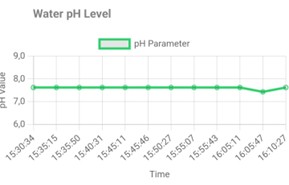
pH data is collected using a SEN0161 type sensor. The reference input for pH values ranges from 6 to 9. Data is collected at 5-minute intervals, 24 hours a day (24/7). If the data from any sensor exceeds the pre-set reference values, a notification will appear as feedback or a warning for the user. An example of the notification can be seen in the following image :
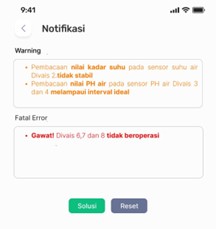
The notification feature is also included to help the user monitor and control the system, especially if a sensor device experiences a malfunction or a reading error..