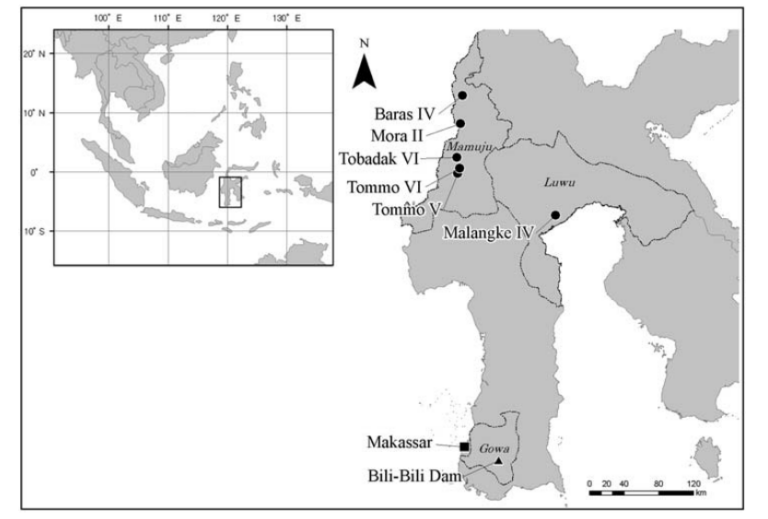
As cities continue to grow, understanding how land changes over time becomes increasingly important. Urban expansion brings opportunities, but it also creates challenges such as environmental degradation and loss of green spaces. A scientific study titled “Modelling Land Use/Land Cover Changes Prediction Using Multi-Layer Perceptron Neural Network (MLPNN): A Case Study in Makassar City, Indonesia,” published in the International Journal of Environmental Studies by Routledge on 14 August 2020, provides a modern approach to predicting how cities develop over time .
The study focuses on Makassar, a rapidly growing city in Indonesia. To understand future land changes, researchers used a type of artificial intelligence called a Multi-Layer Perceptron Neural Network (MLPNN). While the name may sound technical, the idea is simple: this technology learns from past data to predict future patterns. By analyzing satellite images and land use data from previous years, the model can estimate how land will be used in the future.

The findings reveal a clear trend—urban areas in Makassar are expanding quickly. Land that was once used for agriculture or natural vegetation is gradually being transformed into residential and commercial areas . This transformation is mainly driven by population growth and increasing demand for infrastructure.
Why is this important? Because land is a limited resource. When cities expand without proper planning, they often consume valuable ecosystems. This can lead to problems such as reduced food production, increased flooding, and loss of biodiversity. By predicting these changes early, governments and planners can take action to manage growth more sustainably.
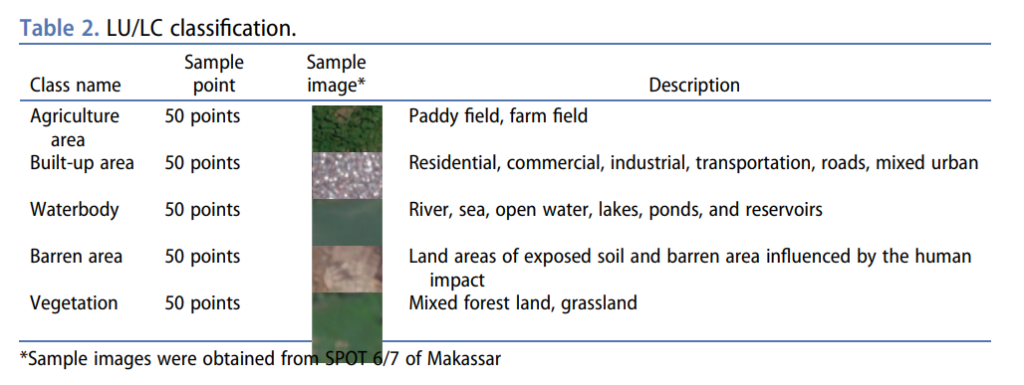
One of the key advantages of using AI models like MLPNN is their accuracy. The study shows that this method can effectively simulate real-world conditions and provide reliable predictions. This makes it a powerful tool for decision-making, especially in fast-growing urban areas.
This research is closely linked to Sustainable Development Goal (SDG) 15: Life on Land. SDG 15 focuses on protecting ecosystems, preventing land degradation, and promoting sustainable land use. The ability to predict land cover changes helps policymakers protect green spaces and ensure that development does not harm the environment.
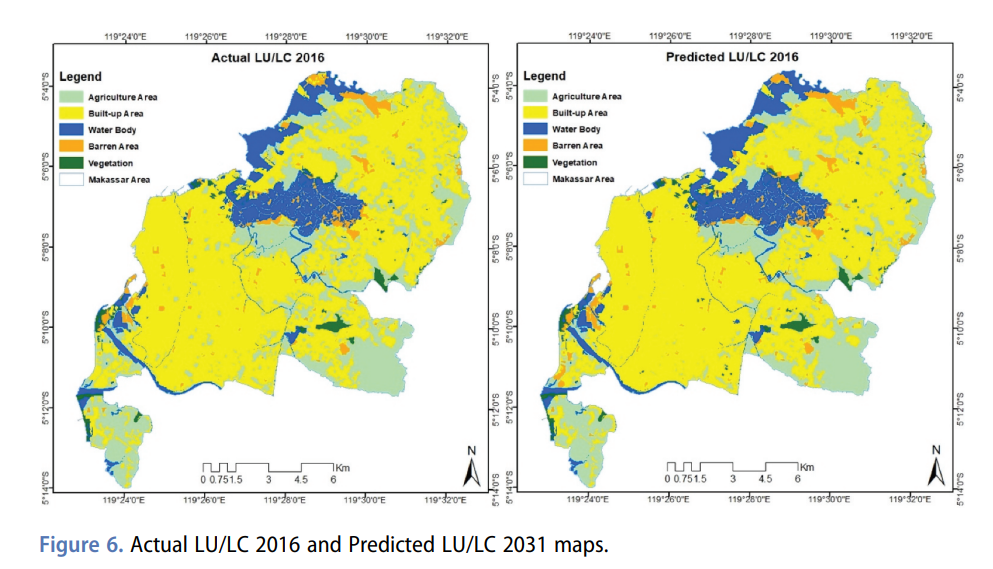
Another important insight from the study is the need for better urban planning. Predictions alone are not enough—they must be followed by action. Local governments need to integrate these findings into spatial planning policies, ensuring that development is balanced with environmental protection.
In addition, public awareness plays a crucial role. Communities need to understand how their activities contribute to land changes. Simple actions, such as supporting green spaces and sustainable housing, can make a difference in the long run.
In conclusion, the study published in the International Journal of Environmental Studies highlights how technology can help us “see the future” of our cities. By using AI to predict land use changes, we can make smarter decisions today that protect the environment tomorrow. Makassar’s experience shows that with the right tools and planning, urban growth does not have to come at the expense of nature—it can be managed in a way that benefits both people and the planet.
https://doi.org/10.1080/00207233.2020.1804730
Contact :
Prof. Agnes Rampisela
metroxylonsagu@trg.unhas.ac.id