As cities grow, an important question arises: can the environment keep up with human needs? Rapid urban development often brings economic benefits, but it can also put serious pressure on land, water, and ecosystems. A scientific study titled “Assessment of Future Environmental Carrying Capacity in the Mamminasata Area, Indonesia, Derived from Regional Census and Land Cover,” published in the International Journal of Environmental Studies by Routledge Taylor & Francis Group on 20 April 2023, helps answer this important question
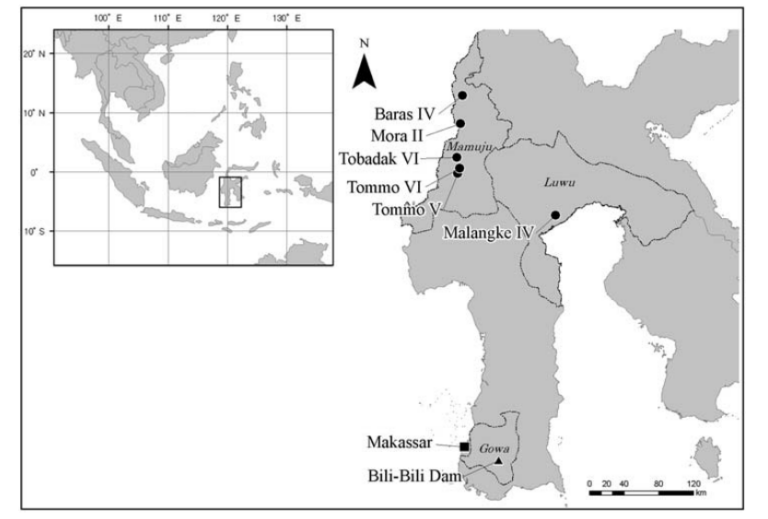
The research focuses on Mamminasata, a strategic region in South Sulawesi that includes Makassar, Maros, Gowa (Sungguminasa), and Takalar. This area plays a major role in economic growth, with sectors like agriculture, tourism, and industry. However, rapid population growth is creating new challenges. The study predicts that the population could reach more than 3.3 million people by 2031 , increasing demand for housing, food, and natural resources.

To understand whether the environment can support this growth, researchers used the concept of “environmental carrying capacity.” Simply put, this refers to how much pressure the environment can handle without being damaged. The study examined several key aspects, including population density, housing availability, agricultural land, and environmental protection.
The findings are both hopeful and concerning. On one hand, the region’s overall carrying capacity is still considered “good” in several areas, such as housing and food production. For example, agricultural land is expected to still meet basic food needs, with around 45% reserve capacity by 2031 . This means there is still room to support the population—at least for now.
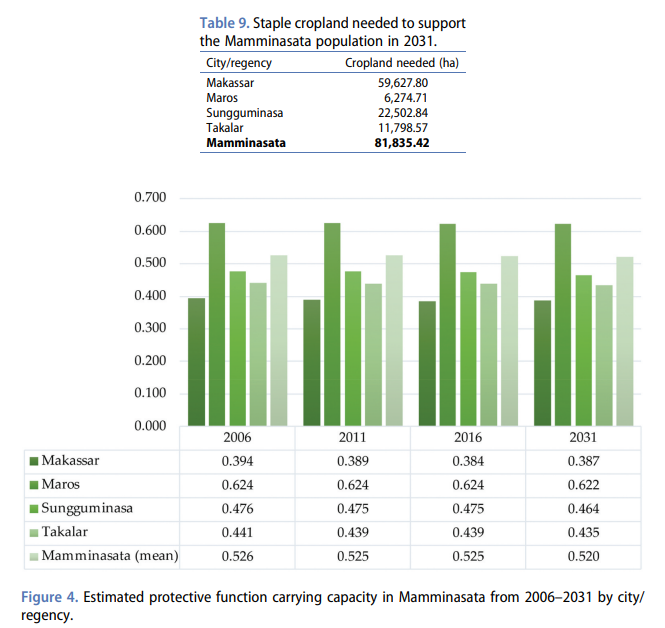
On the other hand, there are warning signs. Urban areas like Makassar are experiencing declining environmental capacity due to high population density and land conversion. explains that increasing built-up areas are reducing the environment’s ability to function properly, especially in protected zones. This could lead to problems such as flooding, loss of green spaces, and reduced ecosystem services in the future.
This issue is closely linked to Sustainable Development Goal (SDG) 15: Life on Land. SDG 15 emphasizes the importance of protecting ecosystems, managing land sustainably, and preventing environmental degradation. The Mamminasata case shows that without careful planning, rapid development can push the environment beyond its limits.
Another important insight from the study is the gap between planning and reality. Many spatial plans do not fully consider environmental limits or future population growth . As a result, development may exceed what the environment can support. The study suggests that better planning, stricter land-use regulations, and conservation efforts are needed to maintain balance.
In conclusion, Mamminasata teaches us that development must respect environmental limits. Growth is important, but it should not come at the cost of sustainability. By understanding environmental carrying capacity, policymakers and communities can make smarter decisions that protect both people and nature. After all, a city’s future depends not only on how fast it grows, but on how well it sustains life within it.
DOI:
10.1080/00207233.2023.2204001
Contact :
Prof. Agnes Rampisela
metroxylonsagu@trg.unhas.ac.id