MAKASSAR, Indonesia Mar 2 2026/RESPOBIO/ – Every day, millions of eggs are consumed worldwide—yet many are lost to spoilage, poor storage, or inefficient processing. In developing regions especially, this loss translates into reduced nutrition, economic inefficiency, and food insecurity. What if a simple transformation could extend shelf life, preserve nutrients, and improve food safety at once? This is where egg flour emerges as a quiet but powerful innovation.
Egg flour, produced by drying fresh eggs into a stable powder, offers a longer shelf life, easier transportation, and versatile application in food products. However, its success depends heavily on understanding how it interacts with moisture—an invisible factor that determines whether food remains safe or becomes a breeding ground for microbes. This is precisely the focus of a recent scientific study titled “Characteristics of Isothermic Sorption Curves and Determination of the Best Equation Model for Egg Flour,” published in the Indonesian Food Science and Technology Journal by Jambi University on July 30, 2024.
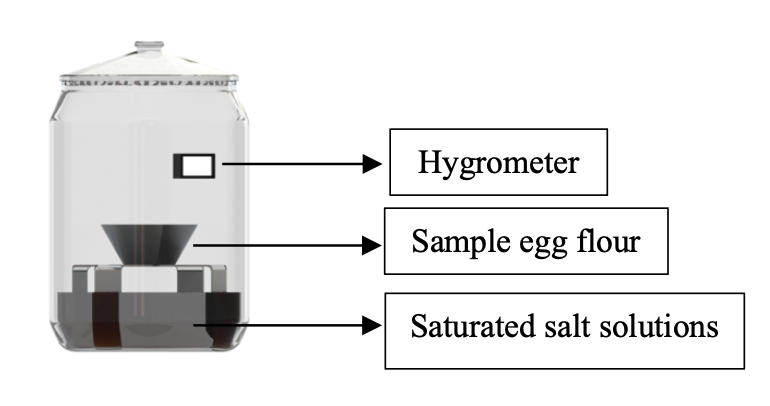
The research dives into sorption isotherms—scientific models that describe how food materials absorb or release moisture under different environmental conditions. While this may sound highly technical, its implications are very practical. By identifying the best mathematical model to predict moisture behavior in egg flour, scientists can determine optimal storage conditions, packaging requirements, and shelf-life stability. In simpler terms, this research helps ensure that egg flour remains safe, nutritious, and usable for longer periods.
Why does this matter? Because food safety is directly linked to public health. Improperly stored food can harbor harmful microorganisms, leading to foodborne illnesses. By applying accurate sorption models, producers can design better packaging systems—such as moisture-resistant materials or controlled humidity environments—that minimize these risks. This aligns directly with SDG 3: Good Health and Well-being, which emphasizes reducing illness and improving overall health through safer food systems.
Beyond safety, the innovation also supports food accessibility. Egg flour can be distributed to remote areas without refrigeration, making it an excellent protein source in regions with limited infrastructure. It can be used in school feeding programs, emergency food supplies, and fortified products, contributing indirectly to better nutrition outcomes.
Moreover, this research highlights the importance of science communication and education. Translating complex models into practical guidelines bridges the gap between laboratory findings and real-world application. It empowers food producers, policymakers, and even small-scale industries to adopt evidence-based practices.
In essence, the study is not just about equations—it is about enabling smarter food preservation strategies. It shows how a deeper understanding of moisture dynamics can transform a perishable commodity into a resilient food ingredient.
As global challenges like food waste and health risks continue to grow, innovations like egg flour—supported by rigorous scientific modeling—offer a pathway toward safer, more sustainable food systems. Sometimes, the smallest particles of knowledge can make the biggest difference on our plates.
Reference
DOI: https://doi.org/10.22437/ifstj.v7i2.33865
Contact:
Prof. Andi Dirpan
+62 812-8774-1963
dirpan@unhas.ac.id