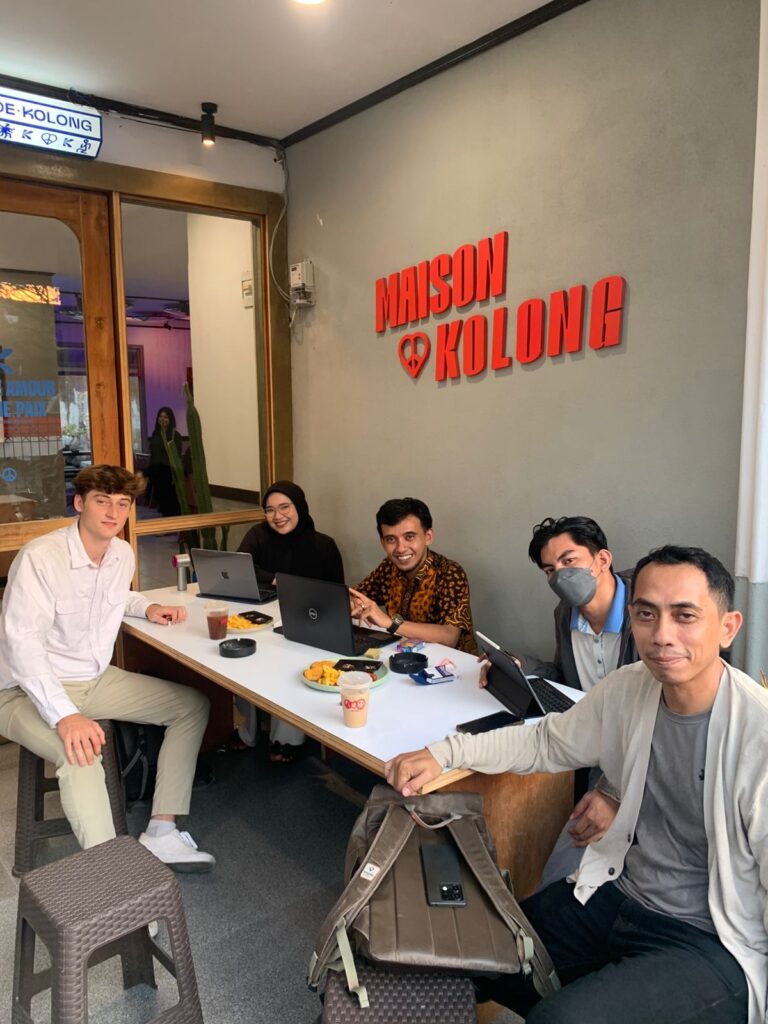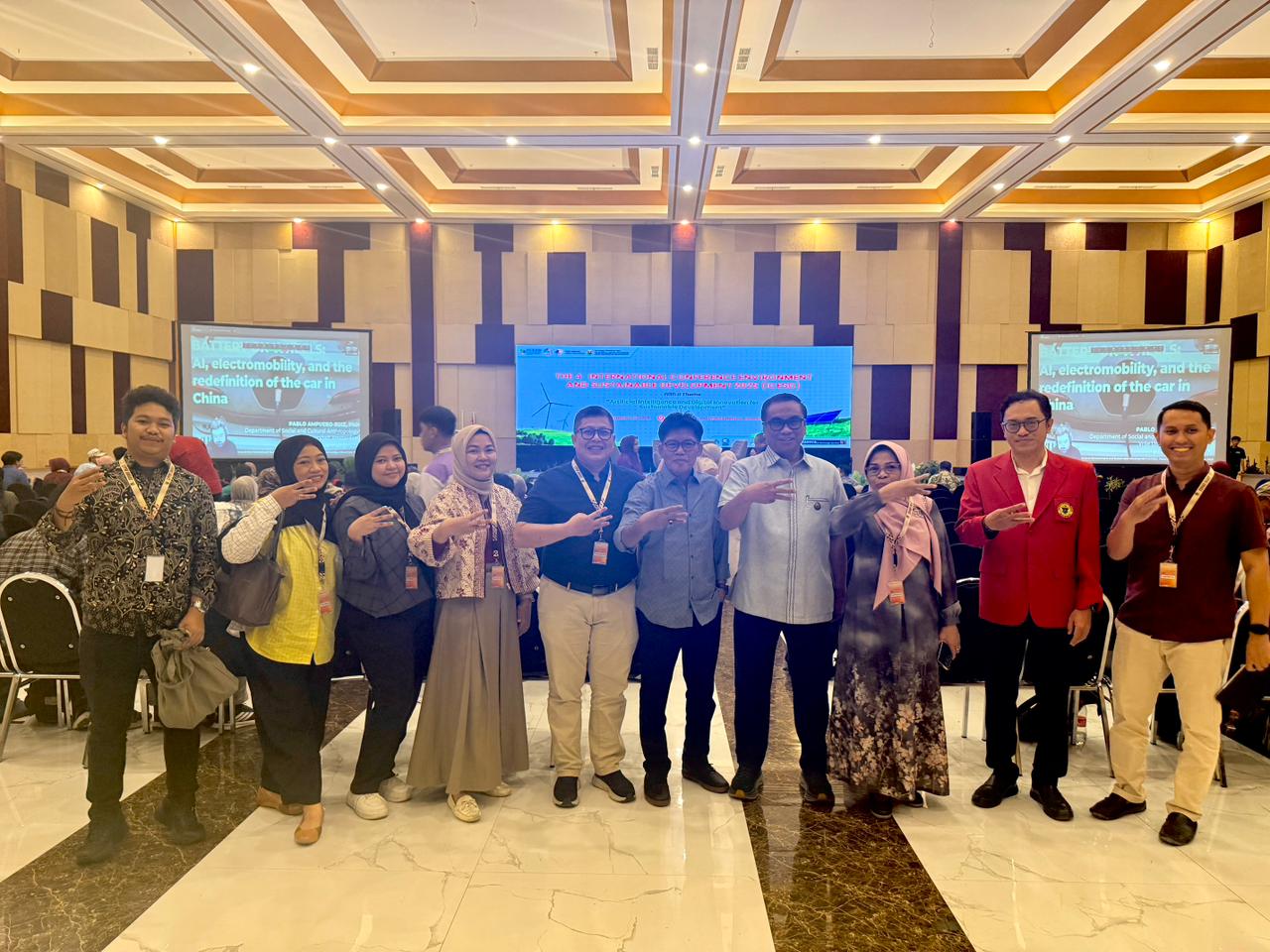

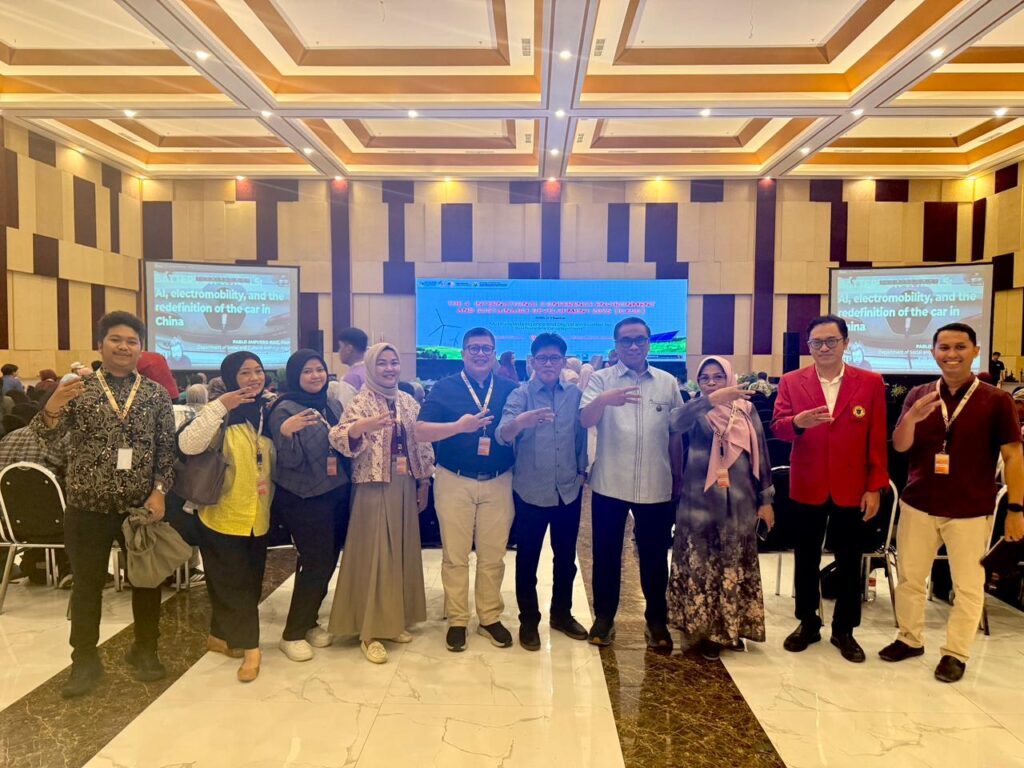
The participation in The 4th International Conference on Environment and Sustainable Development 2025 (ICESD) represents a significant academic and collaborative milestone in advancing research dissemination and global engagement in sustainable development. Held in Makassar, Indonesia, this international forum brought together scholars, practitioners, and policymakers to exchange ideas and innovations addressing pressing environmental and economic challenges.
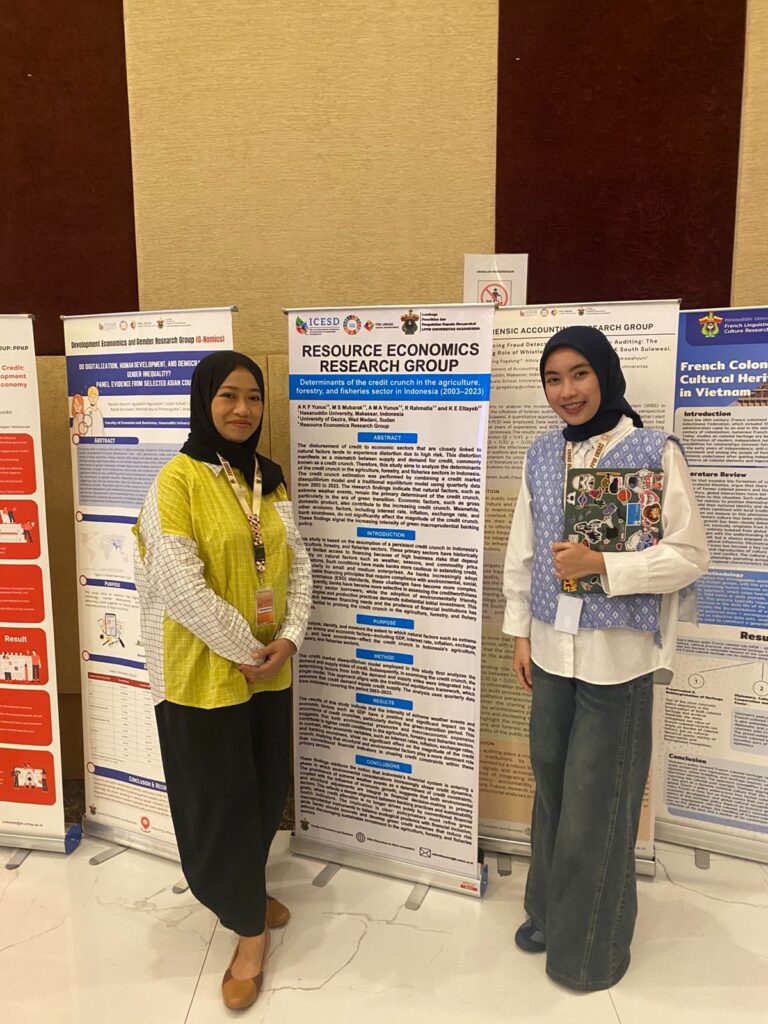
During the event, our team from the Resource Economics Research Group actively contributed by presenting a research poster focused on the issue of credit crunch in the agriculture, forestry, and fisheries sectors. This research highlights structural financial constraints that limit access to credit for key productive sectors, ultimately affecting economic resilience, resource sustainability, and livelihoods. By translating complex empirical findings into a visually engaging poster, the presentation aimed to reach a broader audience and stimulate interdisciplinary dialogue.
The activity aligns strongly with several Sustainable Development Goals (SDGs), particularly SDG 1: No Poverty, SDG 4: Quality Education, and SDG 17: Partnerships for the Goals. The research addresses SDG 1 by examining how financial bottlenecks in primary sectors can exacerbate poverty, especially in rural and resource-dependent communities. By identifying these constraints, the study contributes to policy discussions aimed at improving financial inclusion and reducing economic vulnerability.
Furthermore, participation in this international conference reflects a commitment to SDG 4, as it promotes knowledge sharing, academic exchange, and capacity building. Engaging with global scholars enhances the quality of research and fosters a learning environment that supports innovation and critical thinking. The dissemination of research findings in an international setting also contributes to the broader academic community and encourages evidence-based policymaking.
Equally important is the relevance to SDG 17, which emphasizes the importance of partnerships in achieving sustainable development. The conference served as a platform to build networks, establish research collaborations, and strengthen institutional partnerships across countries and disciplines. Such interactions are essential for addressing complex, cross-cutting issues like financial constraints in resource sectors, which require coordinated and multi-stakeholder approaches.
The participation involved four representatives from the Resource Economics Research Group, demonstrating a collaborative effort in representing institutional research capacity at the international level. The event was conducted over two days, on November 4–5, 2025, allowing for intensive academic engagement, discussion sessions, and networking opportunities.
Overall, this activity not only enhanced the visibility of our research on an international stage but also reinforced the importance of integrating economic analysis with sustainability perspectives. It underscores the role of academic institutions in contributing to global development agendas through research, education, and partnerships.