
MAKASSAR, Indonesia Oct 30 2024/Resource Economics Research Group/ – When central banks adjust interest rates, most people think about loans, inflation, or economic growth. But what if these decisions also shape something much closer to everyday life—what households choose to buy? A recent study titled “Household Durable Goods Spending in Urban Areas: A New Keynesian Micro Perspective,” published in the International Journal of Economics and Financial Issues by EconJournals on October 30, 2024, sheds light on this important connection between macroeconomic policy and household behavior.
The research explores a key idea from the New Keynesian economic model: that spending on durable goods—such as cars, electronics, and household appliances—is more sensitive to monetary policy than spending on everyday items like food or clothing. While this assumption has long been accepted in macroeconomic theory, this study goes a step further by examining it from a microeconomic perspective, focusing on real household behavior in urban areas.
The findings confirm that durable goods spending is indeed highly responsive to changes in interest rates. When borrowing becomes cheaper, households are more likely to purchase big-ticket items. Conversely, when interest rates rise, these purchases tend to be postponed. This makes intuitive sense—buying durable goods often involves long-term financial commitments, so households carefully consider economic conditions before making such decisions.
However, the study also introduces a deeper insight: household decisions are not driven by interest rates alone. Factors such as the number of dependents and long-term saving behavior play a crucial role. Families with more dependents, for example, may prioritize financial security over large purchases, even when interest rates are low. Similarly, households that follow long-term saving strategies tend to smooth their consumption over time, aligning with what economists call the life-cycle hypothesis.
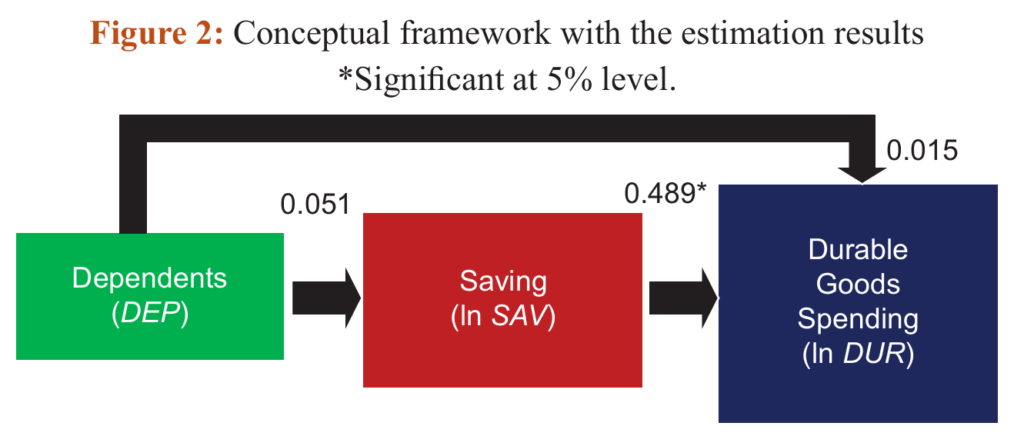
This combination of macroeconomic and microeconomic perspectives highlights a critical point: effective policy design requires understanding both the broader economy and individual household behavior. Monetary policy is not just about numbers—it is about people, their priorities, and their financial realities.
These insights are highly relevant to global development goals, particularly SDG 1: No Poverty, SDG 4: Quality Education, and SDG 17: Partnerships for the Goals. The connection to SDG 1 lies in the role of economic stability. When durable goods spending is well-managed, it can support economic growth, job creation, and improved living standards, ultimately helping reduce poverty.
Meanwhile, SDG 4 is reflected in the importance of financial literacy and economic understanding. When households are better informed about how interest rates affect their finances, they can make more strategic decisions, leading to greater financial resilience. Education, therefore, becomes a key tool in empowering individuals to navigate economic changes.
Finally, SDG 17 emphasizes collaboration between policymakers, researchers, and communities. This study itself is an example of how academic research can inform better policy decisions by bridging theory and real-world behavior. By integrating macroeconomic models with household-level data, it contributes to more inclusive and effective economic strategies.
In the end, the message is simple but powerful: economic policies do not operate in a vacuum. They influence everyday choices, from buying a refrigerator to investing in a family’s future. Understanding this connection is essential for building an economy that is not only stable, but also responsive to the needs of its people.
Reference
DOI: https://doi.org/10.32479/ijefi.16853
Contact:
Amanus Khalifah Fil’ardy Yunus
+62 852-4250-2685
orfil@fe.unhas.ac.id