
Description
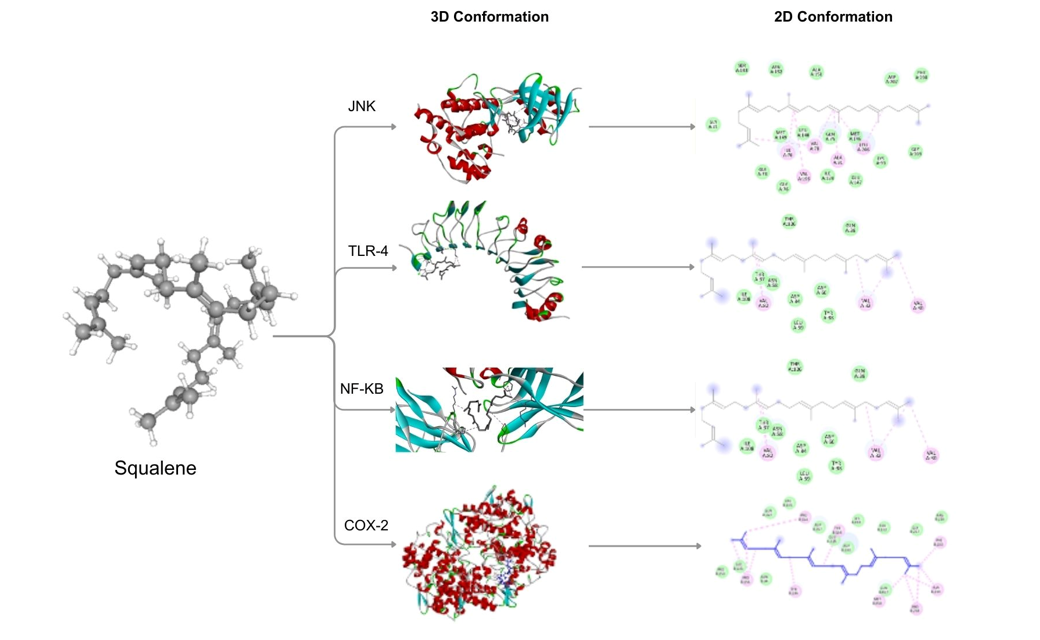
Aims: This study aimed to in silico test and analyze the increase in collagen and fibroblast cells in rat gingival wounds after applying gel made from Stichopus hermanii. Material and Methods: This is a true experimental design with 12 male Wistar rat subjects, which were divided into 3 groups, the group was treated with Stichopus hermanii gel extract, CMC Na, and aspirin for collagenization and fibroblast tests. Using molecular docking studies to know the in silico studies. Each group was given Stichopus hermanii extract at different doses, followed by initial and final blood samples being taken to measure SGOT and SGPT parameters. Results: The fibroblast test showed a significant increase in the number of fibroblasts and the thickness of collagen fibers (collagenase), with the p-value being smaller than 0.05 in the one-way ANOVA test. In silico studies show that 10 compounds have anti-inflammatory benefits. Meanwhile, in the toxicity test, there was an increase in SGOT and SGPT levels with significant results compared to the control group but still within the normal range with minimal increase. Conclusion: The application of Stichopus hermanii extract gel has demonstrated remarkable efficacy in promoting fibroblast proliferation and enhancing collagen fiber thickness. Notably, the absence of toxicity, as evidenced by stable SGOT and SGPT levels, further underscores the safety and potential of Stichopus hermanii gel extract as a promising agent for tissue regeneration.
Description
Abstract
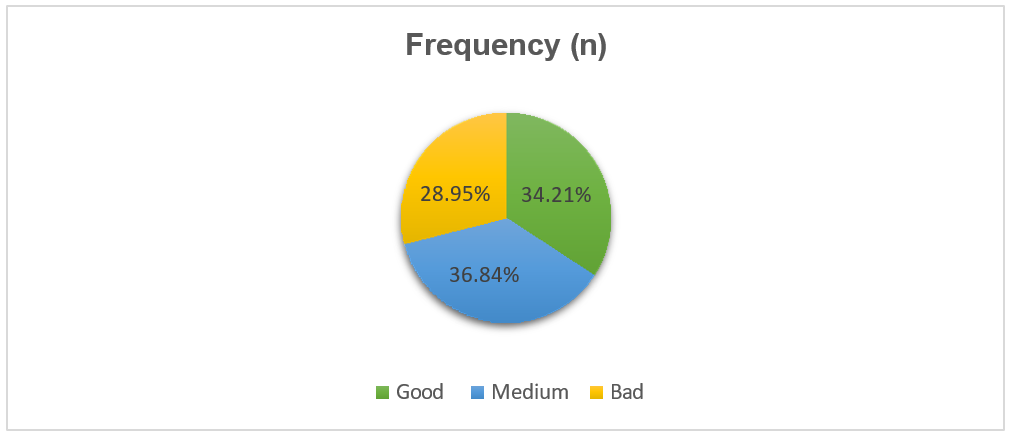
Objective: Down syndrome or also known as Trisomy 21 is a genetic disorder in the form of an excess copy of chromosome 21. Dental anomalies are also common in patients with Down syndrome, with a much higher incidence than the normal population. The aim of this study was to evaluate the profile and characteristics of dental anomalies in patients with Down syndrome. Materials and Methods: Using a descriptive cross-sectional method, 50 samples were collected, consisting of 28 males and 22 females with an age range of 1-31 years. Profile and characteristics were determined based on intraoral clinical examination and panoramic examination and questionnaire filling. Types of dental anomalies were assessed according to the ICD (International Classification of Diseases 10th revision for ;2016. Results: The most common oral anomaly was peg shaped teeth (28.94%), followed by macroglossia (23.68%), and partial anodontia (18.42%). Meanwhile, based on oral hygiene examination, 34.21% had good oral hygiene, 36.84% had moderate oral hygiene, and 28.95% had poor oral hygiene. Conclusion: The highest prevalence of dental and oral anomalies in patients with Down syndrome is peg shaped teeth with an average oral hygiene condition of moderate value.
Description
Penelitian Fundamental Kolaboratif
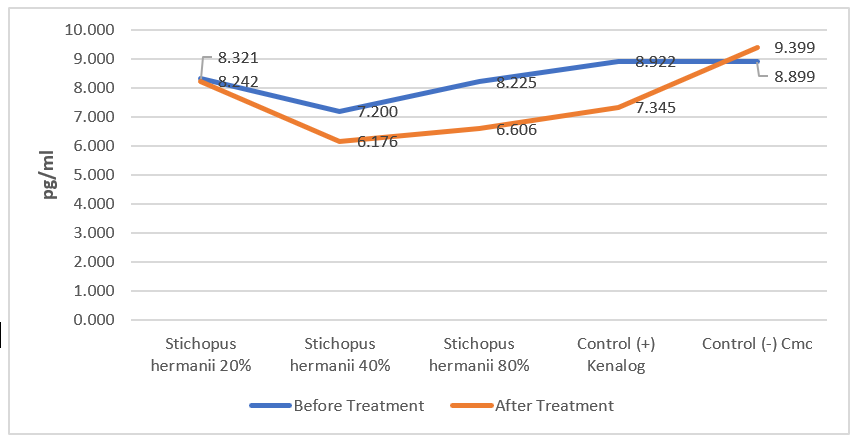
Glycosaminoglycans and collagen in Stichopus hermanii have been shown to support the wound healing process, and Indonesia is the largest producer of this species. This research explores a novel approach to developing natural, cost-effective, and potentially more effective wound healing. This study employs a laboratory experimental design with a post-test-only control group to evaluate the effects of Stichopus hermanii extract IL-6 and IL-10 expression on oral ulcers of Rattus norvegicus. The experimental groups included a positive control (Kenalog in Orabase), a negative control (Carboxy Methyl Cellulose, or CMC), and treatments with Stichopus hermanii extract at concentrations of 80%, 40%, and 20%. The ELISA method was used to measure IL-6 and IL-10 expression. The results demonstrated that Stichopus hermanii extract at an 80% concentration produced the greatest reduction in IL-6 and the highest increase in IL-10 expression. In conclusion, Stichopus hermanii extract significantly reduces IL-6 levels and increases IL-10 levels, suggesting its efficacy in enhancing the wound healing process for oral ulcers.