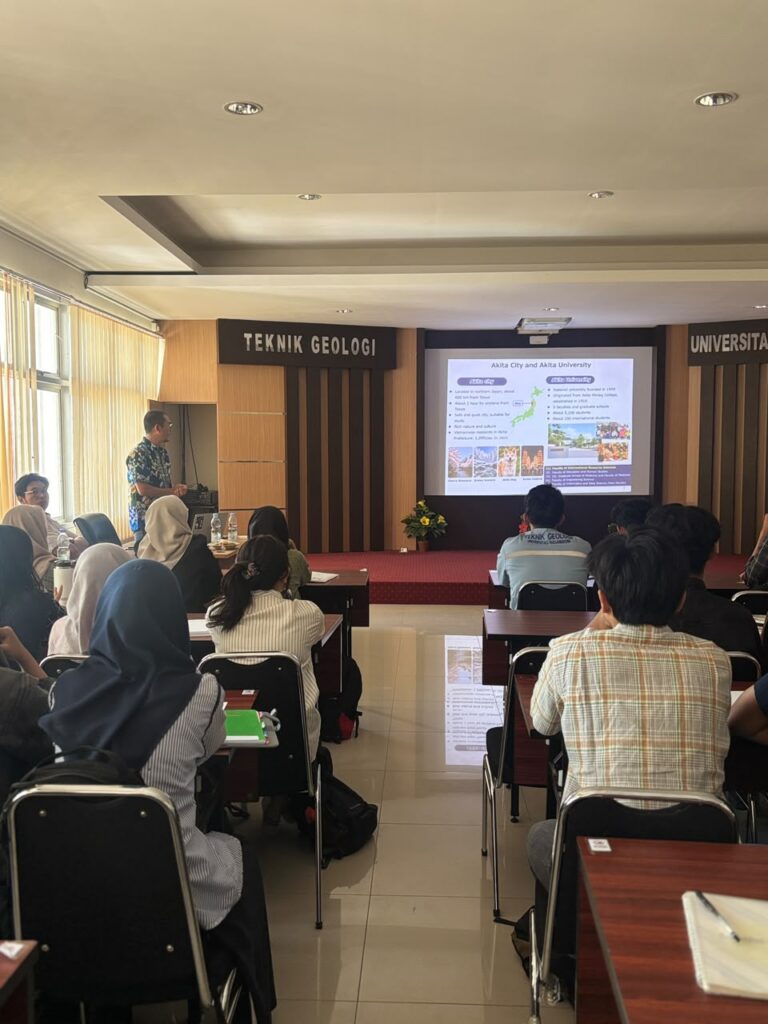
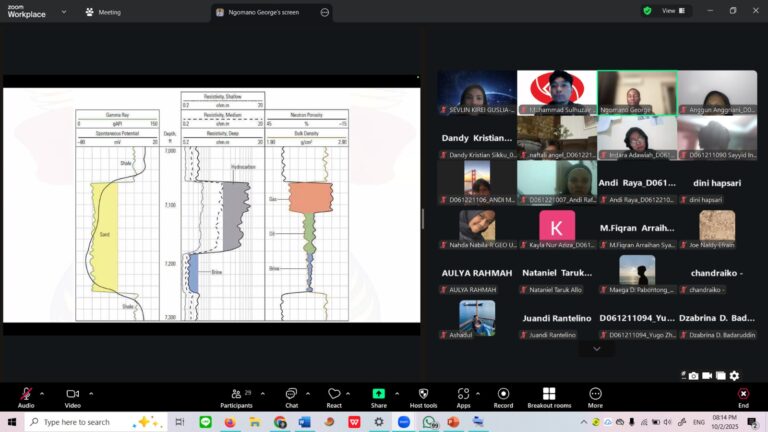
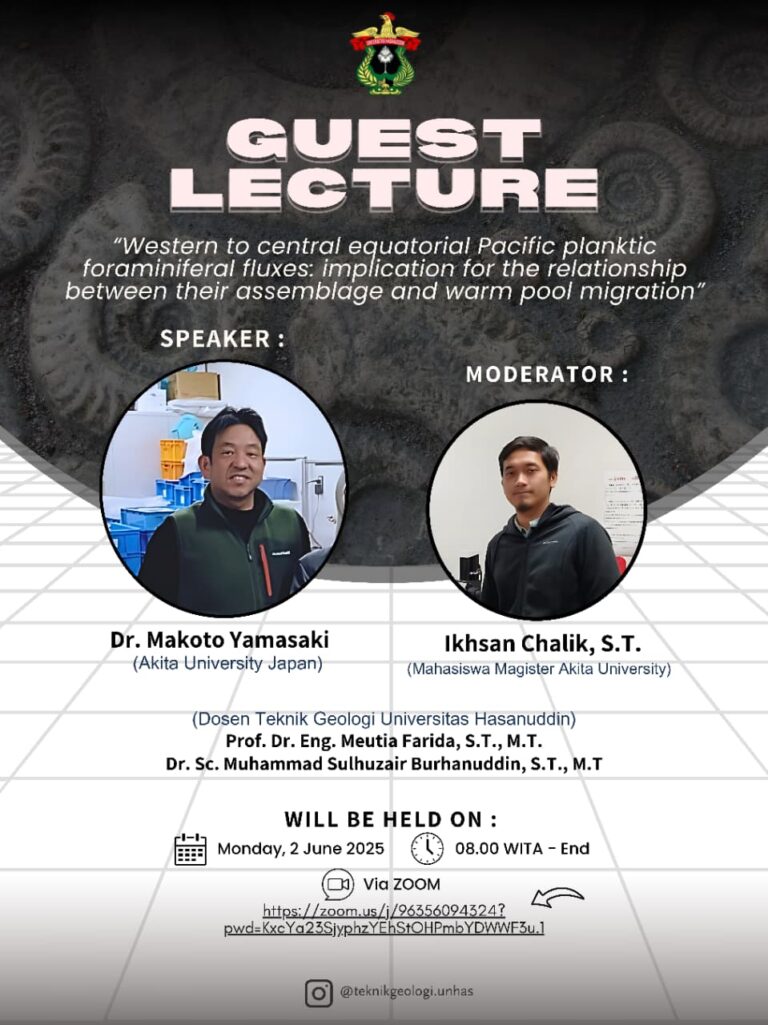
Gowa – From June to September 2025, a research activity entitled “Paleoenvironmental Reconstruction Based on Sediment Characteristics and Fossil Content of the Tonasa Formation, Southern Arm of Sulawesi” was conducted at Hasanuddin University, specifically in the Paleontology Laboratory. The activity involved one participant and focused on reconstructing ancient depositional environments through the integration of sedimentological observations and paleontological analyses, particularly the study of foraminiferal fossils preserved within the Tonasa Formation.
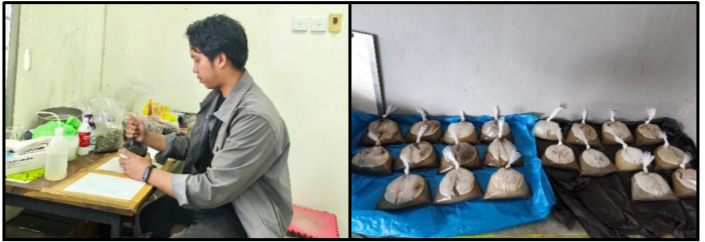
The Tonasa Formation is widely recognized as one of the important carbonate rock formations in South Sulawesi due to its rich fossil content and its significance in understanding the geological evolution of the region. Through this research activity, detailed laboratory investigations were carried out to analyze lithological characteristics, fossil assemblages, and biostratigraphic indicators preserved in rock samples collected from the study area. The integration of these data allowed a more comprehensive interpretation of the depositional history and environmental conditions that existed millions of years ago.
One of the primary objectives of the activity was biostratigraphic interpretation using foraminiferal fossils. Foraminifera are microscopic marine organisms whose fossil records are widely used in geological studies because of their sensitivity to environmental changes and their relatively rapid evolutionary development. By identifying the species composition and distribution of planktonic and benthic foraminifera, the research provided important information regarding the relative age of the rock units and the paleoenvironmental conditions during sediment deposition.
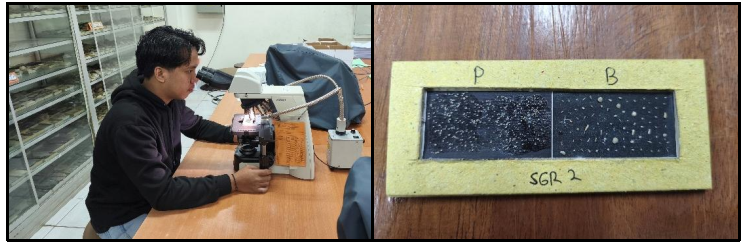
In addition, sedimentological analysis played a major role in reconstructing the paleoenvironment of the Tonasa Formation. The participant conducted detailed observations of rock textures, sedimentary structures, carbonate compositions, and fossil abundance to interpret variations in depositional settings. These findings contributed to understanding how ancient marine environments in Southern Sulawesi evolved through geological time, including changes in water depth, energy conditions, and carbonate platform development.
Beyond its scientific contribution, this activity also demonstrated the importance of laboratory-based geological research in supporting sustainable scientific education and environmental understanding. The research process encouraged analytical thinking, data interpretation skills, and scientific communication, which are essential competencies in Earth science disciplines. The activity became an example of how paleontological studies can bridge geological history with modern environmental awareness by providing insights into long-term environmental change.
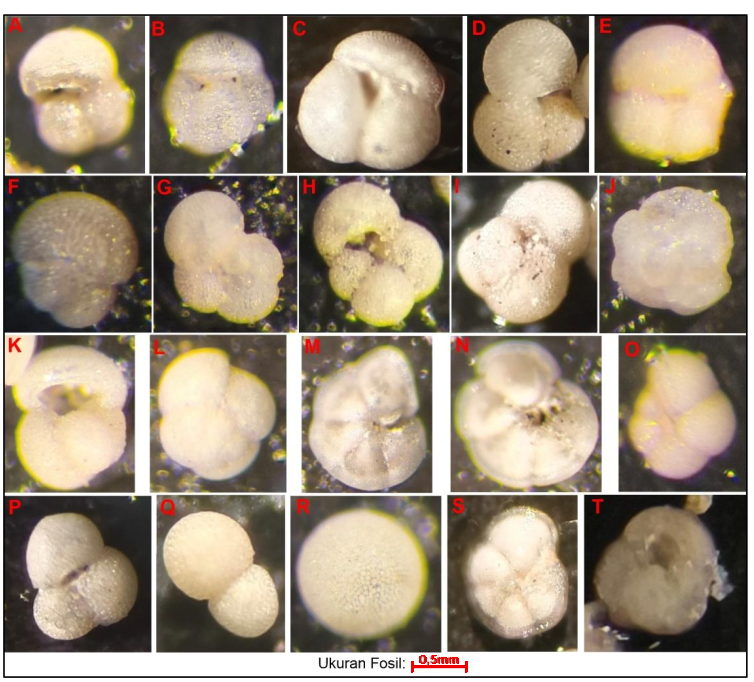
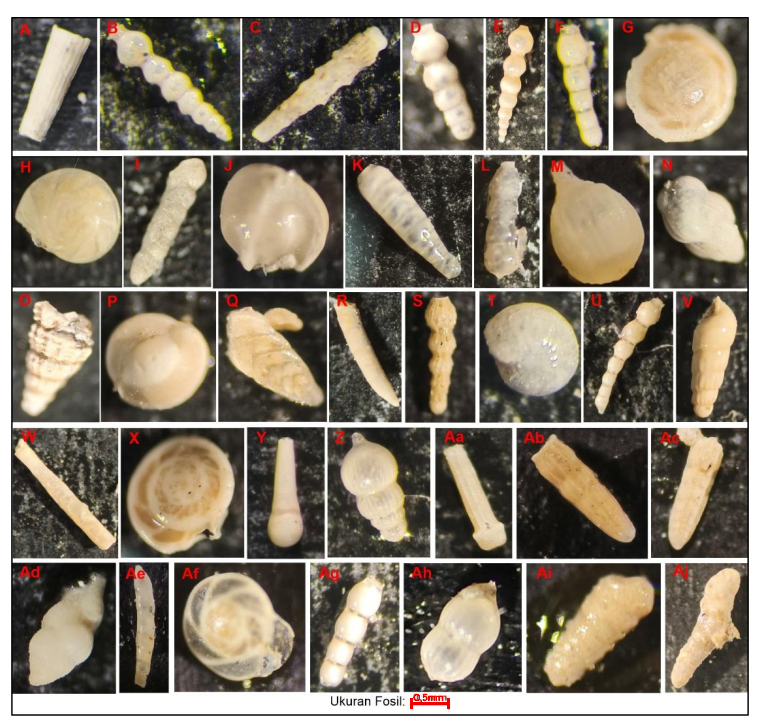
This activity is closely connected to several United Nations Sustainable Development Goals (SDGs). First, it strongly supports SDG 4: Quality Education through the implementation of scientific research and laboratory-based learning that enhances academic capacity and geological knowledge development. The activity also reflects SDG 17: Partnerships for the Goals, particularly through the contribution of institutional laboratory facilities and academic support that enable collaborative scientific advancement in paleontology and stratigraphy.
Furthermore, the research indirectly contributes to SDG 1: No Poverty by supporting the development of geological knowledge that may assist sustainable natural resource management, geotourism potential, and environmental planning in the future. Geological and paleontological studies provide foundational scientific information that can support long-term regional development and sustainable utilization of Earth resources.
Overall, the paleoenvironmental reconstruction study conducted at the Paleontology Laboratory of Hasanuddin University successfully highlighted the value of integrating sedimentological and paleontological analyses in understanding Earth’s ancient environments while simultaneously contributing to education, scientific collaboration, and sustainable development initiatives.