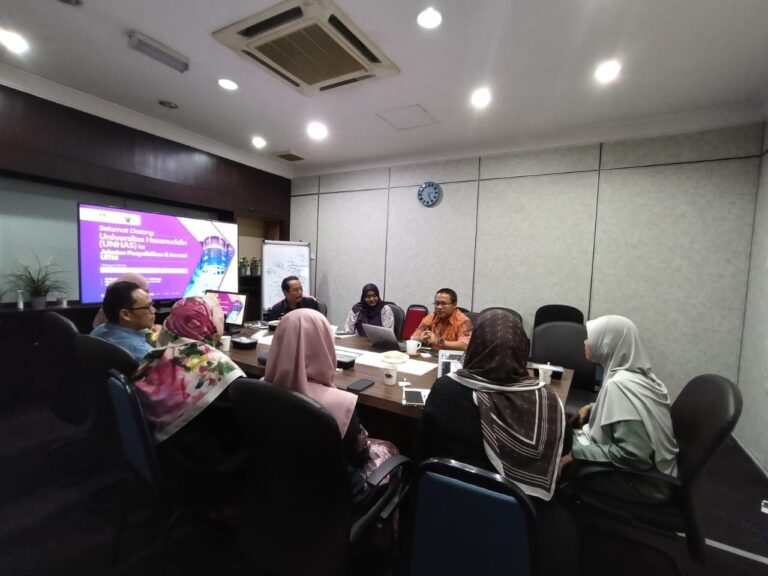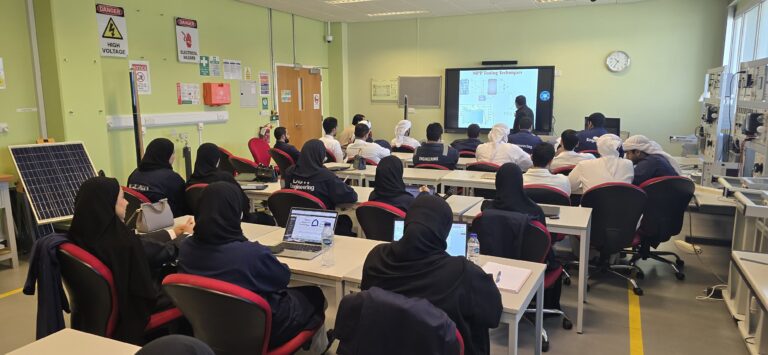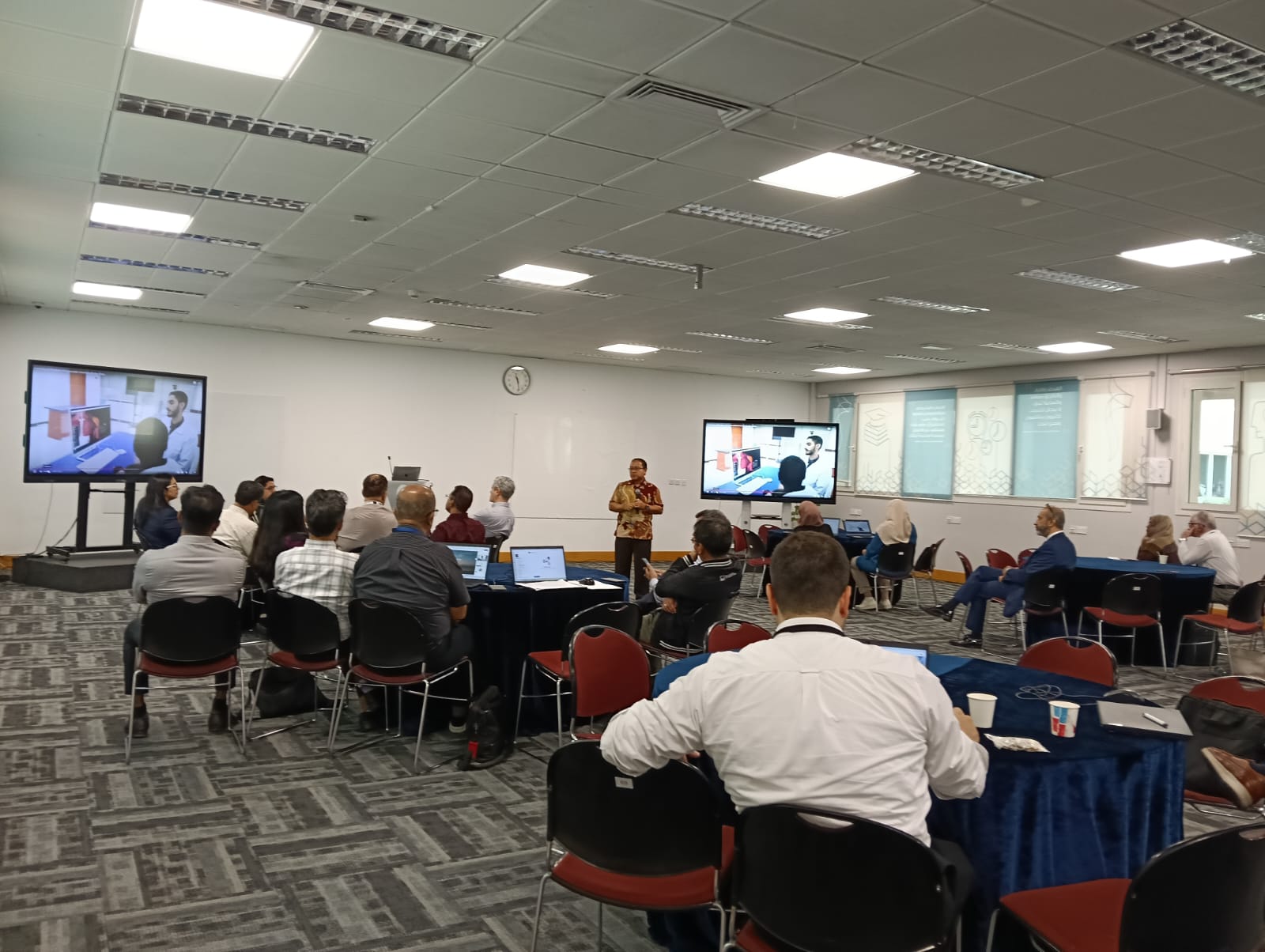

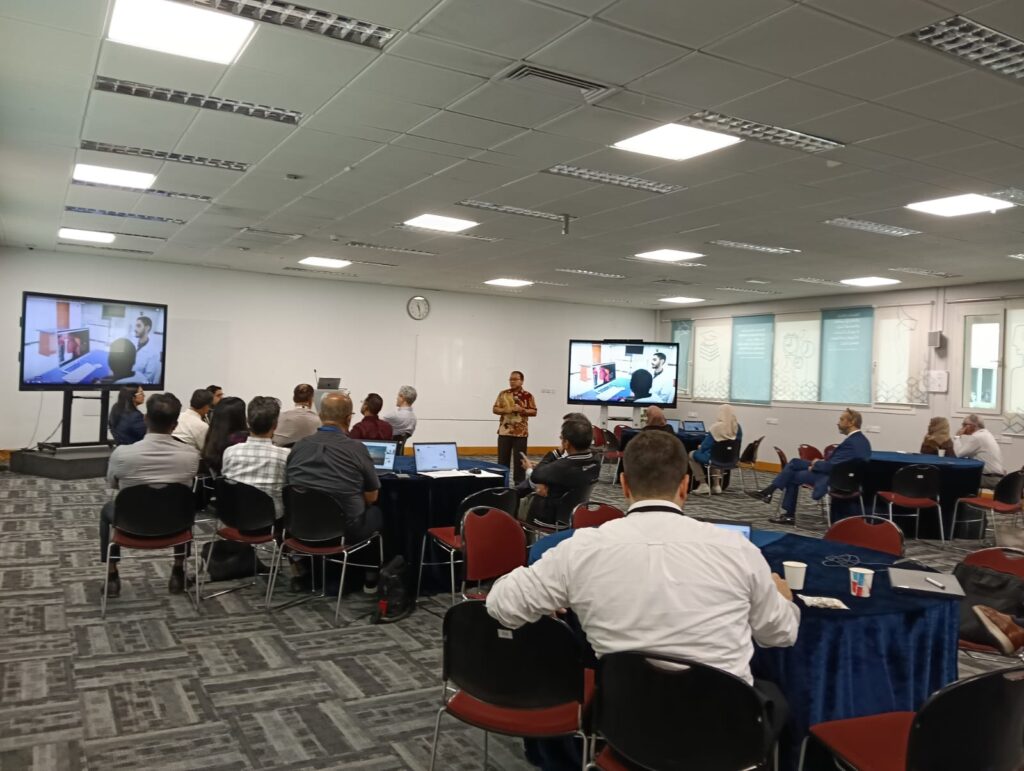
Date: 18 September 2025; Number of participants: 50 people. Representing Universitas Hasanuddin, Prof. Dr. Eng. Ir. Syafaruddin, S.T., M.Eng., IPU, delivered a lecture entitled “Promoting Global Joint Research & Education between Universitas Hasanuddin (UNHAS) and Higher Colleges of Technology (HCT), UAE” to members of the committees and faculty of HCT. The session, hosted by Dr. Faizal Alayyan, signifies the growing collaboration between the two institutions. The lecture highlighted UNHAS’ strategic direction in advancing global joint research, academic mobility, and knowledge exchange, especially in the field of electrical and renewable energy engineering. Discussions also explored the potential for joint academic programs, co-supervised research projects, and exchange opportunities for students and faculty. This visit underscored UNHAS’ ongoing commitment to fostering international collaboration and promoting innovation through cross-border academic partnerships. The engagement with HCT marks another important milestone in strengthening UNHAS’ global presence and enhancing its role as a hub for engineering excellence in the Middle East.
n an era defined by rapid technological advancement and interconnected challenges, the boundaries of the classroom and the laboratory must extend beyond national borders. Recognizing this imperative, our institution recently spearheaded a flagship initiative titled “Promoting Global Joint Research & Education.” This program serves as a strategic bridge, connecting diverse academic minds to foster a culture of shared knowledge, cultural exchange, and high-impact innovation that addresses global concerns.
Building a Borderless Academic Ecosystem
The core philosophy behind this initiative is the belief that the most pressing issues of our time—from climate change and public health to artificial intelligence and sustainable engineering—cannot be solved in isolation. By promoting global joint research, we aim to combine the unique strengths of various international institutions. This synergy allows researchers to access specialized facilities, diverse datasets, and unique regional perspectives that would otherwise be unavailable. It turns the “brain drain” of the past into a “brain circulation” of the future, where ideas flow freely across continents to accelerate the pace of discovery.
Transforming Education through Mobility
Beyond the laboratory, the program places a significant emphasis on global education. We believe that a modern student must be a global citizen. Through joint educational ventures, dual-degree programs, and international credit transfers, we are creating a curriculum that is as diverse as the world itself. These programs do more than just impart technical skills; they cultivate essential “soft skills” such as cross-cultural communication, adaptability, and global empathy. Students participating in these joint initiatives find themselves better equipped for a competitive international job market, having mastered the ability to collaborate with peers from vastly different backgrounds.
The Role of Technology in Connectivity
A key highlight of this initiative was the implementation of “Virtual Collaborative Classrooms.” By leveraging state-of-the-art digital communication tools, we have enabled real-time joint lectures and research seminars involving universities from multiple time zones. This hybrid approach ensures that the benefits of global education are accessible to a wider demographic, reducing the financial and geographical barriers to international collaboration. These digital platforms serve as the nervous system of our global network, allowing for constant dialogue and the rapid dissemination of joint research findings.
Strategic Outcomes and Future Goals
The “Promoting Global Joint Research & Education” initiative has already resulted in several high-impact co-publications in prestigious international journals and the establishment of long-term Memorandums of Understanding (MoUs) with leading global partners. However, the true measure of success lies in the enduring relationships built between scholars and the inspired outlook of our students.
As we move forward, our goal is to expand this network even further, integrating more partners from the Global South and emerging economies to ensure a truly inclusive academic dialogue. By investing in global joint research and education, we are not just enhancing our institutional prestige; we are contributing to a more stable, knowledgeable, and unified global society. The future of innovation is collaborative, and it starts with the bridges we build today. (SDGs 17: Partnerships for the Goals).