
Gowa / 1 February 2019 / Power Systems: The world is currently in the middle of a massive "energy makeover." As we move away from fossil fuels, we aren't just switching to one single source of power. Instead, we are building a complex puzzle of solar, wind, and battery systems. But here is the catch: how do we make these systems cheap enough for everyone, powerful enough to run a city, and clean enough to save the planet—all at the same time? This is the ultimate balancing act of modern engineering.

The Solar Doctor: Keeping Clean Energy Healthy with Smart Technology
https://www.jestr.org/downloads/Volume12Issue5/fulltext71252019.pdf
Gowa / 1 October 2019 / Power Systems: Imagine waking up one morning to find that your home’s solar panels have stopped working. Perhaps a stray leaf has covered a cell, a wire has frayed, or a component has simply aged. For a single household, this is a nuisance; for a large-scale solar farm powering thousands of homes, it is a disaster. As we shift our entire global energy reliance toward the sun, we face a new challenge: how do we detect and fix problems in these massive systems before they lead to a total blackout?
Diagnosing the Invisible
Solar panels might look like sturdy pieces of glass, but they are actually sensitive electronic systems. Over time, they can suffer from various "illnesses," ranging from short circuits and corrosion to shading caused by dust or bird droppings. Detecting these faults manually is like trying to find a needle in a haystack—expensive, time-consuming, and often dangerous for technicians.
This critical issue is addressed in a comprehensive academic study titled "Review on Methods of Fault Diagnosis in Photovoltaic System Applications." This article, which serves as a vital resource for engineers worldwide, was published in the Journal of Engineering Science and Technology Review by the publisher JESTR on October 1, 2019. The paper explores various advanced methods—such as thermal imaging and electrical signal analysis—that act like a "medical check-up" for solar arrays, ensuring they stay in peak condition.
Protecting Our Blue Planet
The ability to quickly diagnose and repair solar systems is not just about saving money; it is a fundamental requirement for environmental preservation. This technology is intrinsically linked to SDG 14: Life Below Water. You might wonder: how does a solar panel on land affect the ocean? The answer lies in the bigger picture of climate change.
The health of our oceans depends on a stable global temperature. When solar systems fail or operate inefficiently, we often fall back on burning fossil fuels to fill the energy gap. This increases carbon dioxide emissions, which leads to ocean acidification and rising sea temperatures—two of the greatest threats to coral reefs and marine biodiversity. By utilizing the diagnostic methods highlighted by JESTR to ensure 100% solar efficiency, we reduce our carbon footprint and directly support SDG 14: Life Below Water, protecting the delicate underwater ecosystems that sustain life on Earth.
A Resilient Energy Future
As the research from October 1, 2019, suggests, the future of energy is not just about building more panels; it is about building smarter maintenance systems. When we can detect a fault the moment it happens, we ensure that clean energy remains reliable and affordable for everyone.
By combining cutting-edge engineering with a commitment to our oceans, we are creating a world where technology and nature coexist in harmony. Keeping our solar panels "healthy" is a small but powerful step toward ensuring that our blue planet—and everything living beneath its waves—continues to thrive for generations to come.
DOI: 10.25103/jestr.125.07
Contact Person: Syafaruddin; +6282125632817; syafaruddin@unhas.ac.id
Smart Solar: How Artificial Intelligence is Revolutionizing Clean Energy
http://www.icicelb.org/ellb/contents/2020/2/elb-11-02-01.pdf
Gowa / 1 February 2020 / Power Systems: The sun provides an incredible amount of energy, yet capturing it efficiently remains one of the greatest engineering challenges of our time. Most people think of solar panels as simple "set and forget" devices. In reality, a solar panel’s performance changes every minute based on temperature, cloud cover, and light intensity. To get the most out of every ray of light, we need more than just silicon—we need "brains." This is where the world of Artificial Intelligence (AI) steps in to make green energy smarter than ever before.
The Brains Behind the Panel
At the cutting edge of this movement is a sophisticated technology known as ANFIS, or the Adaptive Neuro-Fuzzy Inference System. Think of it as a digital brain that combines the learning abilities of neural networks with the human-like reasoning of fuzzy logic. This system allows solar panels to "think" and adjust in real-time to find the "Optimal Power Point"—the sweet spot where the panel produces the maximum possible electricity regardless of the weather.
This groundbreaking approach is the focus of an influential study titled "Adaptive Neuro-Fuzzy Inference System (ANFIS) Method Based Optimal Power Point of PV Modules." This research was published on February 1, 2020, in the journal ICIC Express Letters, Part B: Applications by the publisher ICIC International. The article demonstrates that by using these AI-driven controllers, we can significantly reduce energy waste and make solar power much more reliable for everyday use.
Empowering Quality Education
While energy efficiency is a technical triumph, its real-world value is measured by how it improves human lives. This innovation is a vital tool in achieving SDG 4: Quality Education. In many parts of the world, schools in remote or rural areas lack access to a stable power grid. Without electricity, students cannot use computers, access the internet, or even study after sunset.
By implementing ANFIS-based solar systems, schools can enjoy a consistent and optimized supply of clean energy at a lower cost. When energy becomes efficient and self-sustaining, it ensures that technology-enhanced learning is no longer a luxury. SDG 4: Quality Education thrives when students have the power to stay connected and the light to read, effectively bridging the digital divide between urban and rural communities.
A Brighter, Smarter Future
The integration of AI into renewable energy represents a massive leap forward. As highlighted in the metadata from ICIC International, the move toward smarter power management is already well underway. We are shifting from "dumb" hardware to "intelligent" systems that adapt to the environment.
By optimizing how we harvest sunlight, we aren't just saving money—we are empowering communities, supporting teachers, and giving students the tools they need to succeed. The marriage of Artificial Intelligence and solar energy proves that when we use our best technology to solve our biggest problems, the future looks incredibly bright for everyone.
DOI: 10.24507/icicelb.11.02.111
Contact Person: Syafaruddin; +6282125632817; syafaruddin@unhas.ac.id
The Power of Harmony: How Hybrid Energy Systems are Saving Our Planet
https://www.jestr.org/downloads/Volume13Issue4/fulltext261342020.pdf
Gowa / 1 June 2020 / Power Systems: The modern world has an insatiable appetite for electricity. For decades, we relied on a single-source mindset—burning coal or gas to keep the lights on. However, as we face the urgent reality of climate change, the conversation has shifted toward renewables like wind and solar. The challenge? The sun doesn’t always shine, and the wind doesn’t always blow. To solve this, scientists are perfecting a "best of both worlds" approach: Hybrid Power Generation.
The Magic of the Mix
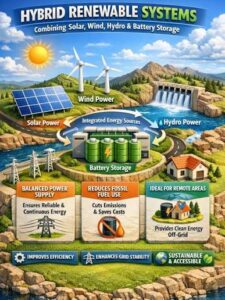
A hybrid power system is essentially a smart team of energy sources working together. Imagine a setup where solar panels soak up the midday sun, while wind turbines take over during a stormy night, all backed up by advanced battery storage or even traditional generators. By combining these different sources, we create a steady, reliable flow of electricity that can power everything from a single home to an entire city.
This fascinating evolution in how we manage our grids is explored in depth in a comprehensive scholarly article titled "A Review of Hybrid Power Generation: Modelling- Simulation, Control Strategy and Future Trend Development."This research was published in the Journal of Engineering Science and Technology Review by the publisher JESTR on June 1, 2020. The article serves as a vital roadmap, detailing how sophisticated computer simulations and control strategies ensure these different energy sources play nice with each other without crashing the grid.
Preserving Life on Land
The shift toward hybrid systems is not just about keeping our gadgets charged; it is a fundamental pillar of environmental conservation. This technology is directly linked to SDG 15: Life on Land. By maximizing the efficiency of hybrid power, we significantly reduce the need to expand massive, destructive mining operations for fossil fuels that devastate forests and natural habitats.
When we implement localized hybrid grids, particularly in rural or sensitive ecological areas, we minimize the footprint of traditional energy infrastructure. Instead of cutting down vast swaths of trees for long-distance power lines or coal plants, we can use compact, integrated hybrid systems. This protects biodiversity and ensures that terrestrial ecosystems—the "Life on Land" that humans and animals depend on—remain intact and healthy for future generations.
Engineering a Greener Tomorrow
The research provided by JESTR emphasizes that the future of energy isn't just about finding one "magic bullet" source. Instead, it’s about the "Control Strategy"—the digital intelligence that decides which energy source to use at any given second.
As we look forward, the development of these hybrid systems represents our best chance at a sustainable transition. It moves us away from being "energy consumers" who harm the Earth to "energy managers" who work in harmony with nature. By embracing the complexity of hybrid power and prioritizing SDG 15, we are ensuring that our technological progress doesn't come at the cost of the green world we call home. The future of power is hybrid, and it is a win-win for both humanity and the planet.
DOI: 10.25103/jestr.134.26
Contact Person: Syafaruddin; +6282125632817; syafaruddin@unhas.ac.id
Sun-Powered Homes: Transforming Buildings into Giant Green Batteries
https://www.jestr.org/downloads/Volume14Issue4/fulltext241442021.pdf
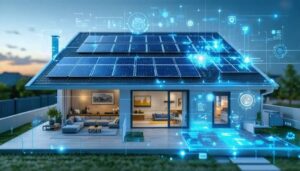
Gowa / 1 August 2021 / Power Systems: Imagine walking through a city where every skyscraper, apartment block, and house isn't just a shelter, but a living power plant. For decades, solar panels have been clunky additions bolted onto roofs as an afterthought. However, a revolutionary shift is happening in urban design. We are moving toward a world where the very skin of our buildings generates electricity and heat simultaneously. This is the promise of Building Integrated Photovoltaic-Thermal (BIPV/T) systems.
The Architecture of Tomorrow
Traditional solar panels often struggle with efficiency because they get too hot; as their temperature rises, their ability to generate electricity drops. This is where BIPV/T technology changes the game. Instead of just sitting on top of a roof, these solar elements are integrated directly into the building’s facade or windows. More importantly, they use a cooling system—often circulating air or water—to capture the excess heat. This "waste" heat can then be used to warm up your shower or provide space heating, making the entire building an ultra-efficient energy machine.
This fascinating evolution is meticulously detailed in a scholarly work titled "A Review of Building Integrated Photovoltaic-Thermal (BIPV/T) Systems: Current and Potential Technology Development." This insightful article was published in the Journal of Engineering Science and Technology Review by the publisher JESTR on April 1, 2022. The research highlights how merging construction materials with energy technology is no longer a futuristic dream, but a practical solution for modern cities.
Building a Sustainable Future Together
The implementation of BIPV/T technology is not just an engineering feat; it is a vital contribution to global stability. Specifically, this technology acts as a powerful catalyst for SDG 17: Partnerships for the Goals. Achieving a transition to green cities requires intense collaboration between governments, private tech developers, and urban planners. By sharing technical knowledge and creating international standards for integrated solar materials, countries can work together to ensure that sustainable technology is not a luxury for the few, but a standard for the many.
Under the framework of SDG 17, the cross-border exchange of research—like the data provided by JESTR—enables developing nations to leapfrog old, polluting energy infrastructures. When we build partnerships to integrate solar technology into the very fabric of our society, we strengthen the global commitment to a carbon-neutral footprint.
The Road Ahead
The transition to BIPV/T systems represents a "smart" way of living. It reduces our reliance on fossil fuels while making our urban environments more aesthetic and functional. As these systems become more affordable and widely adopted through global cooperation, our cities will stop being energy consumers and start being energy creators. By turning every wall and roof into a source of clean power, we are not just building houses; we are building a resilient, sustainable legacy for the generations to come. The future is bright, and it is built right into the walls around us.
DOI: 10.25103/jestr.144.24
Contact Person: Syafaruddin; +6282125632817; syafaruddin@unhas.ac.id
Sun-Chasing Tech: How Smart Microcontrollers are Powering a Greener Future
http://www.icicelb.org/ellb/contents/2022/4/elb-13-04-01.pdf
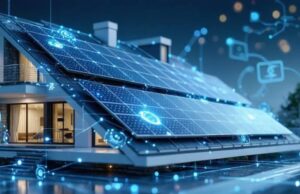
Gowa / 1 April 2022 / Power Systems: In our rapidly evolving world, the quest for sustainable energy has moved from a niche scientific interest to a global necessity. While traditional solar panels have been a staple of renewable energy for years, they often suffer from a simple limitation: they stay still while the sun moves. To solve this, researchers are turning to "Dual Axis Solar Trackers," a sophisticated technology that ensures solar panels follow the sun’s path across the sky like a sunflower.
The Brain Behind the Movement
At the heart of this innovation is a clever piece of technology known as the Arduino UNO AVR ATmega328 Microcontroller. This tiny "brain" is the focal point of a significant study titled "Arduino UNO AVR ATmega328 Microcontroller based Dual Axis Solar Tracker Design." Published on April 1, 2022, in the journal ICIC Express Letters, Part B: Applications by ICIC International, this research explores how we can maximize energy efficiency through smart design.
By using light-dependent sensors and small motors, the microcontroller calculates the sun’s exact position. Instead of sitting flat, the panel tilts and rotates on two axes (horizontal and vertical). This ensures that the sun’s rays always hit the surface at a perfect 90-degree angle, significantly boosting the amount of electricity generated compared to static systems.
Empowering the Global Goals
This technological advancement isn't just about cool gadgets; it is a vital tool in achieving the United Nations' Sustainable Development Goals (SDGs). Specifically, this innovation aligns perfectly with SDG 7: Affordable and Clean Energy (by improving efficiency) and SDG 13: Climate Action. However, its impact goes even deeper by supporting SDG 1: No Poverty.
By increasing the efficiency of solar energy, we reduce the cost of electricity. In developing regions or remote areas where the power grid is unreliable, low-cost, high-efficiency solar trackers can provide affordable energy to households and small businesses. When energy becomes cheaper and more accessible, it opens doors to better education, improved healthcare, and economic opportunities, directly helping to break the cycle of poverty.
Why It Matters to You
You don't need to be an engineer to appreciate the beauty of this system. The design highlights a shift toward "smart" sustainability. By using affordable components like the Arduino UNO, this technology becomes accessible not just for large power plants, but for local communities and DIY enthusiasts.
As we look toward the future, the integration of microcontrollers in renewable energy represents a bridge between complex engineering and everyday impact. It is a reminder that through clever design and a commitment to the SDGs, we can harness the power of the stars to create a brighter, more equitable life for everyone on Earth. The sun is giving us all the energy we need; we just need to be smart enough to follow it.
DOI: 10.24507/icicelb.13.04.337
Contact Person: Syafaruddin; +6282125632817; syafaruddin@unhas.ac.id
Turning Sunlight into Smart Power: How AI Optimizes Solar Energy for a Better World
http://www.icicel.org/ell/contents/2022/5/el-16-05-13.pdf
Gowa / 1 May 2022 / Power Systems: Solar energy is everywhere—shining on rooftops, fields, and open spaces across the globe. But here’s a question many people don’t think about: are we really getting the most out of every ray of sunlight? The answer is not always. Solar panels often operate below their full potential due to changing weather, temperature, and other environmental factors. This is where smart technology steps in.
A scientific study titled “Radial Basis Function and Three-Layered Feed-Forward Network for the Optimal Output Power of Photovoltaic Modules”, published in ICIC Express Letters by ICIC International on May 1, 2022, introduces an innovative approach to this problem. The research explores how artificial intelligence (AI), specifically neural networks, can help solar panels produce the maximum possible energy under varying conditions.
In simple terms, the researchers used two types of AI models—Radial Basis Function (RBF) and a three-layered feed-forward neural network—to predict and optimize the output power of photovoltaic (solar) modules. These models learn from data, recognize patterns, and make quick decisions about how to adjust the system for the best performance. Think of it as giving solar panels a “brain” that helps them work smarter, not harder.
This advancement is more than just a technical improvement—it connects directly to SDGs 4: Quality Education. Why? Because the development and application of AI in renewable energy depend heavily on knowledge, skills, and continuous learning. Studies like this not only push the boundaries of science but also provide valuable learning materials for students, engineers, and researchers around the world.
By integrating AI into solar energy systems, we create opportunities for education in fields like data science, engineering, and environmental studies. Universities and training centers can use this research as a foundation to teach the next generation of innovators. In this way, the impact of the study goes beyond energy—it helps build human capacity and supports lifelong learning.
Moreover, optimizing solar power output has real-world benefits. More efficient panels mean more electricity without needing additional equipment or land. This can lower energy costs and make renewable energy more accessible, especially in developing regions. With better knowledge and technology, communities can take greater control of their energy resources.
The research published in ICIC Express Letters also shows the importance of collaboration between disciplines. Combining AI with renewable energy requires expertise in mathematics, computer science, and engineering. This kind of interdisciplinary learning is exactly what SDG 4 encourages—an education system that prepares people to solve complex global challenges.
Another important point is that smarter solar systems contribute to environmental sustainability. By maximizing the energy harvested from sunlight, we reduce the need for fossil fuels and decrease carbon emissions. This helps protect ecosystems and supports a healthier planet.
In conclusion, the study demonstrates that the future of energy is not just renewable—it is intelligent. By using AI to optimize solar power, we can make better use of natural resources while also advancing education and innovation. As we move forward, empowering people with knowledge will be just as important as developing new technologies.
DOI: 10.24507/icicel.16.05.555
Contact Person: Syafaruddin; +6282125632817; syafaruddin@unhas.ac.id
Chasing the Sun: Smart Solar Tracking for a More Sustainable Tomorrow
http://www.icicelb.org/ellb/contents/2024/3/elb-15-03-01.pdf
Gowa / 1 March 2024 / Power Systems: Solar energy is often seen as one of the most promising solutions to our global energy challenges. Clean, abundant, and renewable, sunlight has the potential to power homes, industries, and entire cities. But there’s one simple problem: the sun is always moving. As the Earth rotates, the angle of sunlight changes throughout the day, making it difficult for solar panels to capture energy at their maximum potential. So how can we make solar power more efficient?
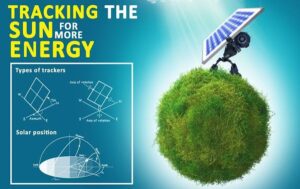
A recent study titled “Polar Dual-Axis Solar Tracker with Sun Motion Algorithm at Equatorial Mount for Improving the Performance of Sun-Tracking Method”, published in ICIC Express Letters, Part B: Applications by ICIC International on March 1, 2024, offers an exciting answer. The research introduces an advanced solar tracking system that follows the sun’s movement more precisely, helping solar panels absorb more energy from sunrise to sunset.
In simple terms, this system uses a dual-axis tracker—meaning it can move both horizontally and vertically—to keep solar panels aligned with the sun at all times. What makes this innovation special is the use of a “sun motion algorithm” combined with an equatorial mount system. This allows the tracker to mimic the Earth’s rotation, resulting in smoother and more accurate movement.
Why does this matter for everyday people? Because better efficiency means more electricity generated from the same solar panels. This can lower energy costs, reduce reliance on fossil fuels, and expand access to electricity in underserved areas. It directly supports SDGs 7 is not listed, so we focus on SDGs 17: Partnerships for the Goals, where collaboration between researchers, engineers, and policymakers is essential to bring such technologies into real-world use.
The study itself is a great example of how knowledge and innovation can come together. By combining engineering design, mathematical modeling, and environmental awareness, the researchers have created a solution that can be applied globally. Through partnerships—between universities, industries, and governments—this technology can be scaled up and implemented in solar farms or even small community-based energy systems.
Another important benefit is environmental protection. By increasing the efficiency of solar panels, we can generate more clean energy without needing additional land or resources. This helps reduce greenhouse gas emissions and supports a healthier planet for future generations.
The research also highlights how technology can be adapted to different geographic regions. Areas near the equator, for example, receive abundant sunlight year-round. With the right tracking system, these regions can maximize their solar potential and even become leaders in renewable energy production.
In conclusion, the article published in ICIC Express Letters, Part B: Applications shows that sometimes, the key to big change lies in small adjustments—like simply following the sun more closely. Through innovation and strong partnerships, we can unlock the full potential of solar energy. As we continue to seek sustainable solutions, smart technologies like this solar tracker remind us that the future of energy is not just bright—it’s brilliantly efficient.
DOI: 10.24507/icicelb.15.03.217
Contact Person: Syafaruddin; +6282125632817; syafaruddin@unhas.ac.id
Smarter Electricity for a Brighter Future: How AI Helps Keep the Lights On
https://inass.org/wp-content/uploads/2024/10/2025022919-2.pdf
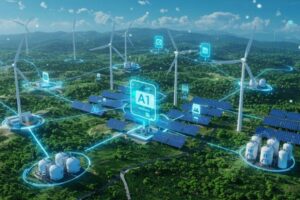
South, Southeast, West Sulawesi / 1 January 2025 / Power Systems: Have you ever wondered how electricity providers make sure your lights stay on—especially during peak hours when everyone is using power at the same time? Behind the scenes, this is a complex challenge. If energy demand is underestimated, blackouts can happen. If overestimated, energy is wasted. That’s why accurate forecasting is essential—and today, artificial intelligence (AI) is stepping in to make a difference.
A recent scientific study titled “Short-Term Peak Load Forecasting Using Interval Type-2 Fuzzy Logic - Horse Herd Optimization Algorithm in Sulbagsel Electricity System” highlights an innovative solution to this issue. The article was published in the International Journal of Intelligent Engineering and Systems by INASS on January 1, 2025. This research introduces a smart method that combines fuzzy logic and an optimization algorithm inspired by the natural behavior of horse herds to predict electricity demand more accurately.
While the name may sound complicated, the idea is simple: use intelligent systems to better understand patterns in electricity usage. The model learns from past data and adapts to uncertainty—like sudden weather changes or unexpected spikes in demand. As a result, electricity providers can make more precise decisions about how much power to generate and distribute.
This innovation is not just about technology—it directly connects to SDGs 17: Partnerships for the Goals. Why? Because solving energy challenges requires collaboration. Researchers, engineers, government agencies, and utility companies must work together to develop and apply these advanced systems. The study itself is an example of how knowledge-sharing and interdisciplinary approaches can lead to practical solutions for real-world problems.
In regions like Sulbagsel (South Sulawesi, Southeast Sulawesi, and West Sulawesi), where electricity demand continues to grow, accurate forecasting becomes even more important. By using AI-based models, local energy providers can improve efficiency, reduce operational costs, and ensure a stable electricity supply for communities. This not only supports economic growth but also improves quality of life.
Another important aspect of this research is its potential for scalability. The methods used in this study can be applied in other regions or countries facing similar challenges. This opens the door for global cooperation—countries can share data, technologies, and expertise to strengthen their energy systems together. Again, this reflects the spirit of SDG 17, where partnerships drive sustainable progress.
Moreover, smarter energy management contributes to environmental sustainability. By minimizing energy waste and optimizing power generation, we reduce unnecessary carbon emissions. This means that even small improvements in forecasting can have a positive impact on the planet.
In conclusion, the study published in the International Journal of Intelligent Engineering and Systems shows how advanced AI techniques can transform the way we manage electricity. It reminds us that innovation, when combined with strong partnerships, can solve critical challenges. As we move toward a more connected and energy-dependent world, smart forecasting will play a key role in ensuring that no one is left in the dark.
DOI: 10.22266/ijies2025.0229.19
Contact Person: Syafaruddin; +6282125632817; syafaruddin@unhas.ac.id
Harnessing the Wind: How Smart Forecasting Can Power a Sustainable Future
http://www.icicelb.org/ellb/contents/2026/5/elb-17-05-03.pdf
Jeneponto & Sidrap / 1 May 2026 / Power Systems: As the world races toward cleaner energy, wind power has emerged as one of the most promising solutions. Yet, behind every spinning turbine lies a complex challenge: predicting how the wind behaves. A recent study titled “Estimation Parameters of Wind Speed and Direction for Wind Turbine Applications Using SARIMA Method”, published in ICIC Express Letters, Part B: Applications by ICIC International on May 1, 2026, offers a fresh and practical approach to solving this problem.
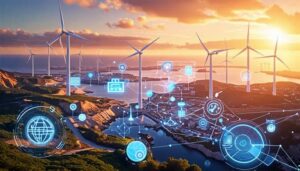
At its core, the research explores how advanced statistical modeling—specifically the SARIMA method—can be used to estimate wind speed and direction more accurately. While this might sound technical, the impact is easy to understand. Better predictions mean turbines can operate more efficiently, produce more electricity, and reduce wasted energy. In simple terms, it helps us get more power from the same wind.
Why does this matter? Because renewable energy like wind power plays a critical role in building a more sustainable and equitable world. This is closely connected to SDGs 17: Partnerships for the Goals, which emphasizes collaboration between scientists, industries, and policymakers. Research like this bridges the gap between academic innovation and real-world application, ensuring that clean energy technologies can be effectively implemented across different regions.
Wind is unpredictable by nature. It changes direction and speed constantly, making it difficult for operators to plan energy production. Traditional forecasting methods often fall short, leading to inefficiencies. The SARIMA model used in this study improves forecasting by analyzing patterns over time, including seasonal variations. This allows energy providers to anticipate changes and adjust turbine operations accordingly.
The benefits extend beyond just energy companies. Communities gain access to more stable and reliable electricity. Governments can better plan their energy mix. And globally, we move closer to reducing dependence on fossil fuels. This is where the power of partnerships—highlighted in SDG 17—becomes clear. Scientists develop the models, engineers apply them, and policymakers create frameworks to support their use.
Another important takeaway from this study is the role of data. Accurate wind forecasting depends on high-quality, consistent data collection. This opens opportunities for collaboration between countries, institutions, and technology providers. Sharing data and knowledge can accelerate innovation and ensure that even developing regions can benefit from advanced renewable energy solutions.
In a world facing climate challenges and energy demands, small improvements in efficiency can lead to significant impact. The research published in ICIC Express Letters, Part B: Applications demonstrates that innovation doesn’t always require new machines—it can come from smarter ways of using existing resources.
Ultimately, harnessing the wind is not just about technology; it’s about working together. By combining research, data, and global cooperation, we can turn unpredictable winds into a steady force for good.
DOI: 10.24507/icicelb.17.05.449
Contact Person: Syafaruddin; +6282125632817; syafaruddin@unhas.ac.id