

The Power of Harmony: How Hybrid Energy Systems are Saving Our Planet
Gowa / 1 June 2020 / Power Systems/- The modern world has an insatiable appetite for electricity. For decades, we relied on a single-source mindset—burning coal or gas to keep the lights on. However, as we face the urgent reality of climate change, the conversation has shifted toward renewables like wind and solar. The challenge? The sun doesn’t always shine, and the wind doesn’t always blow. To solve this, scientists are perfecting a “best of both worlds” approach: Hybrid Power Generation.
The Magic of the Mix
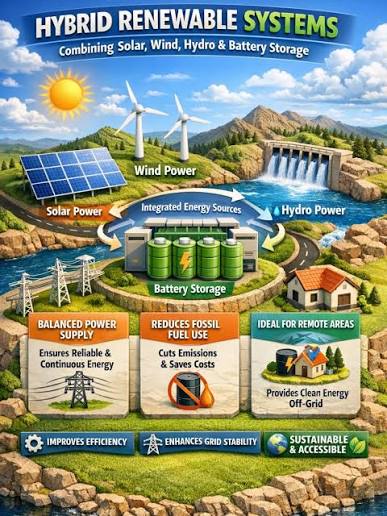
A hybrid power system is essentially a smart team of energy sources working together. Imagine a setup where solar panels soak up the midday sun, while wind turbines take over during a stormy night, all backed up by advanced battery storage or even traditional generators. By combining these different sources, we create a steady, reliable flow of electricity that can power everything from a single home to an entire city.
This fascinating evolution in how we manage our grids is explored in depth in a comprehensive scholarly article titled “A Review of Hybrid Power Generation: Modelling- Simulation, Control Strategy and Future Trend Development.”This research was published in the Journal of Engineering Science and Technology Review by the publisher JESTR on June 1, 2020. The article serves as a vital roadmap, detailing how sophisticated computer simulations and control strategies ensure these different energy sources play nice with each other without crashing the grid.
Preserving Life on Land
The shift toward hybrid systems is not just about keeping our gadgets charged; it is a fundamental pillar of environmental conservation. This technology is directly linked to SDG 15: Life on Land. By maximizing the efficiency of hybrid power, we significantly reduce the need to expand massive, destructive mining operations for fossil fuels that devastate forests and natural habitats.
When we implement localized hybrid grids, particularly in rural or sensitive ecological areas, we minimize the footprint of traditional energy infrastructure. Instead of cutting down vast swaths of trees for long-distance power lines or coal plants, we can use compact, integrated hybrid systems. This protects biodiversity and ensures that terrestrial ecosystems—the “Life on Land” that humans and animals depend on—remain intact and healthy for future generations.
Engineering a Greener Tomorrow
The research provided by JESTR emphasizes that the future of energy isn’t just about finding one “magic bullet” source. Instead, it’s about the “Control Strategy”—the digital intelligence that decides which energy source to use at any given second.
As we look forward, the development of these hybrid systems represents our best chance at a sustainable transition. It moves us away from being “energy consumers” who harm the Earth to “energy managers” who work in harmony with nature. By embracing the complexity of hybrid power and prioritizing SDG 15, we are ensuring that our technological progress doesn’t come at the cost of the green world we call home. The future of power is hybrid, and it is a win-win for both humanity and the planet.
Reference:
DOI: 110.25103/jestr.134.26
Contact:
Syafaruddin
+6282125632817
syafaruddin@unhas.ac.id


