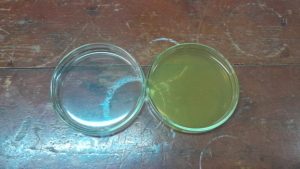
This research, funded by an internal grant from Hasanuddin University, explores the potential of Sareul seaweed polysaccharides (Sargassum sp., Eucheuma cottonii, Ulva lactuca) as renewable biopolymers for eco-friendly food packaging. Conducted under the Polymer Chemistry Research Group, the study integrates natural additives—ketapang leaf extract (Terminalia catappa), dragon fruit peel extract (Hylocereus sp.), and butterfly pea flower extract (Clitoria ternatea)—to enhance the mechanical properties, bioactivity, and functional performance of these biopolymers. Seaweed polysaccharides, including alginate, carrageenan, and ulvan, offer significant advantages as biodegradable, biocompatible, and environmentally friendly materials. Leveraging Indonesia’s abundant seaweed resources, particularly in South Sulawesi, this research aligns with sustainable material innovations to address the environmental challenges posed by plastic-based food packaging. The outcomes aim to characterize Sareul seaweed-based edible films and coatings, demonstrating improved strength, bioactivity, and food preservation capabilities. This research supports the development of high-value, renewable materials for industrial applications, contributing to sustainable solutions in the food packaging sector.