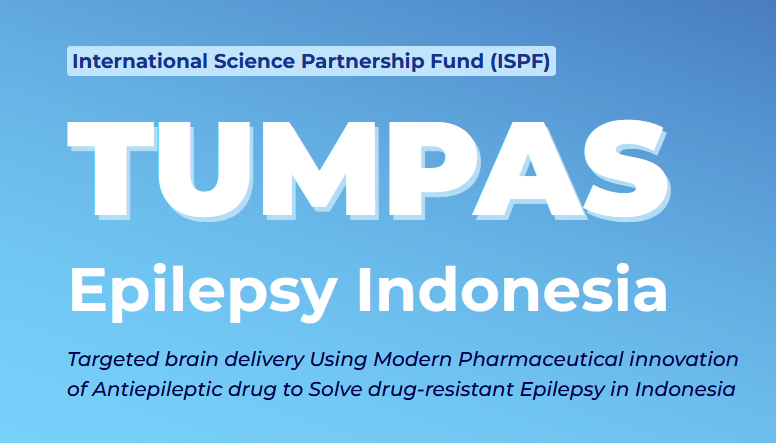

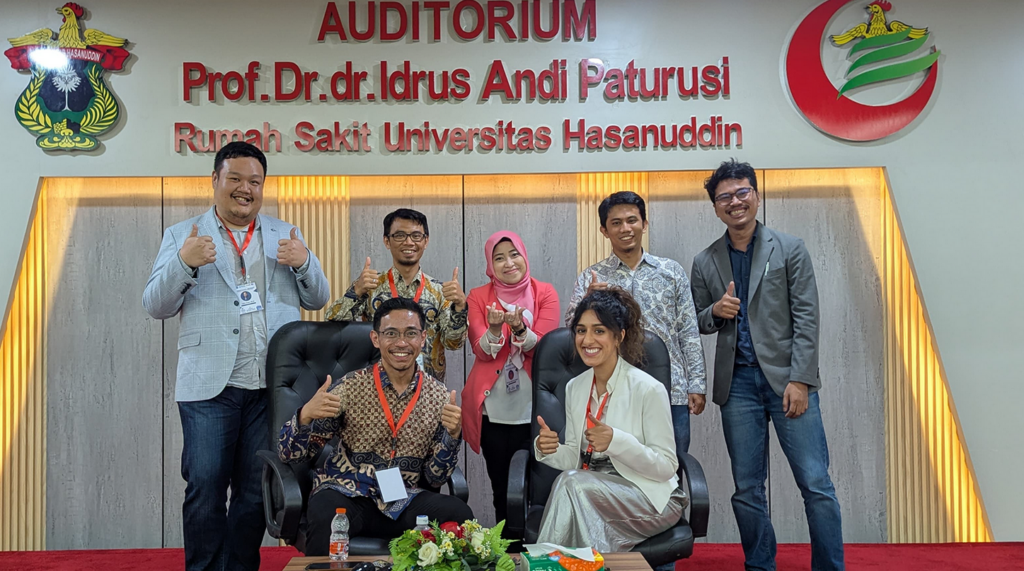
Makassar, 2025 — The Head of the Pharmacoepidemiology Research Group (PharmaEpid-RG) at Hasanuddin University, Dr. Muh. Akbar Bahar, has joined the TUMPAS Epilepsy Indonesia Project, an international collaborative research initiative funded through the International Science Partnership Fund (ISPF) by the British Council and the Indonesia Endowment Fund for Education – Directorate of Research and Community Service (LPDP-DPPM).
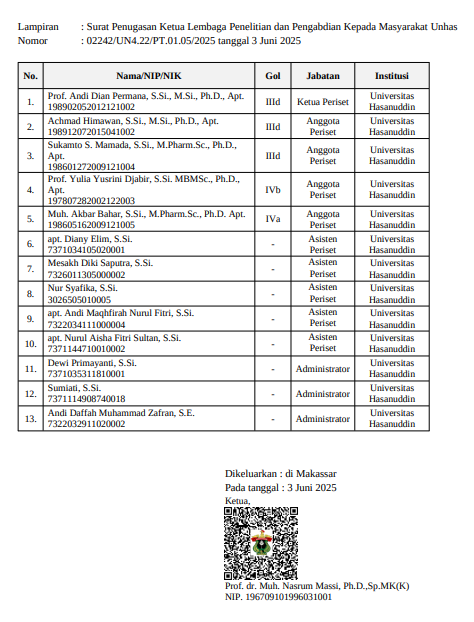
The involvement of Hasanuddin University in this strategic project is formally supported by the Assignment Letter from the Institute for Research and Community Service (LPPM), Hasanuddin University, No. 02242/UN4.22/PT.01.05/2025, referring to the ISPF funding approval No. 023/C4/DT.05.00/ISPF/2025 dated May 28, 2025. This assignment officially designates the UNHAS research team to implement the project entitled: “Targeted Brain Delivery Using Modern Pharmaceutical Innovation of Antiepileptic Drugs to Solve Drug-Resistant Epilepsy in Indonesia (TUMPAS Epilepsy Indonesia).”
The project involves a dedicated team of 13 researchers from Hasanuddin University, reflecting a strong institutional commitment to advancing interdisciplinary research in neurological health.
This project brings together a multidisciplinary consortium involving Universitas Hasanuddin (Indonesia) led by Prof. Andi Dian Permana, Ph.D., the University of Birmingham led by Dr. Felix Chan, and Aston University led by Dr. Mandeep Marwah (United Kingdom). It aims to address one of the most pressing challenges in neurological health: drug-resistant epilepsy (DRE), a condition affecting approximately one-third of epilepsy patients who do not respond adequately to conventional anti-seizure medications.
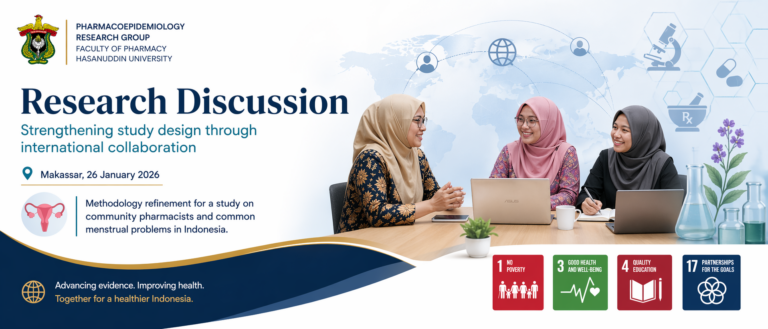
In a broader context, this initiative aligns with Indonesia’s Asta Cita, particularly in strengthening human resource development and advancing equitable healthcare through innovation and evidence-based policy. By targeting improved treatment outcomes for patients with complex neurological conditions, the project directly contributes to Sustainable Development Goal (SDG) 3 (Good Health and Well-being). Its emphasis on interdisciplinary research and academic collaboration supports SDG 4 (Quality Education), while the partnership between Indonesian and UK institutions reflects the spirit of SDG 17 (Partnerships for the Goals).
Advancing Targeted Solutions for Drug-Resistant Epilepsy
The TUMPAS initiative focuses on developing modern, targeted pharmaceutical strategies to improve treatment outcomes and quality of life among patients with epilepsy in Indonesia. A key innovation lies in redesigning anti-seizure medications and delivery systems to enhance therapeutic effectiveness within the BPJS (Indonesian National Health Insurance) framework, ensuring both clinical relevance and accessibility.
The project also integrates genetic, clinical, and socio-cultural considerations into its research design, including the development of model trials tailored to the Indonesian population. This approach is expected to generate context-specific evidence that informs both national policy and global epilepsy research.
Contribution of PharmaEpid-RG
Within this collaboration, PharmaEpid-RG contributes through a dedicated pharmacoepidemiological study led by master’s student apt. Sitti Nur Alim Kuraisy, S.Si, entitled: “Pattern of Antiepileptic Use and Risk Factors for Drug-Resistant Epilepsy in Adults.” The study aims to: identify patterns of antiepileptic drug (AED) use among patients with and without drug-resistant epilepsy in tertiary hospitals and explore risk factors contributing to drug-resistant epilepsy in adult populations.
Scientific and Practical Significance
This research is expected to generate comprehensive and context-specific evidence on antiepileptic drug utilization and determinants of treatment resistance in Indonesia. The findings will contribute to the advancement of epileptology research, enrich national scientific literature with evidence-based insights, and provide practical guidance for optimizing antiepileptic therapy based on patient characteristics and risk profiles.
Furthermore, the study will support improved prediction of treatment response, enhance patient-centered care, and inform more effective and safer therapeutic strategies tailored to the Indonesian healthcare context.
From Evidence to Impact
This collaboration reflects PharmaEpid-RG’s guiding principle, “Evidence into Impact,” by translating pharmacoepidemiological research into actionable insights for clinical practice and health policy. Through its active role in the TUMPAS Epilepsy Indonesia Project, the group continues to strengthen its contribution to advancing evidence-based healthcare and improving outcomes for patients with complex neurological conditions.