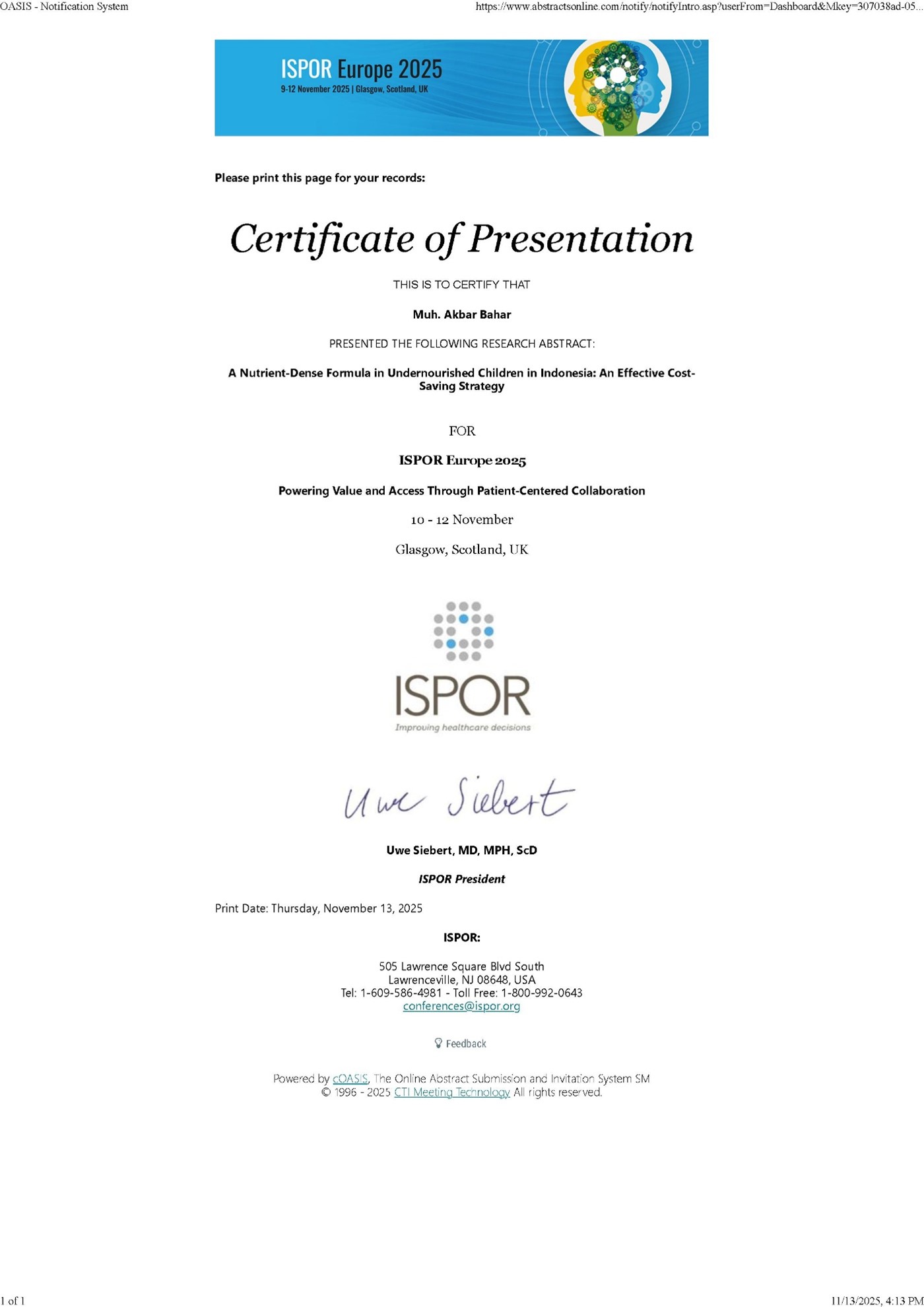

Glasgow, 2025 — The participation of the Pharmacoepidemiology Research Group, Faculty of Pharmacy, Hasanuddin University at ISPOR Europe 2025 marked an important moment in bringing the faculty’s research to a wider international audience. ISPOR Europe 2025 was held under the theme “Powering Value and Access Through Patient Centered Collaboration,” highlighting the importance of research and partnership in improving healthcare decision making and access.
Held at the Scottish Event Campus, Glasgow, Scotland, United Kingdom, ISPOR Europe 2025 took place from 9 to 12 November 2025 and brought together nearly 6,000 participants from around the world. The conference created a vibrant meeting point for academics, researchers, policymakers, healthcare professionals, industry representatives, and patient related organizations. For the Pharmacoepidemiology Research Group, Faculty of Pharmacy, Hasanuddin University, the event served not only as a venue to present research findings, but also as an important opportunity to strengthen scientific capacity, exchange ideas with global experts, and open new paths for international collaboration.
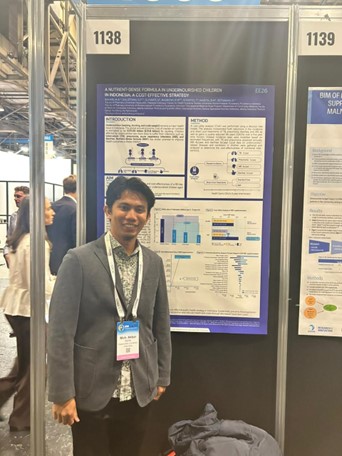
At this event, Muh. Akbar Bahar, Ph.D, Head of the Pharmacoepidemiology Research Group, Faculty of Pharmacy, Hasanuddin University, presented a poster titled “A Nutrient Dense Formula in Undernourished Children in Indonesia: An Effective Cost Saving Strategy.” The poster was officially listed in the conference program as Poster Code EE26 in Poster Session 1.
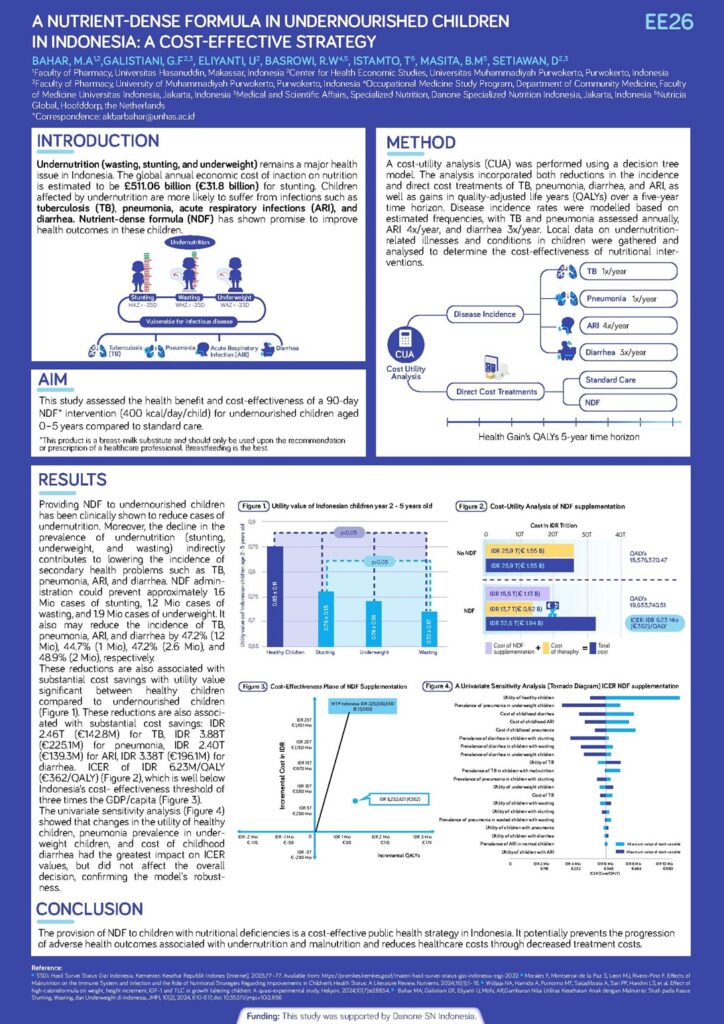
The study focused on undernourished children in Indonesia and examined whether a nutrient dense medical nutrition formula could be a cost saving health intervention. The findings showed that the intervention had the potential not only to improve nutritional outcomes, but also to reduce future treatment costs. In simple terms, the research offered strong evidence that better nutrition for children can also support more efficient healthcare spending.
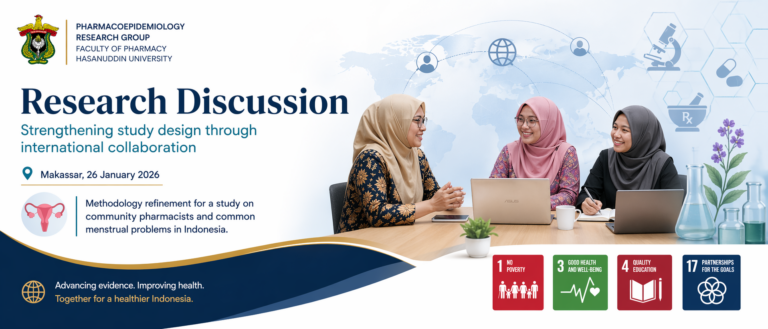
This activity is closely related to several Sustainable Development Goals. It supports SDG 1 No Poverty because cost saving health interventions can help reduce the financial burden on families. It also contributes to SDG 3 Good Health and Well Being by promoting better nutrition and healthier outcomes for children. In addition, the conference experience reflected SDG 4 Quality Education through academic learning, scientific discussion, and research capacity building. Just as importantly, it reinforced SDG 17 Partnerships for the Goals, as the event created opportunities for collaboration among universities, researchers, policymakers, and healthcare stakeholders from many countries.
Overall, this participation showed that the Pharmacoepidemiology Research Group, Faculty of Pharmacy, Hasanuddin University is actively contributing to international scientific discussion while promoting research that is relevant to child health, healthcare policy, and global collaboration.