Research Project

Screenshot 2026-05-09 115108
Growing Hope for Cocoa Farmers: A New Step in Understanding VSD Disease
2021

MAKASSAR, Indonesia 10 May 2026/PRG – Climate change is no longer a distant environmental issue. It is already affecting food production, water supplies, and the livelihoods of millions of farmers around the world. In many developing countries, including Pakistan, rising temperatures, irregular rainfall, floods, droughts, and water shortages are making agriculture increasingly difficult. Farmers are now facing challenges that previous generations never experienced at this scale.

A published research article titled An Assessment of In-service Training Needs for Agricultural Extension Field Staff in the Scenario of Climate Change using Borich Needs Assessment Model explored this urgent issue in depth. The article was published in the Sarhad Journal of Agriculture on 20 April 2020. The study was conducted by Ejaz Ashraf and his research team to evaluate whether agricultural extension workers in Pakistan have enough knowledge and skills to help farmers adapt to climate change.

Screenshot 2026-05-09 112150
Training Farmers’ Frontline Heroes: Why Climate Education Matters More Than Ever
2020

MAKASSAR, Indonesia 10 May 2026/PRG – Climate change is no longer a distant environmental issue. It is already affecting food production, water supplies, and the livelihoods of millions of farmers around the world. In many developing countries, including Pakistan, rising temperatures, irregular rainfall, floods, droughts, and water shortages are making agriculture increasingly difficult. Farmers are now facing challenges that previous generations never experienced at this scale.

A published research article titled An Assessment of In-service Training Needs for Agricultural Extension Field Staff in the Scenario of Climate Change using Borich Needs Assessment Model explored this urgent issue in depth. The article was published in the Sarhad Journal of Agriculture on 20 April 2020. The study was conducted by Ejaz Ashraf and his research team to evaluate whether agricultural extension workers in Pakistan have enough knowledge and skills to help farmers adapt to climate change.

Screenshot 2026-05-09 020022
The Hidden Diversity of Plant Destroyers: What Scientists Found Inside Phytophthora Clade 10
2022

MAKASSAR, Indonesia 10 May 2026/PRG – Plant diseases are often invisible threats that quietly damage forests, crops, and natural ecosystems around the world. One of the most dangerous groups responsible for these problems is Phytophthora, a group of microscopic organisms known for causing root rot, leaf blight, and plant death. Although most people have never heard of it, this organism has already caused serious environmental and agricultural losses in many countries.

A scientific article titled “Extensive Morphological and Behavioural Diversity Among Fourteen New and Seven Described Species in Phytophthora Clade 10 and Its Evolutionary Implications” revealed surprising discoveries about this harmful organism. The article was published in the journal Persoonia on 13 August 2022 by Naturalis Biodiversity Center and the Westerdijk Fungal Biodiversity Institute. In the study, researchers identified fourteen new species and seven previously known species belonging to Phytophthora Clade 10. Their findings showed that these organisms have a wide range of shapes, behaviours, and survival strategies.

Screenshot 2026-05-09 012543
The Secret World Inside a Plant Pathogen: Exploring the Virome of Phytophthora cinnamomi
2025

MAKASSAR, Indonesia 10 May 2026/PRG – When we think about threats to forests and agriculture, we often imagine pests, climate change, or deforestation. However, one lesser-known but equally important issue lies in how scientists name and classify plant pathogens. Surprisingly, even the naming system itself can influence how effectively we respond to global plant diseases.

A recent scientific publication titled “Preserve the Broad Generic Concept of Phytophthora”, published in the journal Phytopathology by the American Phytopathological Society (APS) on March 4, 2025, highlights this issue. The article argues for maintaining the current classification of Phytophthora, a well-known group of plant pathogens often referred to as “plant destroyers” .

Screenshot 2026-05-09 004908
Hidden Threats in Our Forests: Why Newly Discovered Pathogens Matter for Our Planet (SDG 15: Life on Land)
2024

MAKASSAR, Indonesia 10 May 2026/PRG – Forests are often seen as stable and timeless ecosystems, yet recent scientific discoveries reveal a very different reality. Beneath the soil and within plant tissues, invisible enemies are evolving—posing serious risks to global biodiversity and food security. A recent scientific study highlights just how much we still do not know about these hidden threats.

The article titled “Worldwide forest surveys reveal forty-three new species in Phytophthora major Clade 2 with fundamental implications for the evolution and biogeography of the genus and global plant biosecurity”, published in the journal Studies in Mycology by the Westerdijk Fungal Biodiversity Institute on February 27, 2024, uncovers a striking finding: 43 previously unknown species of Phytophthora, a group of plant-destroying pathogens, have been identified through global forest surveys . This discovery significantly expands our understanding of plant diseases and raises concerns about global ecosystem health.

Screenshot 2026-05-09 002458
When Chocolate Trees Get Sick: Why Protecting Cacao Means Protecting Our Future
2019

MAKASSAR, Indonesia 10 May 2026/PRG – Chocolate is more than just a treat—it is a livelihood for millions of farmers and a global industry worth billions. Yet behind every chocolate bar lies a fragile system increasingly threatened by plant diseases that attack cacao trees, the source of cocoa beans. A scientific review published in Phytopathology reveals how both long-known and emerging diseases are putting chocolate production at serious risk.

Cacao (Theobroma cacao) originated in the Amazon and has been cultivated for over 5,000 years. Today, however, it faces devastating biological threats. According to the research, up to 38% of global cacao production is lost annually due to diseases . These losses are not just numbers—they translate into reduced income for farmers, higher prices for consumers, and instability in global supply chains.

Screenshot 2026-04-25 015644
From Tires to Technology: How AI Drones Could Help Stop Dengue Before It Spreads
2026

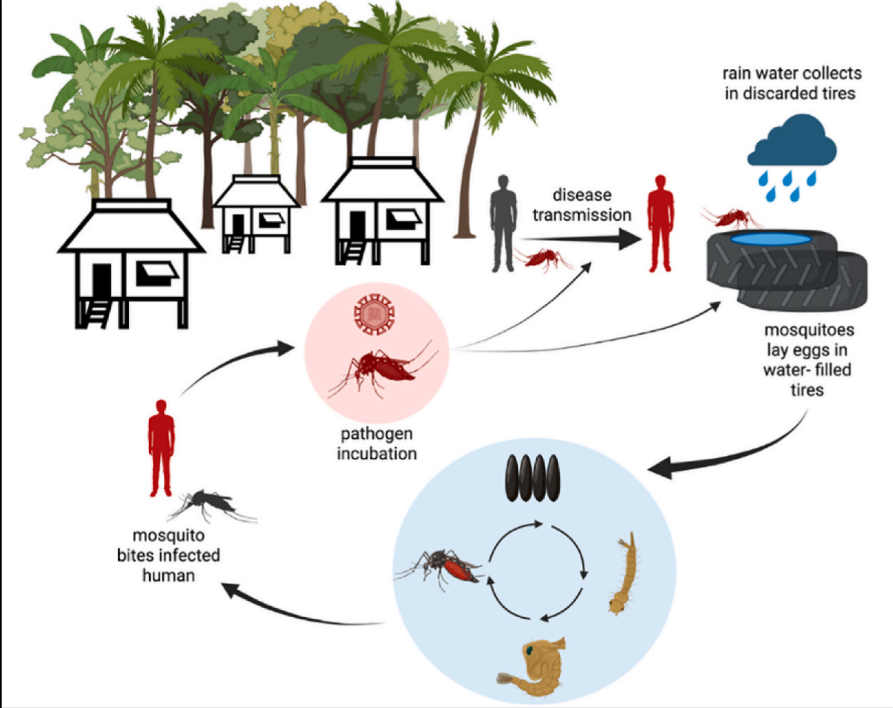
MAKASSAR, Indonesia 9 May 2026/PRG – Imagine if we could stop dengue outbreaks before they even begin—simply by spotting where mosquitoes are likely to breed. In many tropical cities like Makassar, Indonesia, something as ordinary as a discarded tire can quietly become a dangerous hotspot for disease. These tires collect rainwater, creating the perfect environment for Aedes aegypti, the mosquito responsible for spreading dengue, Zika, and chikungunya.

bg
Hidden Viruses, Global Threats: What Lies Beneath a Devastating Plant Pathogen
2025

MAKASSAR, Indonesia 9 May 2026/PRG – In today’s interconnected world, threats to agriculture and ecosystems often come from unexpected places. One such hidden danger lies not just in plant diseases themselves, but in the microscopic viruses living inside them. A recent scientific study published in Virus Evolution by Oxford University Press on 1 April 2025, titled “The virome of the panglobal, wide host-range plant pathogen Phytophthora cinnamomi: phylogeography and evolutionary insights,” reveals a fascinating and important story about how viruses interact with one of the world’s most destructive plant pathogens.

Screenshot 2025-11-22 115828
Resilient RuralAI for Rice Farming and Future Cocoa Village
2025

Background
Precision agriculture is vital for food security and climate resilience, yet rural Indonesia faces connectivity gaps, noisy sensor data, and privacy concerns. Current digital farming systems assume stable infrastructure, leaving smallholders behind. To address this, we propose Resilient RuralAI, an AI-driven system using Hierarchical Federated Learning (HFL) to predict plant health and optimize rice production. HFL enables distributed model training without sharing raw data, ensuring privacy and adaptability to local conditions.

State of the Art & Research Gap
Global advances in IoT, AI, and cloud computing have enabled real-time crop monitoring and disease detection using CNNs and Vision Transformers. Federated Learning further enhances privacy, but most implementations target well-connected environments. Rural Indonesia lacks solutions for low-bandwidth networks, heterogeneous data, and localized disease prediction. This gap motivates a system that is energy-efficient, privacy-preserving, and tailored for rice ecosystems.

Objectives

  1. Develop RuralAI architecture based on HFL for rice health prediction.
  2. Deploy IoT sensors for soil moisture, temperature, EC, and NPK monitoring.
  3. Integrate predictive models into a farmer-friendly dashboard.
  4. Validate through field trials in Rice farm-Sidrap District South Sulawesi and collaborative testing in Australia.

Methodology & Preliminary Findings
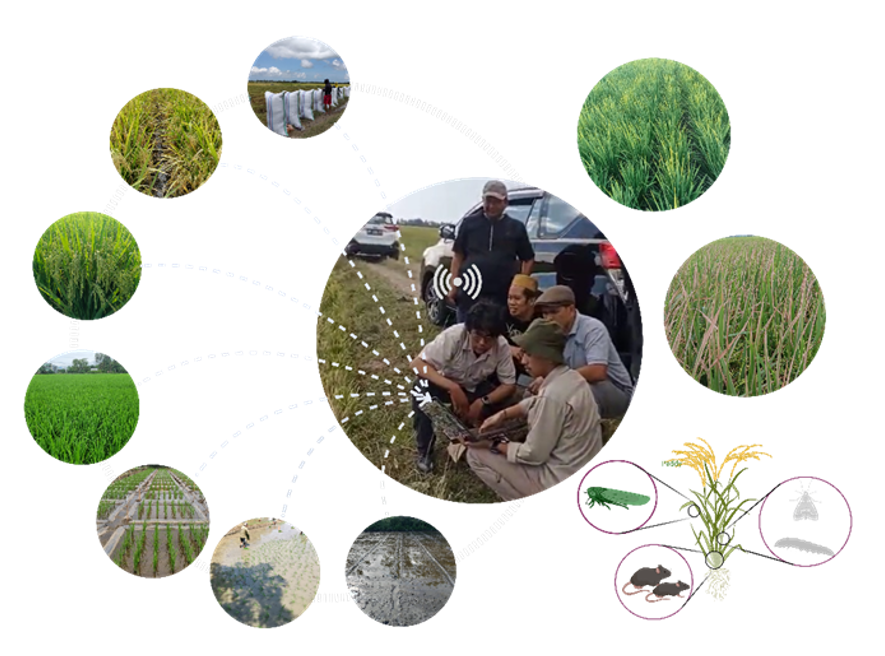
Sensors collect soil and environmental data, processed via interpolation and rolling averages. LSTM models predict time-series trends, aggregated hierarchically (local → edge → cloud). A Grafana dashboard visualizes predictions for irrigation and disease control. Initial Sidrap data show soil moisture (29–31%) and N (306–335 mg/kg) within ideal ranges, but variability underscores the need for adaptive management. Prior HFL trials achieved low MSE in soil moisture prediction, confirming feasibility.
Hierarchical Federated Learning in Action: Building Resilient Agriculture

Future Direction: Resilient Cocoa Village
Building on RuralAI, the next phase targets cocoa sustainability. The system will adapt HFL for predicting Phytophthora pod rot and Vascular Streak Dieback, integrate CNN-based lesion detection, and deploy biosensors for soil health. A cooperative dashboard will empower farmer groups, while genomic and climate data integration strengthens resilience. This expansion aligns with Indonesia’s cocoa revitalization strategy and global sustainability goals.

Expected Outcomes

  • Prototype RuralAI for rice and roadmap for cocoa.
  • Improved irrigation and disease management.
  • Capacity building for farmers and young researchers.
  • Joint publication in Frontiers: Plant Science.



Screenshot 2025-11-21 081023
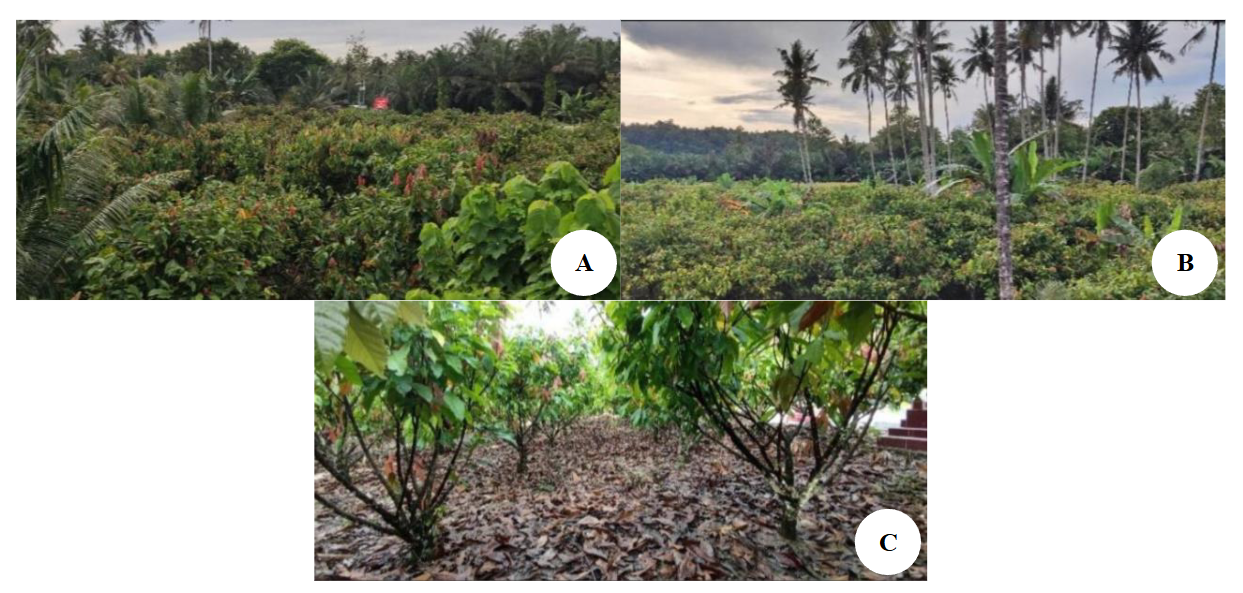
Inoculum prevalence, virulence, and morphometric variation of Phytophthora palmivora recovered from soil across cocoa plantations in East Luwu, Indonesia
2024

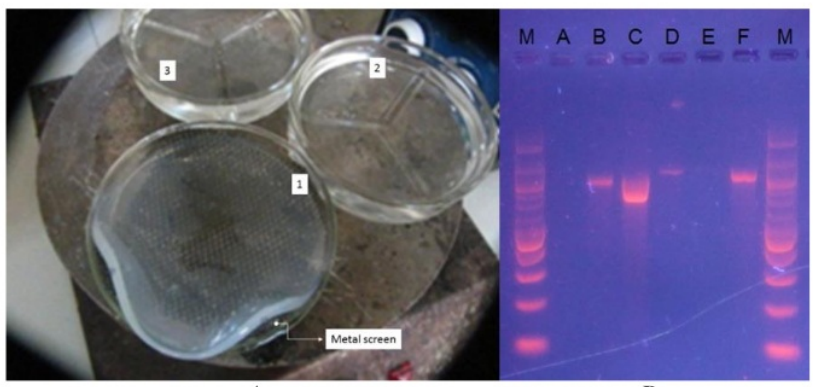
Phytophthora palmivora is one of the most important pathogens affecting cacao production worldwide, particularly as the causal agent of black pod disease. Our research group investigates inoculum prevalence, virulence characteristics, and morphological diversity of P. palmivora populations associated with cacao-growing regions. Using soil baiting methods and selective media, isolates are routinely recovered and characterized through morphological observation of colony patterns and asexual structures. We also apply multivariate morphometric analyses, such as principal component analysis (PCA), to examine variation among isolates.

Pathogenicity and virulence assessments are conducted through controlled inoculation on cacao pods, evaluating parameters such as disease severity, lesion development rate, and latent period. Our findings consistently show that P. palmivora populations exhibit diverse morphotypes and varying degrees of virulence, with some isolates showing low or no pathogenicity while others cause rapid disease progression. Soil consistently serves as an important reservoir of inoculum in cacao plantations.

Overall, this research contributes to a better understanding of P. palmivora population structure, pathogenic potential, and epidemiological significance, supporting the development of improved disease management strategies for cacao farmers.