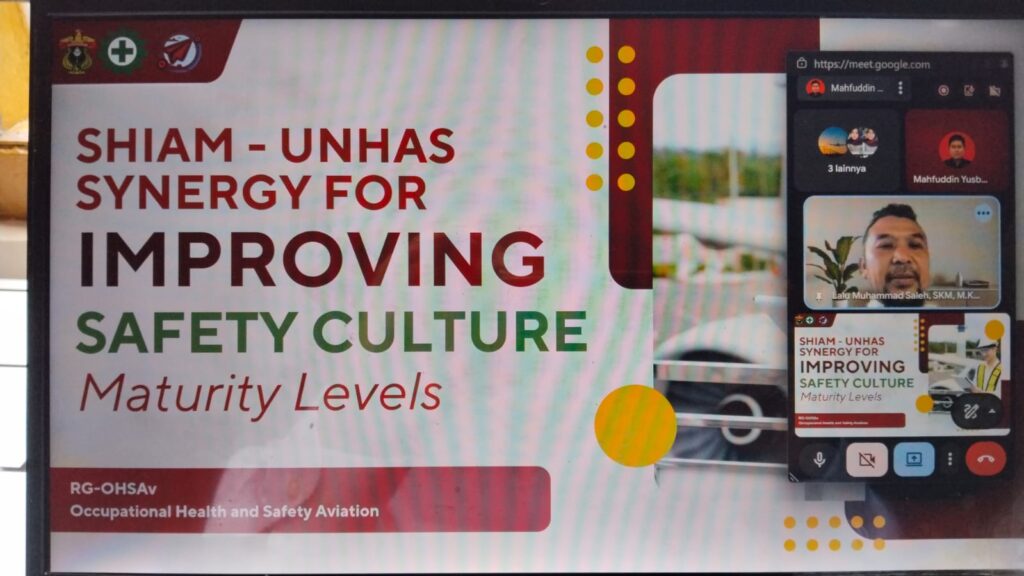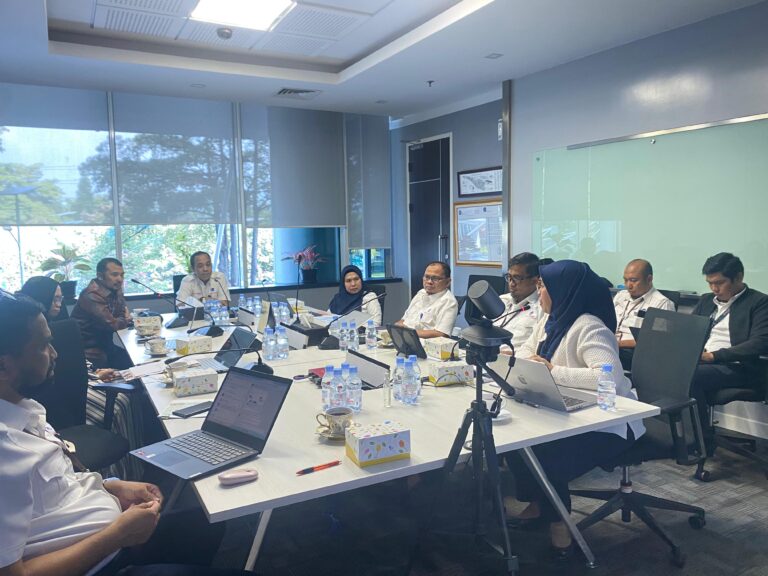

Makassar, On Friday, 13 March 2026, Sultan Hasanuddin International Airport Makassar (SHIAM) and Hasanuddin University (UNHAS) held a collaborative online session through Google Meet to strengthen their joint commitment toward enhancing occupational health and safety (OHS) practices. This activity, titled “SHIAM–UNHAS Synergy for Improving Safety Culture Maturity Levels,” brought together five participants, consisting of two representatives from UNHAS and three representatives from PT Angkasa Pura Indonesia, the airport’s managing authority. Although conducted virtually, the session created a productive environment for dialogue, reflection, and shared learning.
The primary purpose of this activity was to consolidate expertise from academia and the aviation industry to develop a more structured approach to assessing the implementation of Occupational Health and Safety (K3) systems. The aviation sector demands the highest standards of safety due to its complex and high‑risk operational environment. In this regard, SHIAM’s collaboration with UNHAS provided an opportunity to apply scientific methodologies for improving the airport’s safety culture maturity. Through comprehensive discussions, participants explored the current state of safety behavior, organizational commitment to safety, and mechanisms for evaluating K3 implementation.
This collaboration also aligns with several key Sustainable Development Goals (SDGs). Most notably, it reflects SDG 4 (Quality Education) by encouraging knowledge sharing and academic‑industry linkages that strengthen professional competencies in OHS management. The involvement of UNHAS illustrates how higher education institutions can contribute directly to community and industry development through applied research and mentorship. Additionally, the initiative supports SDG 17 (Partnerships for the Goals), as it demonstrates a strategic partnership aimed at enhancing safety standards that benefit both institutional stakeholders and the wider public. Indirectly, the discussion also relates to SDG 1 (No Poverty), acknowledging that improved workplace safety reduces the risk of injury‑related economic hardship for workers and their families.
During the session, participants examined frameworks for measuring safety culture maturity, emphasizing the importance of evidence‑based evaluation tools. Dialogue centered on identifying indicators that reflect employees’ safety awareness, leadership engagement, communication pathways, and reporting transparency. The academic representatives from UNHAS contributed theoretical perspectives and methodological insights, while the team from PT Angkasa Pura Indonesia provided practical observations from daily airport operations. This reciprocal exchange ensured that the proposed assessment model would be both scientifically valid and operationally realistic.
By the end of the meeting, the group affirmed their shared commitment to advancing safety practices at SHIAM. The collaboration marks an important step in bridging research and real‑world application, enabling continuous improvement through data‑driven decision‑making. As airports continue to evolve to meet global safety expectations, such partnerships play a vital role in ensuring robust, resilient, and accountable K3 systems.
The success of this activity highlights the value of sustained cooperation between academia and industry. Moving forward, SHIAM and UNHAS plan to deepen this synergy by developing more detailed assessments and follow‑up initiatives that further enhance organizational safety culture maturity.