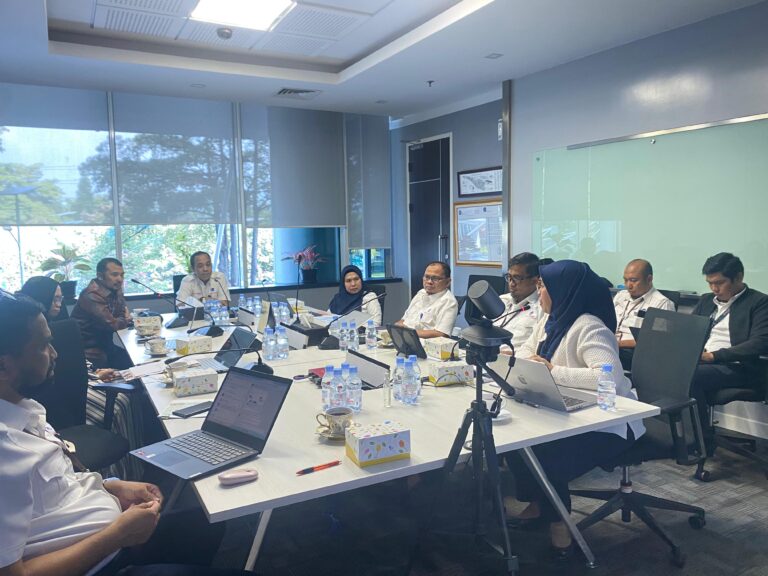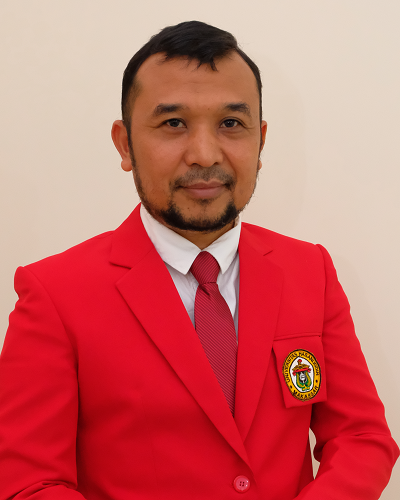
UNHAS.TV — We often see professions like Air Traffic Controllers (ATCs) as cool-headed and highly focused. But behind the scenes, they’re dealing with an intense amount of mental pressure—something most people don’t realize. Tasked with keeping skies safe, ATCs face daily stress that, if unmanaged, can take a serious toll on both mind and body. Seeing this, Professor Dr. Lalu Muhammad Saleh, Head of the Occupational Health and Safety (OHS) Subdirectorate at Hasanuddin University (Unhas), came up with a simple yet powerful idea: progressive muscle relaxation.
It’s a technique specially designed for high-stress jobs to help workers stay balanced, mentally and emotionally. “This relaxation technique actually fits really well with our OHS programs at the university,” said Prof. Lalu. “Imagine after singing the national anthem, the entire campus community takes 10 minutes to relax—just that little moment can refresh the brain and prevent burnout,” he told Unhas.TV.
Backed by Over a Decade of Research
This method didn’t just appear overnight. Prof. Lalu began developing the idea during his PhD studies more than 10 years ago, diving deep into practical stress management techniques for the workplace. The technique is broken down into 16 simple steps. It starts with a spiritual approach—like a short prayer—followed by gentle physical movements, from head to toe. Participants close their eyes, tense specific muscle groups, hold for a few seconds, then slowly release.
The goal? To calm the body’s sympathetic nervous system—the one responsible for our stress response. Data from the American Psychological Association (APA) shows nearly 77% of workers in high-risk fields like aviation and healthcare suffer from stress-related symptoms that can lead to fatigue, sleep disorders, and even heart disease. “Progressive muscle relaxation is a straightforward way to tackle that,” said the occupational safety professor from Unhas’s Faculty of Public Health.
More Than Just Physical: A Touch of Spirituality
What makes this method stand out is the spiritual element. Each session wraps up with a moment of gratitude—a chance to appreciate our health and wellbeing.
“Mental health isn’t just about relaxing the body; we need to relax the heart too,” said Prof. Lalu. “There’s an element of prayer and mindfulness in the process.”
By combining modern science with spiritual reflection, this method becomes more than just a relaxation technique—it becomes something that feels right at home in Indonesia’s cultural and religious context. Originally created for ATC workers, Prof. Lalu hopes this approach can spread to other environments—especially on campus.
With more than 30,000 students and 3,000 staff and lecturers at Unhas, the potential impact is huge.
A pilot program is now in the works to introduce progressive muscle relaxation at specific times during the day, as part of the university’s broader OHS program. The aim? Better physical health, sharper focus, and a more mentally resilient campus community. This simple yet thoughtful innovation proves one thing: keeping our mental health in check doesn’t always require expensive therapy or high-tech gadgets. Sometimes, all it takes is a few minutes to breathe, move gently, be mindful—and say thanks.
Because when we care for our minds and bodies, we’re better equipped to take on whatever challenges come our way—whether we’re in a control tower, a hospital, or a classroom.
(Written by Andrea Ririn Karina / UNHAS.TV)
Source: https://unhas.tv/relaksasi-otot-progresif-inovasi-k3-unhas-untuk-menjaga-mental-pekerja-bertekanan-tinggi/1