

The Obesity and Child Nutrition Research Group (OCN-RG) further expanded its engagement at the 3rd International Conference on Nutrition and Public Health (ICNPH 2026) through active participation in a satellite session dedicated to school feeding innovation. The session brought together perspectives from academia, industry, and emerging researchers, highlighting the importance of integrated approaches in strengthening Indonesia’s Makan Bergizi Gratis (MBG) program, while also contributing to broader global agendas on health, nutrition, and sustainable development.

The satellite session featured three invited speakers representing complementary perspectives. Andi Imam Arundhana Thahir, Ph.D, as Head of OCN-RG, presented on emerging insights linking nutrition, obesity, and the gut microbiome within the context of school feeding programs. Dr. Mizuho Ogikubo, Executive Vice President of Toyo Foods Co., Ltd., shared practical experiences from Japan’s school meal systems, particularly in maintaining quality, safety, and operational consistency at scale. Meanwhile, Dr. Ulfah Najamuddin, Ph.D highlighted the potential of local food resources in improving the nutritional quality of school meals in Indonesia.
Together, these contributions underscored how strengthening school feeding programs requires the integration of scientific evidence, implementation experience, and local food system approaches. Lessons from Japan demonstrated how well-established systems can ensure high standards in large-scale programs, while local food-based strategies emphasized the importance of sustainability, dietary diversity, and cultural relevance. These perspectives are particularly important as Indonesia continues to scale up the MBG program, aligning with global efforts to improve health outcomes and build sustainable food systems.
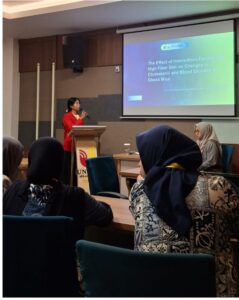
The session also featured research dissemination from within OCN-RG, with Swasti, a master’s student member of the group, presenting her study findings. Her participation reflected the group’s ongoing commitment to building research capacity and fostering early engagement of young researchers in scientific forums. By creating opportunities for students to contribute to high-level discussions, OCN-RG continues to support inclusive and quality education while linking academic training with real-world nutrition challenges.
Overall, the session illustrated how effective school feeding programs require more than nutritional adequacy alone. The integration of scientific evidence, operational experience from industry, and the use of local food systems emerged as key elements in designing interventions that are both impactful and sustainable. Through its involvement in ICNPH 2026, OCN-RG reaffirmed its role not only as a center for research excellence, but also as a platform for collaboration that connects knowledge, practice, and future leadership in child nutrition, contributing to the achievement of global development goals related to health, nutrition, education, and sustainable food systems.