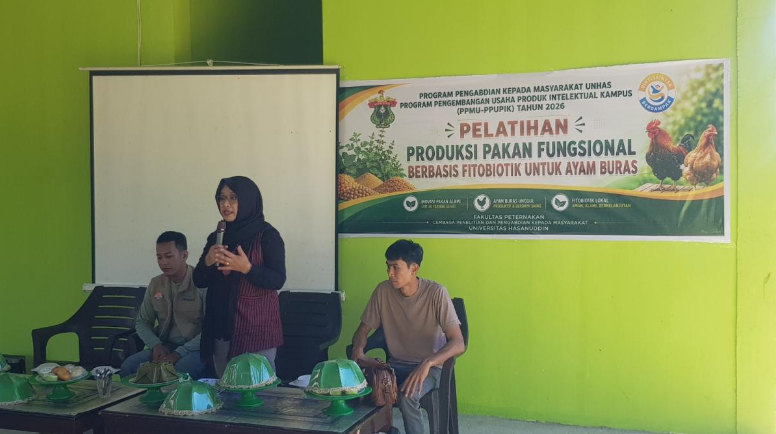
Bone– As part of its commitment to the Tri Dharma of Higher Education—education, research, and community service—a community empowerment and entrepreneurship program entitled “PPUPIK Functional Phytobiotic-Based Feed Production for Native Chickens” was conducted in Kajaolaliddong Village, Barebbo Subdistrict, Bone Regency, South Sulawesi. The program aimed to develop and commercialize functional phytobiotic-based feed for native chickens as a university intellectual product with economic value and market potential. Through this initiative, research-based knowledge was transformed into an innovative livestock product designed to improve animal performance while supporting community-based business development.
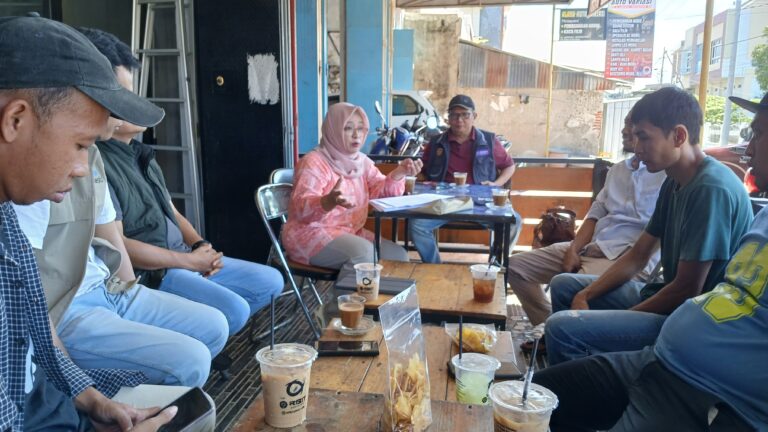
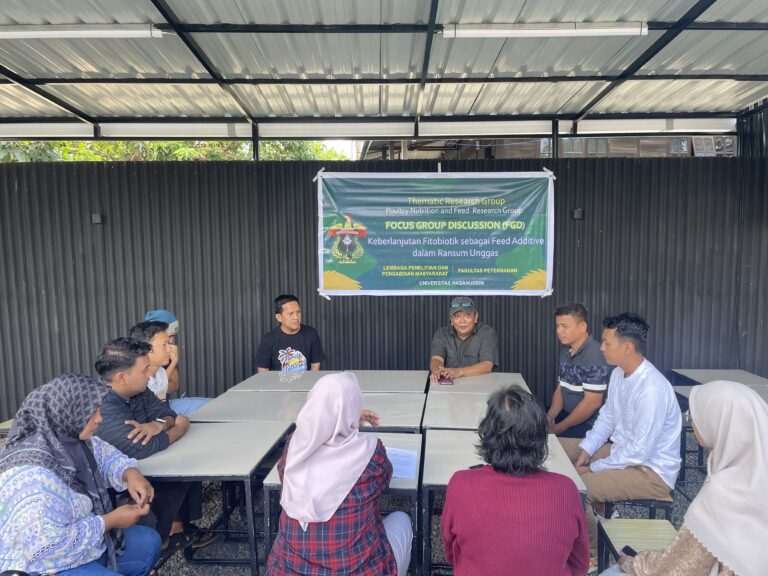
Conducted on July 4, 2026, the program involved 25 participants who actively joined discussions, demonstrations, and practical activities. Their participation demonstrated strong interest in improving poultry-feed quality, increasing production capacity, and developing efficient and sustainable business opportunities. The activity also enabled participants to exchange experiences and discuss challenges related to feed production, raw-material availability, livestock health, production costs, and product marketing.
Native chicken farming has significant potential to support rural livelihoods and household income. Nevertheless, farmers and small-scale feed producers often face problems involving inconsistent feed quality, limited production capacity, dependence on commercial feed, and the use of synthetic additives. These challenges can increase production expenses and reduce the competitiveness of small livestock enterprises. The development of phytobiotic-based functional feed therefore offers a promising alternative by combining nutritional value with the beneficial properties of natural plant-derived compounds.
During the program, participants were introduced to the concept of functional feed and the role of phytobiotics in poultry production. Phytobiotics are plant-based materials containing bioactive compounds that may support animal health, physiological functions, and production performance. Participants learned how to select and utilize herbal ingredients, formulate functional feed, and reduce dependence on synthetic additives. The facilitators delivered scientific information in accessible language and connected each topic with practical production and business requirements.
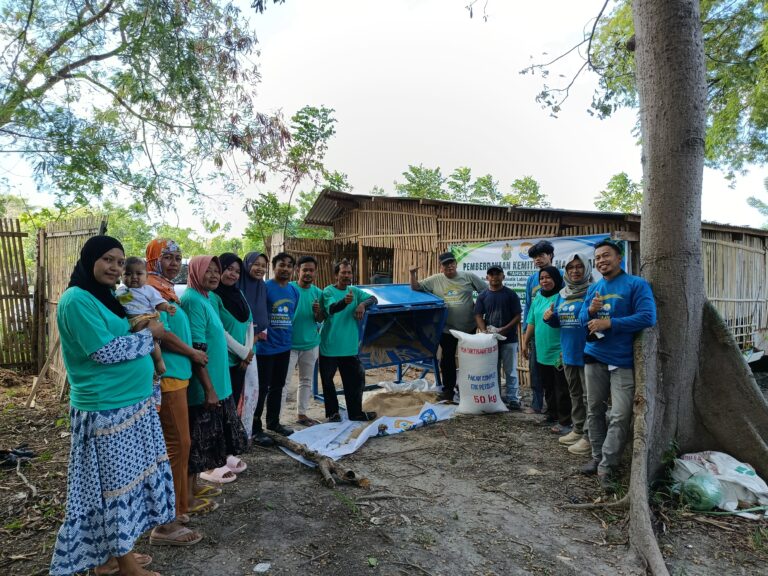
The activity combined technical training with demonstrations of phytobiotic-based feed production. Participants were guided through the preparation and processing of raw materials, production procedures, quality improvement, storage, and proper handling. Attention was also given to increasing production capacity so that the innovation could be developed beyond household use and strengthened as a market-oriented university product.
In addition to technical skills, the program emphasized business management and marketing. Participants learned basic strategies for improving product management, strengthening promotion, identifying target markets, and expanding commercialization opportunities. This approach encouraged partner groups not only to understand the technology but also to manage the product as a sustainable enterprise. By integrating technology, production, management, and marketing, the program promoted a comprehensive model of community-based innovation.
The program supports SDG 1: No Poverty by strengthening livelihoods, economic resilience, and value-added production. It contributes to SDG 3: Good Health and Well-Being through feed innovations that support livestock health and performance. It advances SDG 4: Quality Education through practical, science-based learning and technology transfer. Finally, it supports SDG 17: Partnerships for the Goals by strengthening collaboration among universities, researchers, partner groups, and local communities. Through this initiative, phytobiotic-based functional feed is expected to become a competitive university innovation that supports healthier native chickens, stronger community enterprises, and more sustainable livestock production.