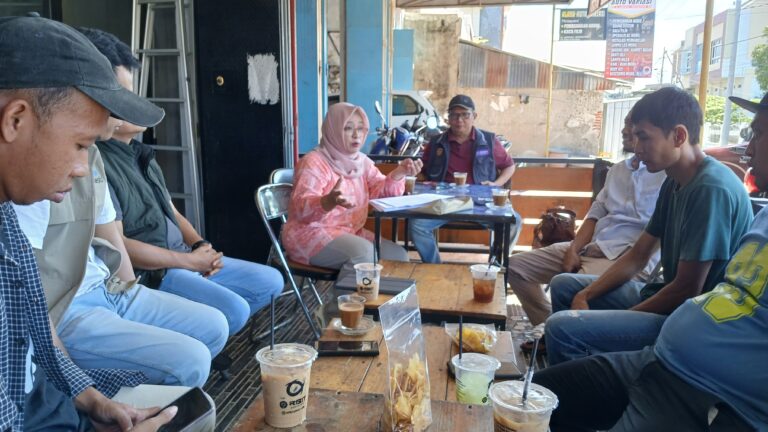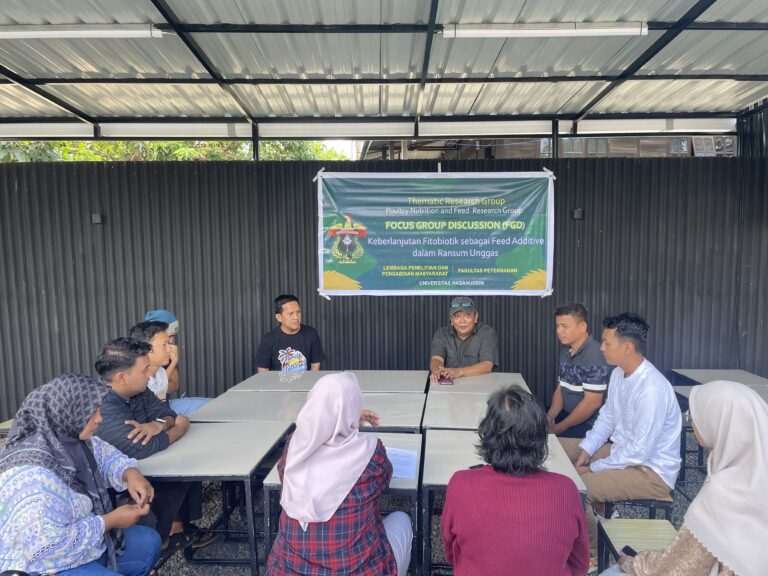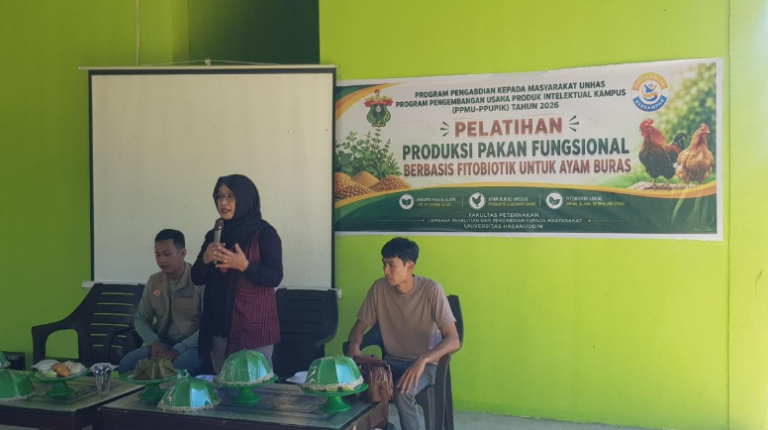

Bantaeng – As part of its commitment to the Tri Dharma of Higher Education—education, research, and community service—TRG Poultry Nutrition and Feed Research Group conducted a community engagement program to improve the knowledge, skills, and productivity of smallholder duck farmers in Bantaeng, South Sulawesi. The program focused on LABIO-1, a phytobiotic-based feed additive developed from herbal ingredients and processed through fermentation technology. Through this activity, scientific knowledge was translated into practical innovations for healthier and more productive duck farming systems.
Conducted on May 5, 2026, the program involved 25 participants who actively took part in discussions, demonstrations, and practical training. Their participation reflected strong interest in alternative feed additives that can support duck health, strengthen body resistance, and improve production performance. The activity also provided an opportunity to exchange experiences and discuss challenges encountered in daily duck farming.
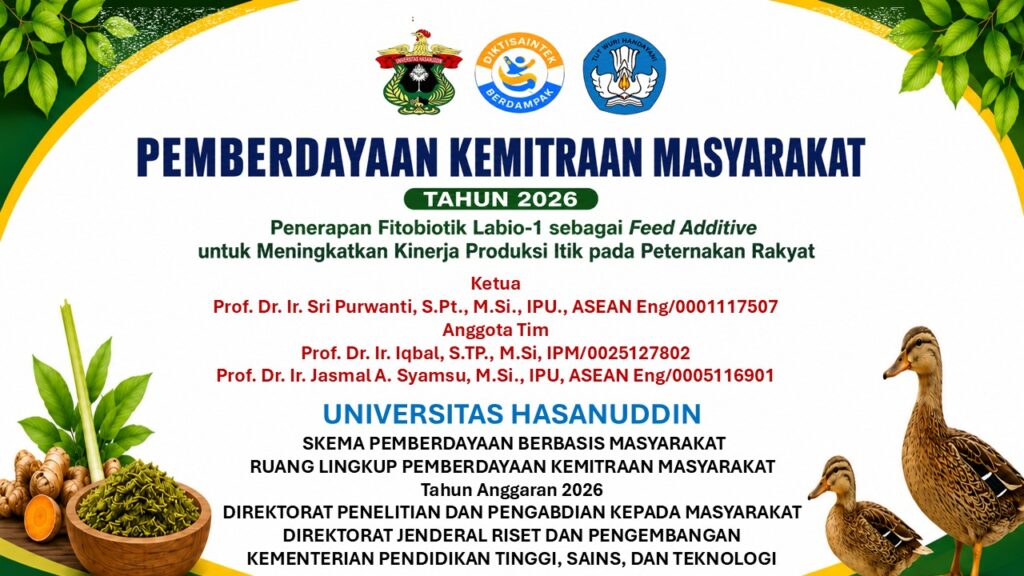
Duck farming has considerable potential to support rural livelihoods, household income, and food production. However, smallholder farmers continue to face challenges related to animal health, feed efficiency, production performance, and limited access to practical innovations. One potential alternative is the utilization of phytobiotics as natural feed additives. Phytobiotics are plant-based products containing bioactive compounds that may provide beneficial effects on animal health and physiological functions. During the program, participants learned the basic concepts and benefits of phytobiotics, the role of herbal ingredients in livestock production, and the potential application of LABIO-1 as a feed additive.
The activity used an interactive combination of classroom instruction, technical demonstrations, and direct practical training. Facilitators presented scientific information in clear and accessible language while connecting the materials to the daily experiences of duck farmers. The training covered the concept and benefits of phytobiotics, herbal ingredients used in LABIO-1 production, and bioactive compounds that contribute to its potential functions. Participants were also introduced to appropriate processing methods to maintain product quality.
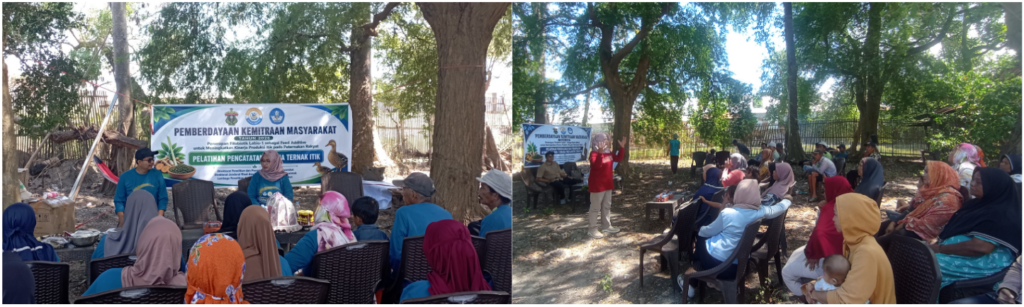
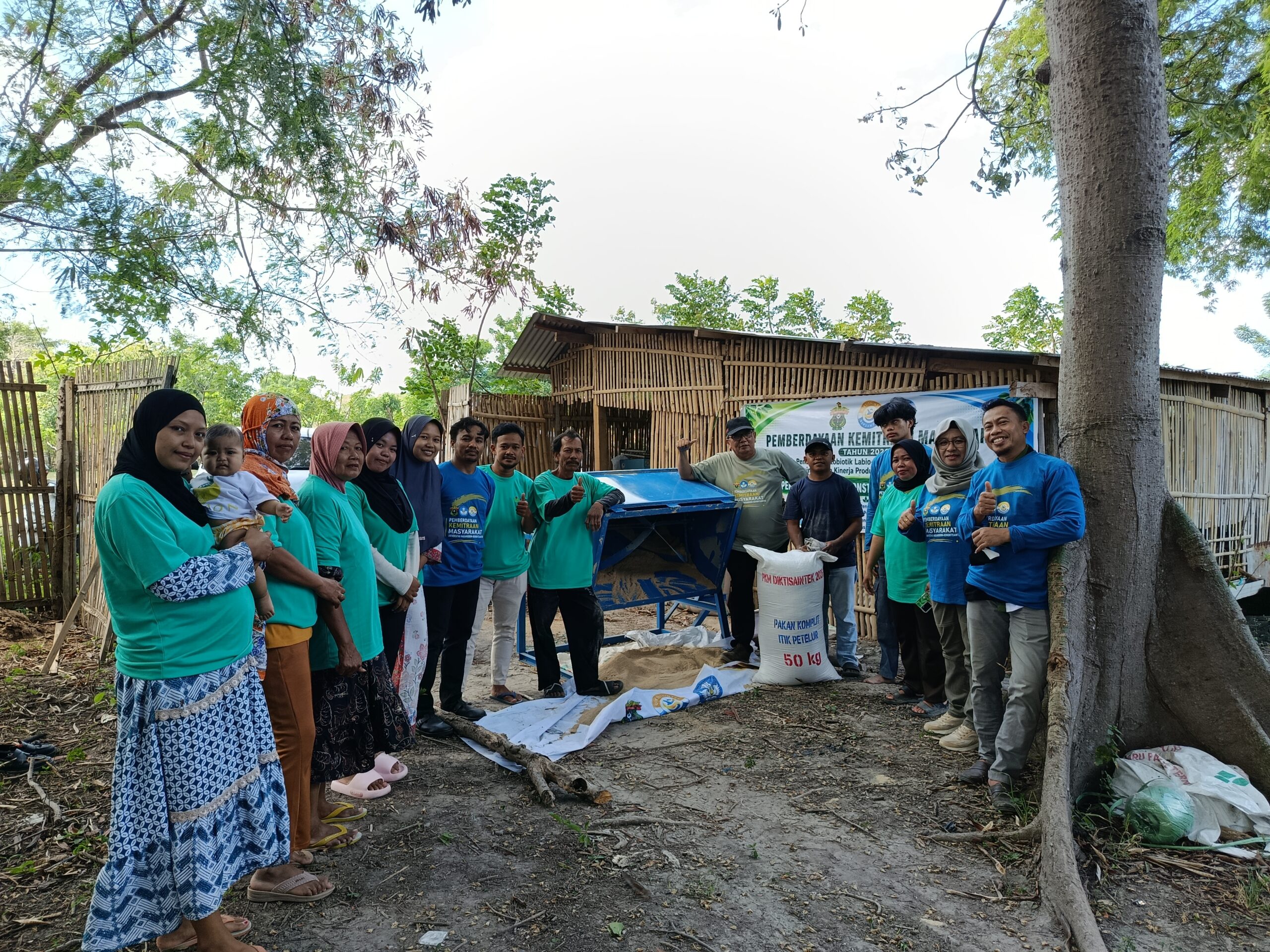
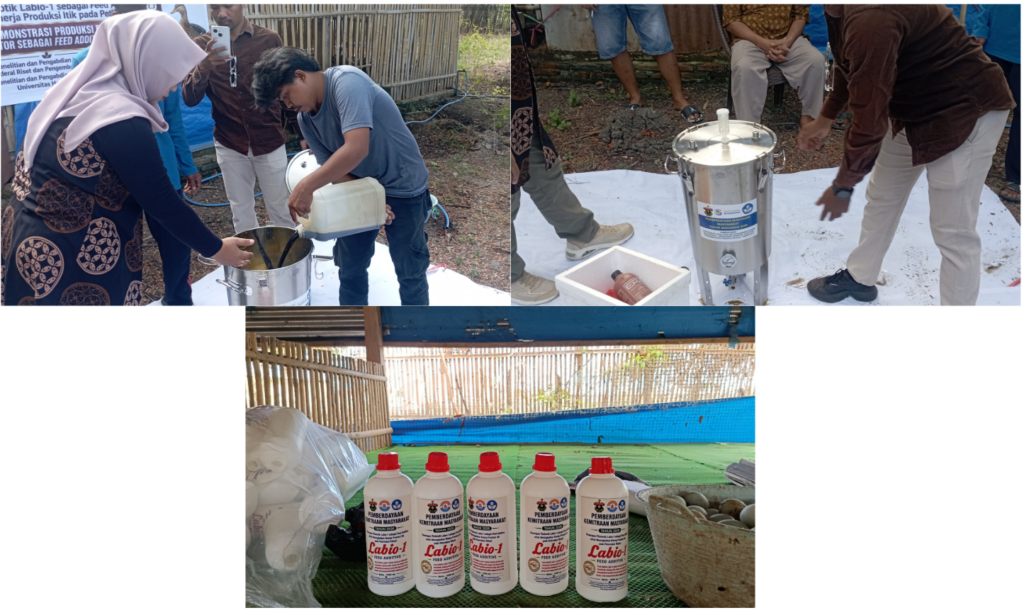
Following the theoretical sessions, participants received practical guidance on producing LABIO-1. The practical component covered the preparation and processing of herbal materials, followed by fermentation using fermentor technology. Farmers were guided through each stage and introduced to principles of proper handling, cleanliness, fermentation, and product preparation. The application of LABIO-1 in duck production was also discussed to help participants understand how the product can be incorporated into daily livestock management.
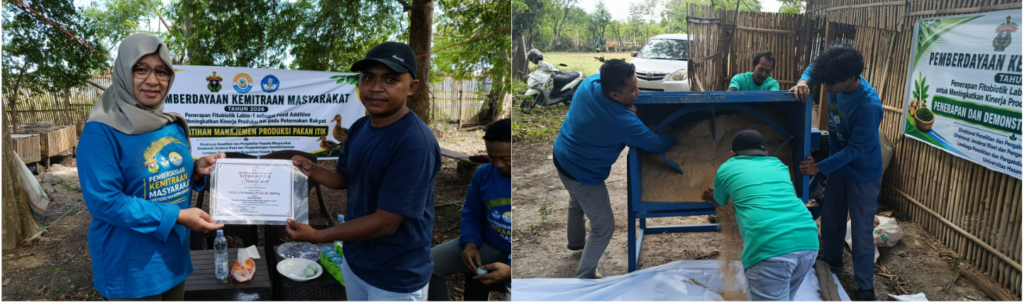
This participatory approach was designed to ensure that participants gained not only theoretical knowledge but also practical skills and confidence. By directly participating in the production process, farmers were expected to develop the capacity to independently produce and apply LABIO-1 using appropriate procedures while utilizing available herbal resources.
The program supports SDG 1: No Poverty by strengthening farmers’ capacity to improve productivity and economic resilience. It contributes to SDG 3: Good Health and Well-Being by promoting livestock practices that support animal health. The activity also advances SDG 4: Quality Education through practical, science-based learning and technology transfer. Furthermore, it supports SDG 17: Partnerships for the Goals by fostering collaboration among academics, researchers, and local farmers. Through this initiative, LABIO-1 is expected to help smallholder duck farmers build more productive, informed, resilient, and sustainable farming enterprises.