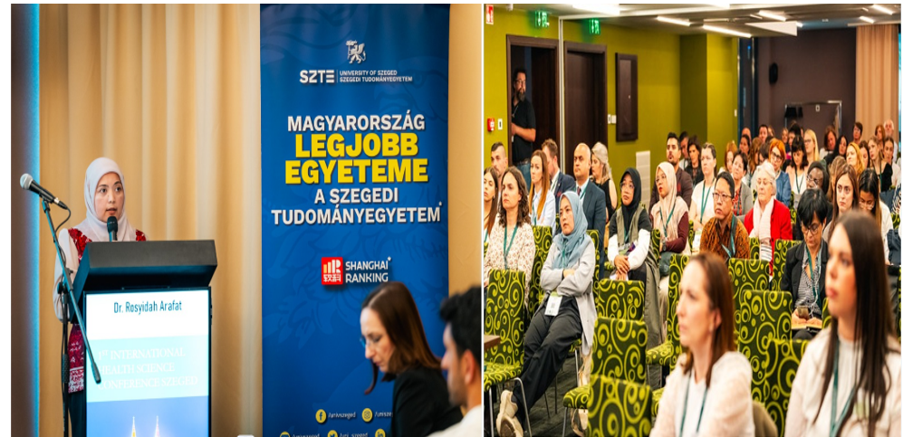
The dissemination of scientific research is an essential step in transforming evidence into meaningful improvements in healthcare practice, education, and international collaboration. Reflecting this commitment, research findings were presented at the 1st International Health Sciences Conference Szeged, held from 28 May to 1 June 2025 at the University of Szeged, Hungary. The conference brought together approximately 300 participants, including researchers, healthcare professionals, academics, and students from various countries to exchange knowledge and discuss emerging issues in health sciences. During the conference, a presentation entitled “Cognitive Function of Stroke Patients in the Acute Phase” was delivered, highlighting important findings on cognitive impairment experienced by patients during the early stages of stroke.
The primary objective of this scientific presentation was to disseminate research findings on cognitive function among patients in the acute phase of stroke, promote evidence-based nursing and neurological care, and strengthen international collaboration in advancing stroke research and clinical practice.
Stroke continues to be one of the leading causes of disability and mortality worldwide, affecting not only physical functioning but also cognitive abilities that are crucial for recovery and long-term independence. Cognitive impairment during the acute phase often influences patients’ ability to communicate, understand treatment instructions, participate in rehabilitation, and perform daily activities. Therefore, early identification of cognitive changes is an important component of comprehensive stroke management that enables healthcare professionals to develop individualized care plans and optimize rehabilitation outcomes.
The presentation emphasized the significance of integrating cognitive assessment into routine stroke care from the earliest stages of hospitalization. The findings demonstrated how early recognition of cognitive dysfunction can support timely nursing interventions, facilitate multidisciplinary collaboration, and improve patient-centered rehabilitation planning. Participants also explored the implications of cognitive assessment for nursing practice, highlighting the important role of nurses in monitoring neurological status, educating families, coordinating care, and supporting patients throughout the recovery process.
Beyond sharing research findings, the conference provided an excellent opportunity for scientific dialogue among international experts. Participants exchanged perspectives on current advances in stroke management, neurological rehabilitation, cognitive assessment tools, and evidence-based interventions implemented in different healthcare systems. These discussions encouraged interdisciplinary learning and opened new opportunities for collaborative research aimed at improving the quality of stroke care globally.
The event also strengthened international academic networking by connecting researchers and healthcare professionals with shared interests in neuroscience and rehabilitation. Through constructive discussions and professional interactions, participants identified potential collaborations in future research projects, educational initiatives, and knowledge exchange programs. Such international engagement plays a vital role in accelerating scientific innovation and ensuring that research findings contribute to meaningful improvements in clinical practice across countries.
This scientific dissemination activity directly supports several United Nations Sustainable Development Goals (SDGs). It contributes to SDG 3: Good Health and Well-being by promoting evidence-based approaches that enhance stroke assessment, rehabilitation, and patient outcomes. The conference advances SDG 4: Quality Education through the international exchange of scientific knowledge, encouraging lifelong learning and strengthening academic excellence among healthcare professionals and researchers. Furthermore, it exemplifies SDG 17: Partnerships for the Goals by fostering collaboration between international institutions, researchers, and healthcare professionals committed to advancing global health research. The activity also indirectly supports SDG 1: No Poverty, as improving stroke care and rehabilitation can reduce long-term disability, preserve patients’ functional independence, and lessen the economic burden experienced by individuals, families, and healthcare systems.
By presenting research findings at the 1st International Health Sciences Conference Szeged, this scientific contribution demonstrated Indonesia’s growing role in international health research while reinforcing the importance of collaborative, evidence-based solutions to address the global burden of stroke. The conference served not only as a platform for disseminating research but also as a catalyst for future partnerships that will continue to strengthen nursing science, neurological care, and international academic collaboration.