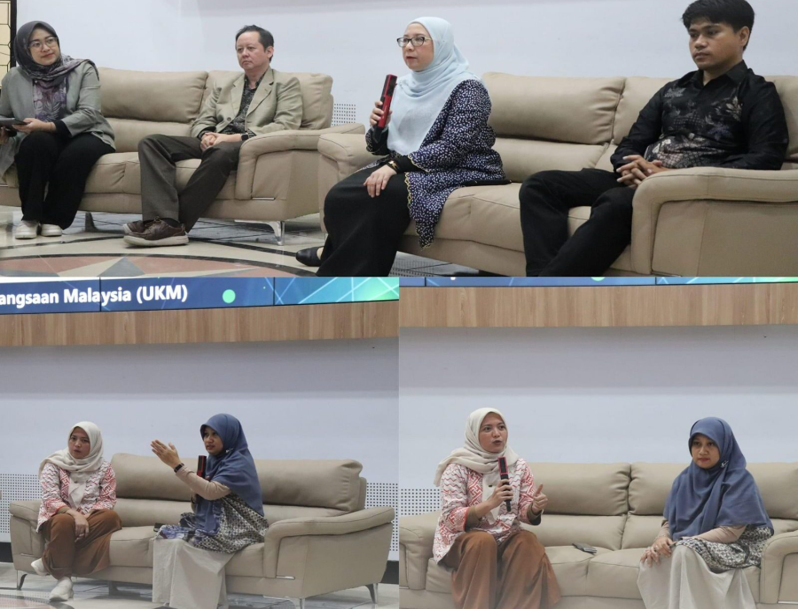
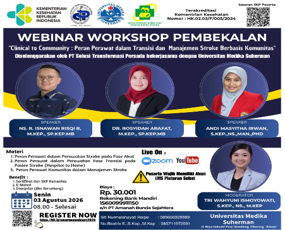
The growing burden of stroke continues to present significant challenges for healthcare systems worldwide, particularly in ensuring continuity of care after patients leave the hospital. Effective stroke management extends beyond acute medical treatment and requires coordinated rehabilitation, patient education, family involvement, and long-term community support. Recognizing this need, an International Thematic Online Course entitled “Community-Based Stroke Care and Prevention” was held at Hasanuddin University on 12 November 2024. The program was attended in person by faculty members and students from the Faculty of Nursing, Hasanuddin University, as well as graduate students from the Faculty of Medicine, Universiti Kebangsaan Malaysia (UKM). As part of the program, a presentation entitled “Transitional Care for Patients with Stroke Following Hospitalization” was delivered, highlighting practical experiences and evidence-based approaches to post-discharge stroke care.
The primary objective of this educational activity was to strengthen participants’ understanding of evidence-based transitional care for stroke survivors, enhance interdisciplinary learning, and promote international collaboration in developing community-based strategies that improve long-term stroke outcomes.
The presentation emphasized that the transition from hospital to home is one of the most critical phases of stroke recovery. During this period, patients often face physical limitations, cognitive changes, emotional challenges, and the need to adapt to new daily routines. Without appropriate support, many stroke survivors experience preventable complications, delayed rehabilitation, or hospital readmission. Therefore, effective transitional care is essential to ensure continuity of treatment while empowering patients and their families to actively participate in recovery.
Participants explored evidence-based strategies that support successful post-discharge care, including comprehensive discharge planning, early rehabilitation, patient and family education, medication management, regular follow-up, and multidisciplinary collaboration among healthcare providers. Practical experiences were shared to demonstrate how nurses play a pivotal role in coordinating care, assessing patients’ ongoing needs, facilitating communication between healthcare professionals, and preparing families to provide safe and effective care at home. The discussion also highlighted the importance of integrating community health services into stroke rehabilitation to ensure that patients continue receiving appropriate support after returning to their communities.
The international nature of the course created a valuable platform for exchanging knowledge and experiences between participants from Indonesia and Malaysia. Faculty members, nursing students, and graduate medical students engaged in interactive discussions regarding healthcare systems, rehabilitation models, and community-based approaches to stroke prevention and management. This collaborative learning environment broadened participants’ perspectives while encouraging the adaptation of best practices across different healthcare contexts.
Beyond enhancing clinical knowledge, the course reinforced the importance of interdisciplinary and international collaboration in addressing the growing burden of stroke. By connecting educators, researchers, and future healthcare professionals, the activity promoted mutual learning, strengthened academic partnerships, and encouraged future collaborative initiatives in education, research, and community health programs.
This educational initiative contributes directly to several United Nations Sustainable Development Goals (SDGs). It supports SDG 3: Good Health and Well-being by promoting evidence-based stroke care that improves rehabilitation, reduces preventable complications, and enhances patients’ quality of life. The activity advances SDG 4: Quality Education by providing an international learning platform that strengthens professional competencies and encourages lifelong learning among healthcare professionals and students. Furthermore, it exemplifies SDG 17: Partnerships for the Goals through academic collaboration between Hasanuddin University and Universiti Kebangsaan Malaysia, fostering cross-border knowledge exchange and capacity building. In addition, the initiative indirectly contributes to SDG 1: No Poverty, as effective transitional care can reduce long-term disability, improve patients’ functional independence, and lessen the economic burden associated with stroke on individuals, families, and healthcare systems.
By sharing practical experiences and scientific evidence on transitional stroke care, this International Thematic Online Course successfully translated research into meaningful educational outcomes. The activity reinforced the essential role of nurses and multidisciplinary collaboration in ensuring continuity of care, while strengthening international academic partnerships dedicated to improving community-based stroke prevention, rehabilitation, and long-term patient well-being.