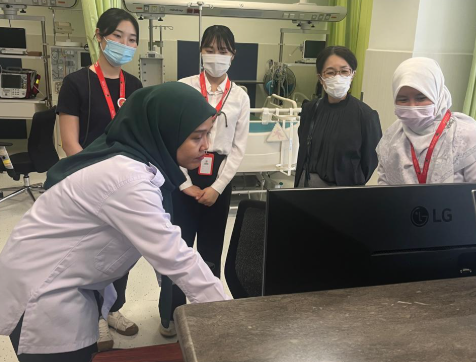
In an era of globalization, healthcare professionals are increasingly required to possess not only clinical competence but also intercultural understanding and adaptability. Addressing this need, the Global Nursing Internship: Clinical Practice in Community and Hospital Settings was successfully conducted at Hasanuddin University in collaboration with Okayama City University as an international partner. This program took place from 6 October to 7 November 2025, involving 2 participants, namely Himari Myoi and Yuriko Wada, who actively engaged in academic and clinical learning activities.
The primary objective of this internship program was to enhance students’ academic and professional experiences through cross-country learning. By immersing participants in both community and hospital healthcare settings, the program aimed to broaden their understanding of global health service systems while strengthening intercultural competence, adaptability, and international communication skills. These competencies are essential in preparing future nurses to work effectively in diverse healthcare environments.
Throughout the program, participants were exposed to various aspects of healthcare delivery in Indonesia. In community settings, they engaged with local health initiatives, observing and participating in health promotion activities, preventive care programs, and community-based interventions. These experiences provided valuable insights into how primary healthcare services are implemented at the grassroots level, particularly in addressing public health challenges.
In hospital settings, the students observed clinical practices, patient care management, and interdisciplinary collaboration among healthcare professionals. They gained a deeper understanding of clinical workflows, patient safety protocols, and culturally sensitive care practices. The integration of theoretical knowledge with real-world clinical exposure enabled participants to develop a more comprehensive perspective on nursing practice.
This program strongly aligns with SDGs 4 (Quality Education) by promoting inclusive and high-quality learning opportunities through international academic exchange. It enables students to gain experiential knowledge beyond the classroom, fostering critical thinking and professional growth. Additionally, the collaboration between Hasanuddin University and Okayama City University reflects the principles of SDGs 17 (Partnerships for the Goals), highlighting the importance of international cooperation in advancing education and healthcare.
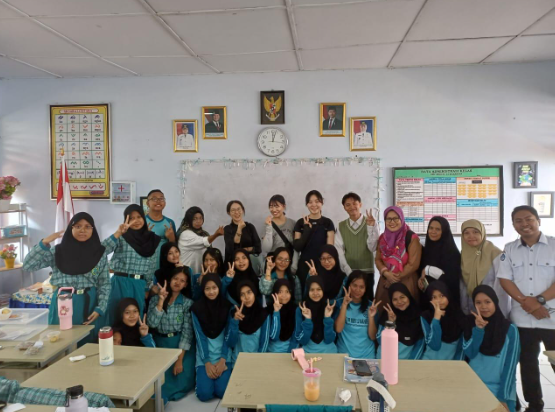
Furthermore, the program contributes to SDGs 1 (No Poverty) by equipping future healthcare professionals with the skills and knowledge necessary to address health disparities, particularly in underserved communities. By understanding different healthcare systems and socio-economic contexts, participants are better prepared to contribute to equitable healthcare delivery.
The internship also supports SDGs 3 (Good Health and Well-being) through the promotion of quality healthcare practices and the exchange of knowledge related to patient care and public health strategies. Exposure to diverse healthcare models allows participants to identify best practices that can be adapted and implemented in their future careers.
In conclusion, the Global Nursing Internship: Clinical Practice in Community and Hospital Settings represents a meaningful step toward developing globally competent nursing professionals. Through a combination of clinical exposure, cultural exchange, and academic collaboration, the program not only enriches students’ learning experiences but also contributes to the advancement of global health education and practice.