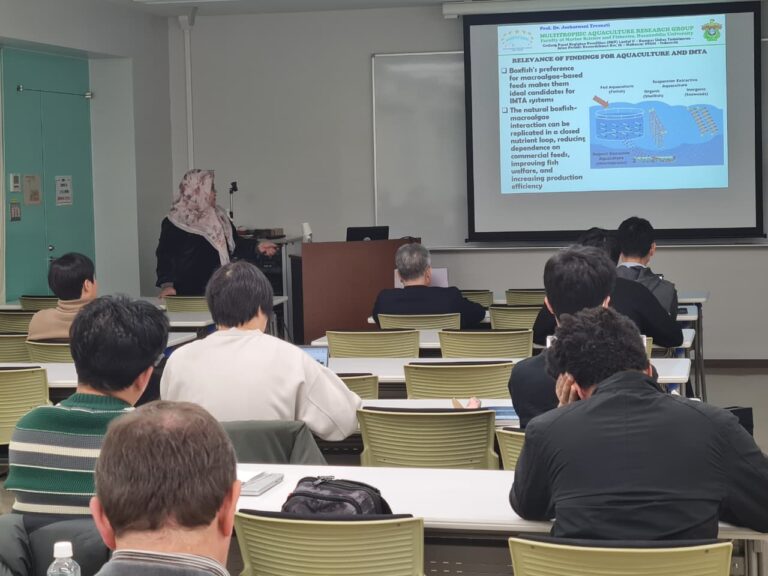
MAKASSAR, Indonesia Agustus 30 2021/MARGO/ At first glance, the problem facing seaweed farmers in Indonesia seems simple: their crop grows well, but prices crash unpredictably. One month, Gracilaria changii seaweed sells for a decent price; the next, it barely covers the cost of harvesting. Meanwhile, just a few meters away in the same brackishwater ponds, a potential solution swims—literally.
Meet the rabbitfish, Siganus canaliculatus. Known locally as a “luxury fish,” it graces the menus of high-end seafood restaurants and commands premium prices. But here’s the catch: most rabbitfish still come from wild catches, not farms. What if farmers could raise rabbitfish and seaweed together in the same pond, solving two problems at once?
A groundbreaking study published on 30 August 2021 in the journal AACL Bioflux (Publisher: Bioflux Publishing House) titled “Effect of salinity on the growth and feed conversion of rabbitfish, Siganus canaliculatus (Park, 1797), fed with seaweed (Gracilaria changii)” provides the scientific evidence that this “multitrophic aquaculture” system is not only possible—it’s highly promising.
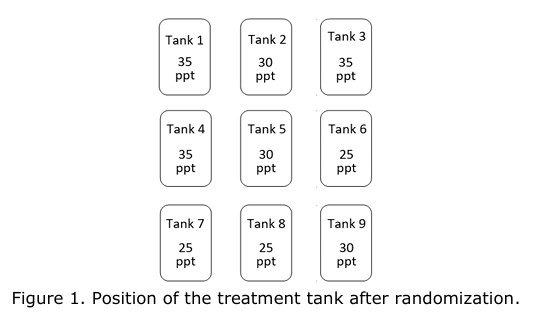
Researchers from Hasanuddin University in Indonesia conducted a 60-day experiment. They placed rabbitfish in tanks with three different salinity levels (25, 30, and 35) parts per thousand (ppt) and fed them fresh Gracilaria changii seaweed. The question was simple: can rabbitfish thrive on a seaweed-only diet across the fluctuating salinities typical of brackishwater ponds?
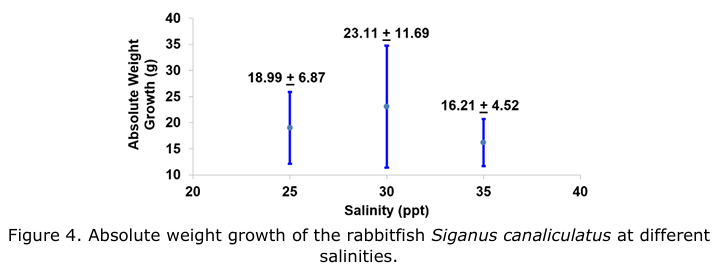
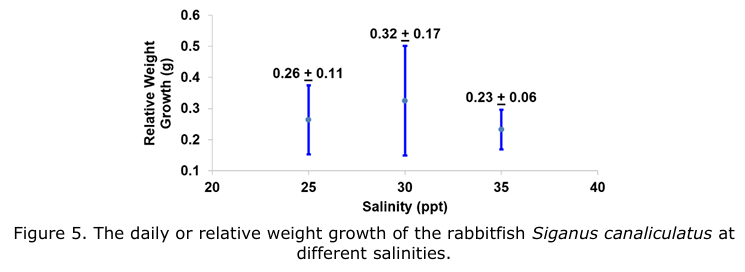
The answer was a resounding yes. The rabbitfish survived at 100% in all salinity treatments. Their length and weight growth were not significantly different between salinity levels. Even more encouraging, the feed conversion ratio—how much seaweed it takes to produce one gram of fish—remained consistent across all salinities. In practical terms, it took about 62 to 76 grams of wet seaweed to produce one gram of rabbitfish. While that sounds like a lot, remember that seaweed is mostly water (about 88%). When converted to dry weight, the efficiency is comparable to feeding goats on tree leaves.
The study also revealed that rabbitfish can tolerate a salinity range much wider than previously thought—up to 10 ppt of fluctuation. This is excellent news for farmers, because brackishwater ponds often experience dramatic salinity swings due to rain and evaporation.
Why does this matter? This research directly supports the United Nations’ Sustainable Development Goal 14: Life Below Water. By promoting multitrophic aquaculture that uses natural seaweed as feed, it reduces reliance on artificial feeds and minimizes nutrient pollution in coastal waters. Seaweed acts as a natural biofilter, absorbing excess nutrients from the water, while fish provide an additional income stream. The system is environmentally friendly, economically resilient, and socially inclusive—helping small-scale farmers escape the trap of volatile seaweed prices (SDG 1) while contributing to sustainable food production (SDG 2). 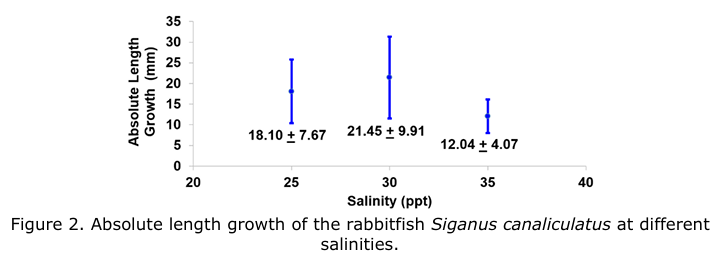
The researchers conclude that brackishwater pond farmers should seriously consider this multitrophic system. Even when seaweed prices plummet, farmers can still profit by feeding their harvest to rabbitfish and selling the fish at premium prices. One farmer, two income streams, one sustainable system. That is the beauty of working with nature.
Reference
DOI:
https://bioflux.com.ro/docs/2021.2615-2625.pdf
Contact:
Prof. Dr. Ir. Ambo Tuwo DEA
+628124206391
ambotuwo62@gmail.com