MAKASSAR, Indonesia Januari 19 2021/MARGO/ Coastal communities around the globe stand at a critical crossroads. On one side lies the immense potential of the ocean economy—from fishing and aquaculture to coastal agriculture. On the other side, rising sea levels, rising energy costs, and environmental pollution threaten the livelihoods of millions. For too long, coastal industries have operated in silos: fish farms operate separately from clean energy projects, and seafood waste is often discarded into ecosystems rather than repurposed. But what if we could connect these dots into one harmonious, sustainable system?
This transformative vision is explored in detail in the scientific review article titled “Toward integrated coastal special economic zones: A review of agro-marine industry, renewable energy, and circular economy synergies,” published in the journal Environmental Challenges on January 19, 2026. The authors examine how Coastal Special Economic Zones (CSEZs) can be redesigned from traditional industrial hubs into green powerhouses. Instead of focusing solely on factory manufacturing, modern CSEZs can unite three essential pillars: agro-marine production, coastal renewable energy, and circular economy practices.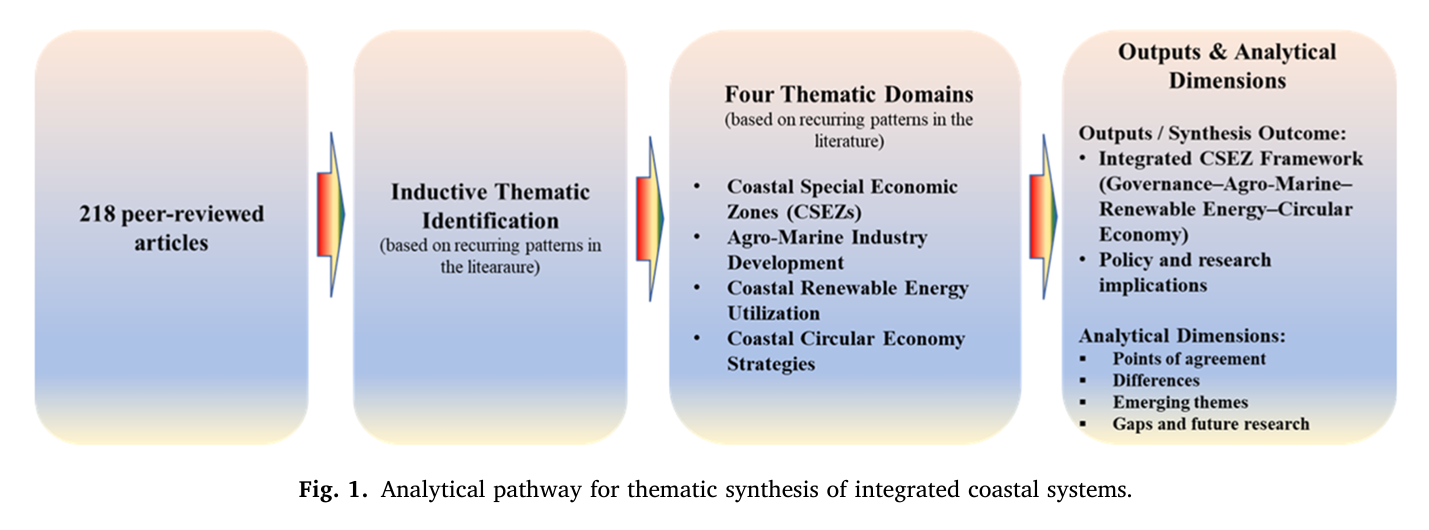
Imagine a coastal zone where solar panels, wind turbines, and ocean wave converters power high-tech aquaculture aeration systems and cold-storage facilities. This ensures that freshly caught fish do not spoil, reducing food waste and stabilizing local market prices. At the same time, seafood processing byproducts—such as fish scales, bones, and seaweed residue—are not thrown away. Instead, they are converted into organic biofertilizers, animal feed, or biogas. This closed-loop approach transforms expensive waste management into profitable new products.
Crucially, this integrated approach aligns directly with SDG 14: Life Below Water. Sustainable Development Goal 14 calls for the conservation and sustainable use of oceans, seas, and marine resources. By preventing organic runoff, eliminating fossil fuel dependence in coastal facilities, and establishing ecosystem-based spatial zoning, integrated CSEZs directly reduce marine degradation while restoring coastal biodiversity.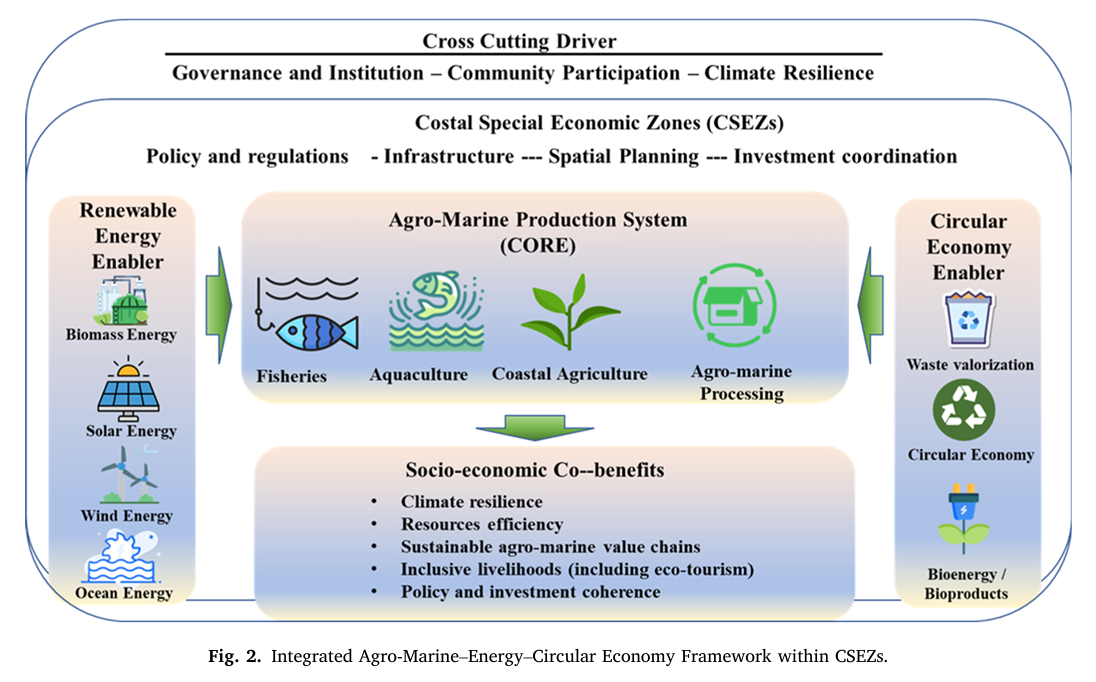
However, technology alone is not enough. The review stresses that governance and community inclusion are the real keys to success. Small-scale fishers and local farmers must be actively involved in decision-making processes. When local knowledge meets modern clean technology, coastal communities become resilient against environmental and market shocks. Ultimately, integrated coastal economic zones offer a compelling blueprint: a thriving blue economy where human prosperity and ocean conservation go hand in hand.
Reference
DOI:
https://doi.org/10.1016/j.envc.2026.101410
Contact:
Prof. Dr. Ir. Ambo Tuwo DEA
+628124206391
ambotuwo62@gmail.co