MAKASSAR, Indonesia Des 20 2025/MARGO/ What if a fish could change from female to male as it grew? In the shallow coral-reef waters of Indonesia’s Seribu Islands, the rivulated parrotfish (Scarus rivulatus) does exactly that. But this unusual ability is more than a biological curiosity. It may hold an important clue for protecting coral reefs and the fisheries that depend on them.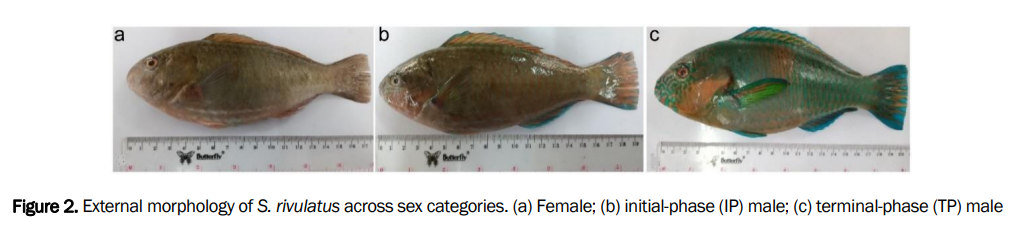
A recent study by Asri Yanti and colleagues, published in Ilmu Kelautan: Indonesian Journal of Marine Sciences on December 20, 2025, takes a close look at how this fish reproduces. The article, “Reproductive Biology of the Rivulated Parrotfish (Scarus rivulatus) in the Seribu Islands: Fecundity, Sex Ratio, Gonadosomatic Index, and Spawning Patterns,” provides new evidence about the species’ reproductive life and what it means for sustainable fisheries management.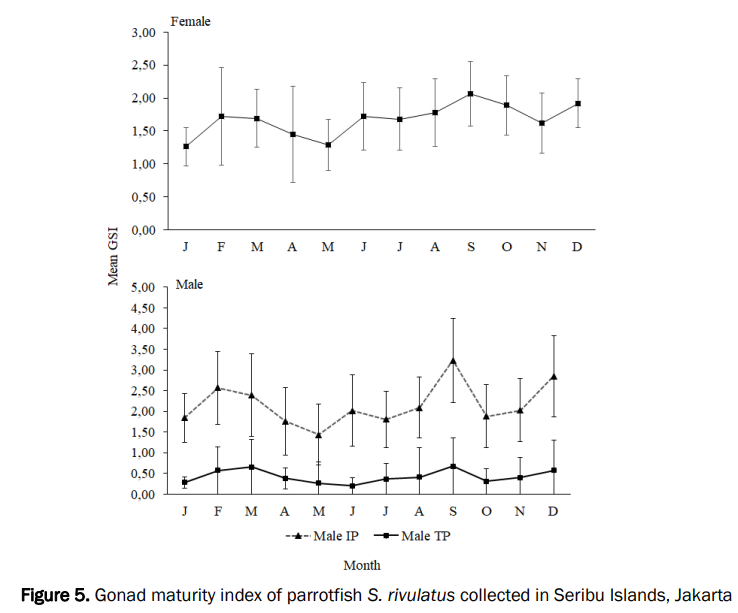
The researchers examined 2,425 fish collected monthly from January to December 2022 at five locations in the Seribu Islands. Their findings reveal a fascinating life strategy. Smaller fish were mostly female, while larger individuals were mainly males. This pattern is consistent with protogynous hermaphroditism—a natural process in which individuals begin life as females and later change sex to males.
The study also found that the overall male-to-female ratio was about 1:0.8, which was not significantly different from a balanced 1:1 ratio. However, the researchers warn that large males deserve special attention. Because larger fish are often attractive targets for fishing, removing too many of them could disrupt the population’s reproductive structure.
Size also matters when it comes to producing offspring. The fish in the study produced between 17,013 and 178,813 eggs, and larger individuals generally produced more eggs. This means that protecting bigger, mature fish can make a major difference to the future of the population.
Perhaps the most encouraging finding is that S. rivulatus can spawn throughout the year. The study identified stronger spawning activity around February, September, and December. Its ovaries contained eggs at different developmental stages, suggesting asynchronous development and partial spawning—meaning the fish can release eggs in several reproductive events rather than all at once.
Why should the public care about one reef fish? Parrotfish are important herbivores. By grazing on algae, they help prevent excessive algal growth and support healthy coral-reef ecosystems. When reef fish populations decline, the effects can extend beyond fisheries to the broader health and resilience of coral reefs.
This research directly supports Sustainable Development Goal (SDG) 14: Life Below Water, which calls for the conservation and sustainable use of oceans and marine resources. Protecting spawning periods, setting appropriate minimum catch sizes, and safeguarding larger reproductive fish are practical steps toward healthier reefs and more sustainable fisheries.
The message is simple: protecting a fish’s reproductive life means protecting the ecosystem around it. In the Seribu Islands, understanding how parrotfish reproduce can help turn scientific evidence into smarter decisions for the sea—and for the communities whose futures depend on it.
Source Article Metadata
Article Title: Reproductive Biology of the Rivulated Parrotfish (Scarus rivulatus) in the Seribu Islands: Fecundity, Sex Ratio, Gonadosomatic Index, and Spawning Patterns
Journal: ILMU KELAUTAN: Indonesian Journal of Marine Sciences
Publication Date: December 20, 2025
DOI: 10.14710/ik.ijms.30.4.544-556
Authors: Asri Yanti, Sulistiono, Ali Mashar, Nurfajar, Sebastian C.A. Ferse, and Ambo Tuwo